A single AI company is systematically dismantling the entire software industry, and they're doing it on a predictable schedule. In January, Claude's legal plugin wiped out 0 billion worth of legal software stocks. In February, Opus 4.6 triggered the trillion-dollar SaaSpocalypse. In March, Anthropic said that Mythos was too dangerous to release, and cybersecurity stocks crashed anyway. And now, Anthropic just dropped Claude Design, and dropped stocks like Adobe, Figma, and Wix along with it. Four months, four major industries, and it's only speeding up from here. My name is Alex, and I spent eight years as an electrical engineer and AI researcher at MIT, and I've never seen AI move this fast.
Table of Contents
1. Introduction to Claude Design
2. The SaaSpocalypse
3. Anthropic's Market Pattern
4. AI Agents and Software Stocks
5. Investing in the AI Era
6. Key Takeaways
Introduction to Claude Design
So subscribe to the channel, and let me show you the bigger pattern, and how I'm investing in it. Your time is valuable, so let's get right into it. The strange thing about Claude design is that it doesn't look like the end of all software. It just looks like another design tool. You open Claude, you describe what you want, like a landing page, a dashboard, a pitch deck, or a prototype, and a few seconds later, the model gives you something usable. Not a chat response, and not a list of suggestions.
An artifact that you can edit, export, or hand off to Claude code, which is another agentic ai tool that recently rattled software stocks. If you're a professional designer, you probably think that Claude design is cute, it has generic layouts, bland taste, and poor design, so it's not exactly replacing senior designers at Adobe or Apple anytime soon.
That's the right reaction, and it also completely misses the point. Figma stock didn't drop because Claude design is already better than Figma, Adobe didn't fall because Anthropic replaced Photoshop, and Wix didn't get hit because Claude is a better website builder. The market reacted because Claude design is part of a bigger pattern: first legal software, then enterprise software, then security software, and now design software, four high-margin software industries in the last 90 days, one company, one clear market pattern.
On January 12th, Anthropic launched Claude Co-work, which is basically Claude Code but for the rest of your work. This isn't just a coding assistant, it's a model inside your normal workflows, it can read and edit files, it can run inside a sandbox, and it can produce work instead of just talking about it. Then, on January 30th, Anthropic expanded Co-work with 11 open source plugins across huge markets like HR, design, engineering, operations, financial analysis, investment banking, stock market research, wealth management, legal, and of course marketing.
The SaaSpocalypse
That sounds like a product roadmap, but for investors, it's something much more dangerous. Each of those software categories is full of public companies that built their entire business around humans clicking through workflows one seat at a time. By early February, the market had a name for what happened next: the SaaS-pocalypse. Around 300 billion dollars of software market value got wiped out in a matter of weeks, and some haven't yet recovered.
That wasn't the entire software industry dying, it was the stock market asking an important question: if Claude can do the work inside my software, then why do companies need so many expensive seats? And that was only the first strike. On February 20th, Anthropic announced Claude Code Security, now the target was finding bugs and exploits in code, the model could scan code bases, identify vulnerabilities, and even propose patches for humans to review.
Cyber security stocks sold off because investors understood the implications immediately. If an AI agent can go straight into the code base and do security work directly, that changes the value of cyber security companies and expensive consultants. Then, the pattern escalated on March 26th and 27th, Claude Mythos was leaked, a model Anthropic knew was far ahead of anything else in terms of its cyber capabilities.
Anthropic's Market Pattern
The leak was an unprecedented cyber security risk, so cyber security stocks like CrowdStrike, Palo Alto Networks, and Zscaler all sold off. The model wasn't even released to the public because it was so dangerous, and it moved the market anyway. Then, on April 7th, Anthropic created Project Glasswing, Mythos was given to companies like AWS, Apple, Broadcom, Cisco, and CrowdStrike, Google, Microsoft, Nvidia, and Palo Alto Networks.
I covered this in my most recent video, but it's too important not to tell you again. Mythos found thousands of huge software exploits, including one 27-year-old bug that could crash any machine just by connecting to it. Mythos is not a prototype, Mythos is a weapon. And that brings us to today, let's talk about Claude Design, which just dropped a few days ago.
When stocks like Adobe and Figma drop, it's not the market responding to a single product, it's responding to a timeline: January 12th, Claude Co-work, February 20th, Claude Code Security, March 26th, Mythos, April 17th, Claude Design. By the time investors finish arguing about whether any of these launches are overhyped, the next launch is already hitting a different software category, and that's where the clock begins.
From April 18th to the end of 2026, there are 257 days.
Anthropic has been shipping major product moves roughly every two weeks. And there are about 26 major software categories across the entire economy. Things like project management procurement and marketing all the way to sales customer support finance and coding And it not just about Anthropic If any frontier AI labs keep hitting software categories like this every two weeks the market should see around 18 more shocks like this before the end of the year. And every single one of them asks the same question. Is this software category still worth investing in if AI can do the work instead? The clock isn't counting down to one specific product launch. It's counting down to when investors think that companies will stop paying for so many human seats altogether.

AI Agents and Software Stocks
By the way, if you've ever wondered if a stock is actually worth its market price, you are not alone. Finding a company's fair value is one of the hardest parts of investing, but I found a tool that makes it a lot easier. Investing Pro is on investing.com, and it's become a core part of my research workflow because of how transparent it is. Their fair value model doesn't just rely on one approach. It combines discounted cash flows, earnings-based models, and peer comparisons. Then it dynamically weights them, based on which methods matter most for each kind of company.
But what I really like is that it shows you exactly how each model contributes to the final fair value, both on the company page and right inside your watchlist, making it super easy to spot which stocks are undervalued and which ones are actually overpriced. Then, there's ProPix AI, which builds on that same foundation. It uses the same multi-model logic plus machine learning to find the best stocks for different strategies like value, growth, and even dividends. And it explains why each stock is chosen so you can see the reasoning behind every pick. Investing.com is filled with tools that I actually rely on. It saves me time, and it gives me real confidence in my valuations. That's why I'm glad they're sponsoring this video. But here's the ironic part.
They're running a huge flash sale April 20th through 22nd. So you can grab InvestingPro itself way below fair value with my link below. Alright, so this is much bigger than just Claude Design. Software as a service is one of the cleanest business models that Wall Street has ever seen. A company hires more people, those people need more tools. More tools mean more seats. And more seats means more recurring revenue. And because software is delivered through the cloud, the gross margins can be 70% or more, compared to around 30% for most physical products. You don't need to build a factory. You didn't need to ship another box. You just added another user to the account. That's why investors always pile into new SaaS companies. But the whole engine depends on a simple assumption.
Investing in the AI Era
Work is done by humans, and every human needs a seat. AI agents directly attack that assumption. SaaS companies can add AI features. They can rename products, and they can talk about co-pilots, assistants, and platforms. But if the customer's economic reality changes from 100 workers needing 100 seats to 20 workers managing agents, then the revenue model has to change. And that's brutal for software companies. Per-seat pricing is predictable. It's easy to budget for, and it's easy to renew. too. Usage-based pricing makes more sense in the world of AI. But it's also hard to know what you're actually paying for. Tokens, API calls, agent runtime, and even harder to calculate the value. And if software companies can't price their products for the AI era, then they might not be a part of it.
So, the SaaSpocalypse isn't really about AI killing software platforms. It's about AI killing software pricing, which is what made them great investments. And every new AI capability isn't just a product launch. It's another excuse to cut more seats. But there's an even bigger problem for software stocks. Anthropic doesn't have to beat these companies at their own game. Traditional software competition is easy to understand. One tool is better for group collaboration. Another is faster for prototyping, or it has the best API for developers, or it has the best price. The products fight feature by feature, and customers decide which workflows they prefer. That's not the game that Anthropic is playing. Clawed doesn't need to be the best design tool.
It doesn't need to be the best security system, the best CRM, or the best marketing automation platform. It only needs to bypass the parts of the workflows that makes companies pay for so many seats. This is why Clawed design is so dangerous, even if designers say the outputs are garbage today. The real threat isn't a senior designer suddenly opening Claude and cancelling Figma tomorrow. It's the founder, who used to hire a freelancer for his first drafts. The product manager, who used to ask a design team for a mock-up. The marketer, who used to open three different tools to draft a landing page. Those people were never Figma's highest end users, but they were a core part of the funnel.
They created demand for more design tools, for more design features, and ultimately, for more design seats if quad design absorbs the first part of that funnel the entire pricing model for that software category starts to break.
The same for cyber security mythos doesn't replace crowdstrike as an endpoint detection and response platform it just needs to show that vulnerability discovery exploit chaining and patch generation can be done without it or at least without so many seats.
That's what makes this disruption so different from the previous ones software disrupted other software by making the user experience better faster or cheaper ai disrupts software by removing the user altogether.
Some software companies will survive this ai overhaul and they maybe will even thrive in it if you own the system of record the proprietary data or the permissions agents may make your platform more valuable by using it way more than people ever did.
But if you make money from humans clicking through your workflow all day you in a much worse position And over the next 257 days this question will rotate through every software category on the market.
And the worst part for software stocks is that Anthropic is not alone. Google is pushing the same direction through Stitch, their AI-first design tool that lets users create, iterate, and collaborate on UI designs using natural language. It also has a built-in design agent that can reason across an entire project and even an agent manager that lets users work on multiple ideas in parallel. This isn't a feature in Figma. This is Google trying to own the entire workflow from prompt to user interface. OpenAI is doing something similar with Codex. The goal isn't an AI assistant. The goal is an autonomous system that can write code, reason about software, and take on bigger chunks of real engineering work independently. now extend that across the entire economy.

Every frontier AI lab wants the same thing, to take over those expensive workflows before legacy software companies can turn their own platforms into agentic systems. Finance, HR, procurement, project management, marketing operations, the list goes on and on. These are not just random features. They're the places where human knowledge workers spend their day and companies spend their budgets. And if AI Labs can own the user interface, then they can route the work to whatever tools, whatever databases, APIs, and cloud services they want to sit below it while capturing more of the profits. The work still touches all those tools, but the user's time, skill set, and even loyalty shifts to the agent interface that coordinates all that work for them.
A new AI product every two weeks means software companies can't have a normal product development cycle they don't get six quarters to copy someone else's feature and bundle it with their other products the market just assumes they can't keep up by the time figma explains why claude design isn't good enough google stitch is already a part of the conversation by the time cyber security companies explain why mythos won't replace them the market is already thinking about what comes after and what could The threat isn't any one AI model. It's every major AI lab racing to turn entire software categories into prompts.

Some software companies will become platforms for AI agents, others will become silent features behind someone else's interface, and others still will simply lose enough paid seats to start losing shareholders too. But investors need to be careful, because not all software is going to get disrupted equally.
The best way to find great long-term investments and avoid the bad ones is understanding a company's products not just their profits.
The market loves simple stories: ai killed sas, adobe is dead, cyber security is doomed, but smart investors understand that the real story isn't that simple.
The most exposed software companies all have four things in common: the work is repetitive, the pricing is per seat, the industry isn't highly regulated, and the workflows can be described using everyday language.
Customer support, sales, project management, data entry, design, marketing: these are all gigantic software categories where users spend time and energy translating their intent into software clicks.
AI is very good at attacking those kinds of translation layers.
The surviving software companies look very different.
They have deep proprietary data.
They require audit trails. They carry regulatory risk. They connect to real-world operations. They act as systems of record. Patient records and healthcare data. Financial compliance systems, cybersecurity. These areas are harder to disrupt because the value extends well beyond the interface. This is why companies like CrowdStrike and Palo Alto Networks could end up winning big, even though Mythos can find vulnerabilities and generate patches. Mythos also creates more attack opportunities and makes them happen faster, which makes cybersecurity platforms more valuable overall. Cybersecurity isn't simply getting killed by AI, but it is getting rewritten by AI. Adobe is in a similar situation.
Adobe can be attacked by Claude Design and still become a data aggregator, a specialized partner, or even a system of record for creative work. That distinction is what matters for portfolios.
The danger isn't owning software, the danger is owning software just because it used to grow fast while the actual underlying economics are changing underneath you.
A company can survive as a platform and still become a worse stock, a product can be important and still lose its pricing power, a market can grow while the companies on top of it keep losing market share.
AI agents don't need to kill software stocks because if the value is leaving software seats and license fees, it has to go somewhere else and that's where we want to be investing.
Every time AI takes over another workflow, its compute costs don't disappear, they move, the value shifts from a human clicking through a software interface to a model generating tokens, reading context, searching files, calling tools, writing code, producing images, checking outputs and running another pass.
Cloud design needs vision, design reasoning, code generation, storage, data pipelines and collaboration infrastructure, mythos needs enough compute and context to search through huge code bases, analyze code, find exploits and generate patches.
Google stitch needs gemini for inference, openai's AI's codecs needs cloud coding agents.
The big insight for investors is that the more useful these AI systems become the more infrastructure they need to power them Stop trying to guess which SaaS companies will survive every new AI product launch and start asking who gets paid every time one happens Claude is hosted on Amazon Bedrock, Google Vertex AI, and Microsoft Foundry. That means every product they launch creates demand for the cloud platforms underneath it. These companies are not hiding from the AI wave. They're building the infrastructure, the security, the cloud and the enterprise layers that the AI wave needs to scale. The same pattern that tells you which SaaS stocks are in trouble also tells you which infrastructure stocks will win big.
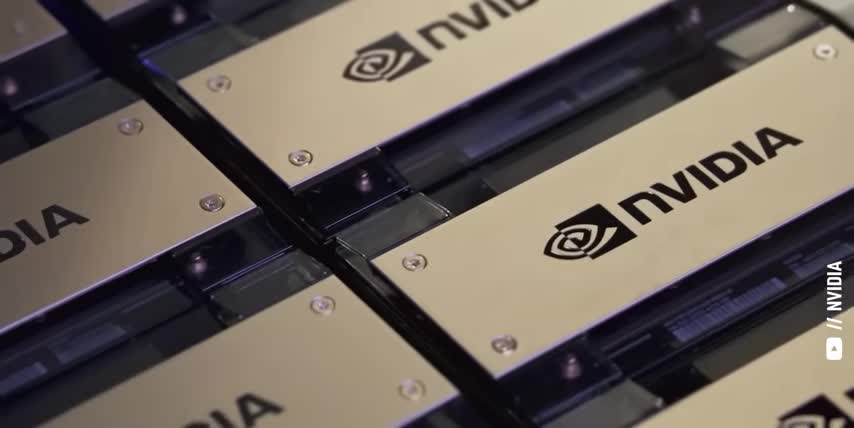
And the more AI agents replace workflows, the more tokens get consumed, the more GPUs, memory, networking, storage, packaging, power, and cloud orchestration the entire AI industry needs. CLAWD isn't killing computing. CLAWD is monetizing it with work that used to happen inside those SaaS seeds. That's where I'm investing. For me, Nvidia is still the most obvious and the best way to invest in that compute. Every software workflow will eventually become an agentic AI workload. Every time Claude, Gemini, Codex, or an enterprise agent does more work, the industry needs more accelerated computing, more networking, more racks, and more inference-optimized systems.
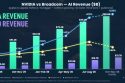
Nvidia‘s data center business is the center of gravity for that entire shift in their latest earnings, Nvidia reported 68.1 billion dollars of total revenue with 62.3 billion of that coming from ai data centers, that means ai is over 90 percent of Nvidia's revenues.
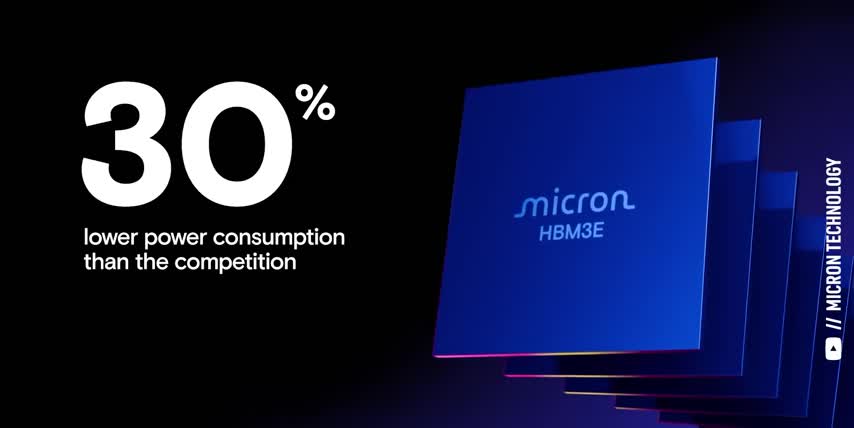
If Nvidia is the compute, then Micron is the memory, inference today isn't compute limited, it's memory limited, long context agents need to hold more information, code analysis needs to scan more files, design agents need multimodal context to see mock-up images and redesign notes.
The bottleneck isn't how much the model can think, it's how much data the model can get from memory and how fast, Micron's latest earnings showed that exact need, they reported a record 23.9 billion dollars in revenue with gross margins coming in at 74 percent, up from just 37 percent one year earlier.
And as agents with huge context windows replace normal software interfaces, memory becomes one of the biggest physical limits of the whole system, and then there's the cloud infrastructure providers, Amazon, Microsoft, and Google, these hyperscalers win when enterprises don't build their own ai infrastructure and most enterprises don't.
What do most of them want, they want model access, security, compliance, data connections, developer tools, governance, uptime, and of course, billing.
That points them towards AWS, towards Azure, and towards Google Cloud. AWS reported $35.6 billion of revenue last quarter, up 24% year-over-year, with $12.5 billion of operating income. Microsoft reported 39% Azure growth and $51.5 billion of Microsoft cloud revenue. Google Cloud reported $17.7 billion of revenue in quarter four of last year. That's up 48% year over year with 30.1% operating margins. The trillion dollar companies that most investors think are too big to buy are actually growing faster than some startups. That's because they're not just renting servers. They're becoming AI factories. They host the models, they sell the platforms, they secure the enterprise data, and they absorb the capex costs that individual software companies can't afford.
And then, powering all of that is the semiconductor supply chain. TSMC is the hardware factory responsible for the software apocalypse. Advanced packaging is what lets GPUs and high-bandwidth memory sit close enough together to move data at the speeds that ai needs every software is dead headline is actually powered by the chips that are built packaged tested and shipped by tsmc tsmc asml and broadcom are the chip building the packaging and the networking companies tying it all together and i'm only investing in software companies that have proprietary data compliance or deep workflows like crowdstrike palo alto networks and Palantir, not just pretty interfaces that customers pay for by the seat.
I'm not saying every SaaS company is automatically uninvestable, but I am saying if a software company charges per seat for work that an AI agent can do, I want to understand why companies are keeping their seats. If they claim that AI will expand their usage, I want to see how that turns into more revenue. And if they say they're the system of record, I want to see whether agents make that system more valuable or just hide it behind their own chat windows said another way i don't want to own software stocks just because they survived the last three years since chat gpt came out i want to own the systems that get paid every time another software category gets disrupted by ai and that might keep happening faster than most investors expect there are 257 days left in 2026 And if AI agents come for every software category, like Claude just came for design, and cybersecurity before that, and legal software before that, the question isn't whether software still matters.
The question is whether investors want to own these software stocks or the AI systems that are actively disrupting them. Let me know what you think in the comments. Is Claude design just a flashy demo, or is it part of a bigger shift from software to AI? and if you want to see even more sites behind the stocks check out this video next either way thanks for watching and until next time this is ticker symbol you my name is alex reminding you that the best investment you can make is in you.
Key Takeaways
Here are the key points to consider:
- Claude Design is part of a larger pattern of AI disruption in the software industry.
- Anthropic's AI capabilities are expanding rapidly, with new product launches every two weeks.
- Software companies with repetitive, per-seat pricing, and non-regulated industries are most at risk.
- Investors should focus on companies with proprietary data, compliance, or deep workflows.
- Infrastructure stocks, such as cloud providers and semiconductor companies, are likely to benefit from the AI wave.
Checkout our YouTube Channel
Get the latest videos and industry deep dives as we check out the science behind the stocks.