I came back from CES 2026 and I immediately got super sick. So sorry this post is a little late, but the good news is it's still very early for the crazy technologies I'm about to show you. The key to finding great long-term investments before everyone else is understanding products, not just profits. Huge growth happens when consumers and companies adopt new innovations while profits just show you how it's going. And there were a few huge innovations at CES that investors need to know about.
Some of them even use AI. AI everywhere and AI AI. AI is the most important technology. We actually have the opportunity in the not too distant future to have AI cure baldness. Cool. So in this post, I'll show you some of the most exciting and actually useful innovations from CES and what they could mean for tech stocks going forward. Your time is valuable, so let's get right into it. I think AI hit a major milestone at CES this year.
Everyone finally got the memo that chatbots and virtual assistants just aren't that exciting. Helping you with homework, taking notes at meetings, and automated customer service just aren't killer apps for consumers. But now, AI is finally leaving our screens and moving into the physical world, turning intelligence into action on roads, in factories, and even in our homes. A huge portion of CES focused on robotics, and that's exactly what this video is all about.
Table of Contents
1. Introduction to CES 2026
2. AI Innovations at CES
3. Self-Driving Cars and RoboTaxis
4. Industrial Robots and Infrastructure
5. Humanoid Robots: Atlas and Dynamis
6. Investing Insights and Robotics Stocks
7. Key Takeaways for Investors
Let's break things down into a few key categories. Self-driving cars, which are already making money today. Industrial robots, which are being deployed right now. And humanoid robots, which are coming way sooner than I thought. All three are going to be a much bigger deal than most people realize. Because they'll change the way we interact with technology at work, at home, and on the go. And new technologies come with new opportunities for great long-term investments.
like Google with the search engine, Apple with the smartphone, and Nvidia with all things AI. Let's start with self-driving cars. I got to talk to industry experts from companies like Uber, Waymo, which is owned by Google, and Zoox, which is owned by Amazon. And it's clear that cars are quickly turning into software-defined robots that can see, plan, and adapt as road conditions change in real time.
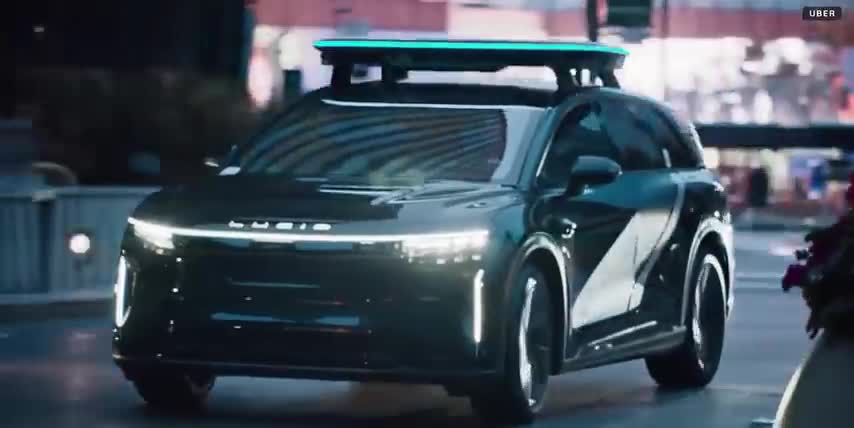
One thing I find so cool about this area of robotics is how different companies are collaborating to tackle real market challenges. My favorite example from CES is the autonomous Lucid Gravity, which is a collaboration between Lucid Motors, Nuro, and Uber to create the most luxurious Level 4 Robotaxi on the road. Lucid makes the vehicle, Nuro brings the self-driving technology, and Uber handles all the ride-sharing operations.
Now, I'm not personally into luxury cars, but they are the first segment to get all the latest and greatest tech, and this Robotaxi is no exception on the outside it has 360 degree perception thanks to high resolution cameras radar and solid state lidar units that are arranged all around the body and in this roof mounted halo module if you're fairly new to robots and robo taxis the reason they use different kinds of sensors is to get better data to improve safety and to reduce errors in difficult scenarios cameras are great for reading text traffic lights signs and lane markings but their performance collapses when there's low light lots of glare or heavy rain snow or fog cameras are also bad at estimating range which is important for deciding how fast a robot should go and when it should stop on the flip side radar uses radio waves specifically to measure range and velocity and it works in bad weather but it's terrible at reading fine details and flat surfaces like lane markings signs and traffic lights without the help of other sensors and lidar uses lasers to make precise 3d point clouds that show the distance to every surface it can see which is used to map the area around the robo taxi and detect obstacles but combining data from all three kinds of sensors gives robots and robo taxis best of all worlds cameras give the whole system colors shapes and text radar gives all weather range and velocity and lidar brings precise geometry and mapping with all that data the system can do much more complex tasks like track objects and obstacles predict paths and plan actions and even compensate if a sensor goes down or gets a bad read.
I wanted to explain that since you see these same sensors on all kinds of robots from this lucid gravity robo taxi to boston dynamics atlas which i cover in a bit because it really blew my mind in this case all the sensors on the lucid gravity feed into neuro level 4 driver stack which is built on top of nvidia's drive hyperion platform drive hyperion is nvidia's full reference platform for autonomous vehicles including the sensors the software needed for level 4 autonomy and the agx thor you can think of thor as nvidia's version of tesla's fsd chip which combines an arm cpu a blackwell gpu and dedicated accelerators specifically for tasks like perception planning control and powering the cockpit that's what nero built their custom sensor package and planning software on top of this lucid gravity robo taxi is already testing in the san francisco bay area with a commercial launch expected later this year and plans to scale the fleet to tens of thousands of units in the near future.
But here's the thing most investors are focused on which robo taxi fleet will win uber versus waymo versus tesla but ces made it clear that the real winners will be the autonomy platforms not the fleets themselves for example the lucid robo taxi for uber runs on neuro's autonomy stack but nothing is stopping neuro from reusing that stack in other vehicles and markets and taking it one step further i found nvidia's drive platform in eight different big name showcases at ces not just uber but other massive brands like mercedes-benz stellantis and volvo they build the vehicles but they need another company to bring the artificial intelligence according to market us the global artificial intelligence market is expected to almost 19x in size over the next nine years that's a compound annual growth rate of 38.5 through 2034 but many of the companies building next-generation AI applications are not publicly traded.
Think about the 90s and early 2000s. Companies like Amazon and Google went public very early in their growth cycle, but today, they're waiting an average of 10 years or longer to go public. That means investors like us can miss out on most of the returns from the next Amazon, the next Google, the next Nvidia. That's where Fundrise comes in, the sponsor of this video.
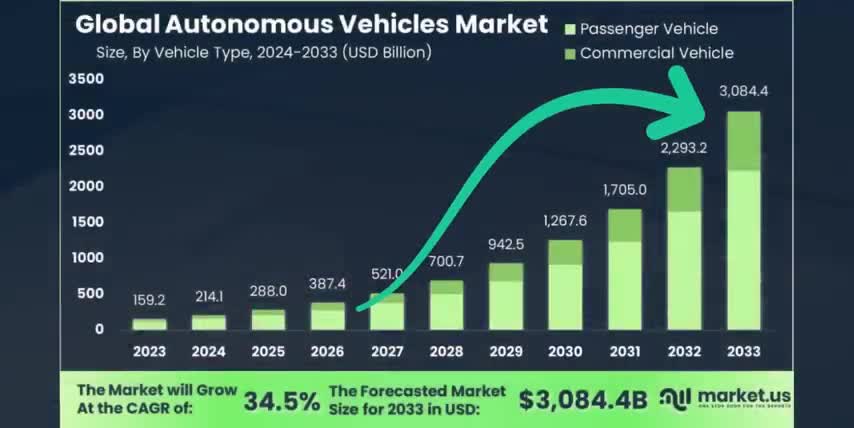
On top of that, the global autonomous vehicles market is expected to almost 10x in size by 2033, which would be a 34.5% compound annual growth rate for the next 8 years. So this is a multi-trillion dollar market that needs to be on every investor's radar. And the first big insight for investors is that the real money is in the AI platform, not the vehicle itself.

Companies like NVIDIA, ARM, and Qualcomm, and more specialized players like Niro, will become the software and hardware operating systems for autonomy by selling the chips, the models, and the reference designs to many automakers and fleet operators at once. But the second big thing that I learned at CES surprised me even more. CES stands for the Consumer Electronics Show, so I thought the show would focus on, you know, consumer electronics.
but many companies I talked to made it clear that self-driving is much bigger than hailing a driverless Uber. It's part of a broader build-out of physical AI infrastructure that includes trucks, commercial vehicles, construction equipment, and even industrial robots. It's important to remember that robots are already widely deployed in many industries today, like automotive, electronics, construction, and logistics.
So this build-out is really about using AI to make machines safer, more autonomous, and more flexible. Let me show you the best example I saw at CES, and I think you'll be surprised by just how simple it is.
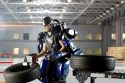
Boston Dynamics and their parent company Hyundai had a massive booth where they showcased an entire portfolio of industrial robots that all work together The one I want to focus on first is Hyundai parking robot which is a flat low profile autonomous platform that slides right under a car lifts it up and then moves it into or out of very tight parking spaces and because this robot can rotate cars in place and move underneath them future parking garages might not need as many aisles as many lanes or no parking zones people just take their vehicles to the entrance but the robots will handle all the parking and storage this particular robot was moving an ionic 5 robo taxi between a parking spot and hyundai's automatic charging robot to showcase the flow between self-driving robotic parking and ev charging all without any humans in the loop but it's not just about this one use case because this robot is basically a universal heavy object mover so it can slide under boxes and pallets and move them into dense storage racks where forklifts struggle or simply aren't an option or it can be used to move machines inside factories to reconfigure their production lines and because it's a low flat square.
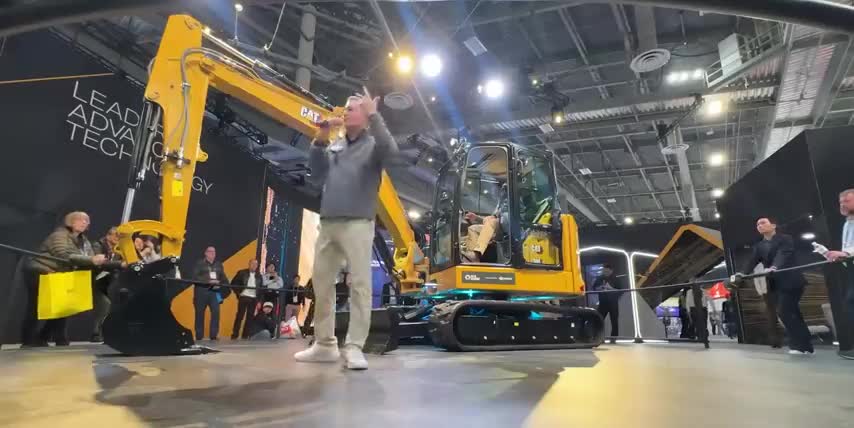
Any company can design simple adapter plates for existing boxes machines and carts to turn them into robot ready payloads all without rebuilding their entire facilities there were many more autonomous industrial robots showcased at ces kuboda revealed an autonomous narrow tractor and a modular concept robot for monitoring and harvesting different kinds of crops caterpillar previewed increasingly autonomous excavators loaders haul trucks bulldozers and compactors that operators could give tasks to using natural language and doosan showed off a fully electric autonomous modular compact loader concept that can switch between wheels and treads has configurable lift arms for job specific setups and can even remove the cab for human operators altogether because it can be piloted remotely or work fully autonomously that's what what I mean when I say this is a broader build-out of physical AI infrastructure.
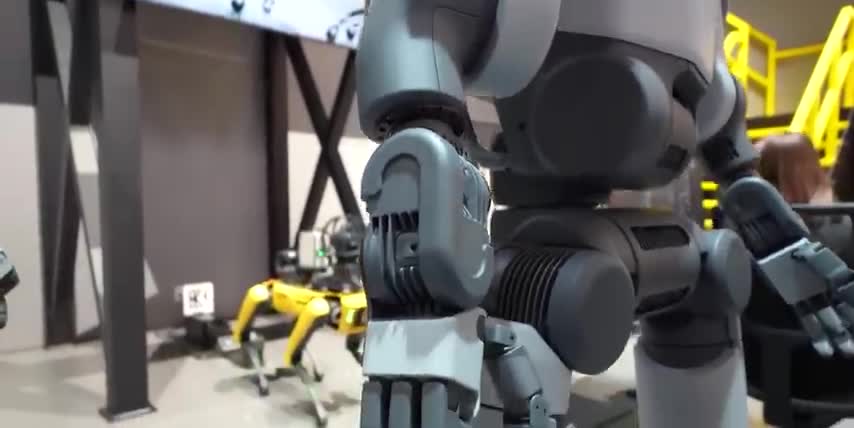
And going back to what I said earlier about platform providers, both Caterpillar and Doosan are partnered with NVIDIA. But let's go back even further to Hyundai and Boston Dynamics, because their parking and charging robots were just the tip of the iceberg. There were two humanoid robots that really stole the show at CES. The first is the new and seriously upgraded version of Atlas.
The previous generation atlas was a platform for locomotion it could do backflips dance run obstacle courses and even do parkour but it used hydraulics it needed a lot of maintenance and it was mainly used for research and demonstrations this new version of atlas is fully electric and redesigned for industrial reliability it has way fewer complex parts it has components that can be mass produced and it's even moisture resistant so it can work inside industrial plants and high humidity warehouses atlas can carry about 60 pounds it can instantaneously lift about 100 pounds and it can operate in temperatures from negative 20 to 40 degrees celsius or about 0 to 100 fahrenheit oh yeah and it can swap its own battery in under three minutes which means it can work almost around the clock.
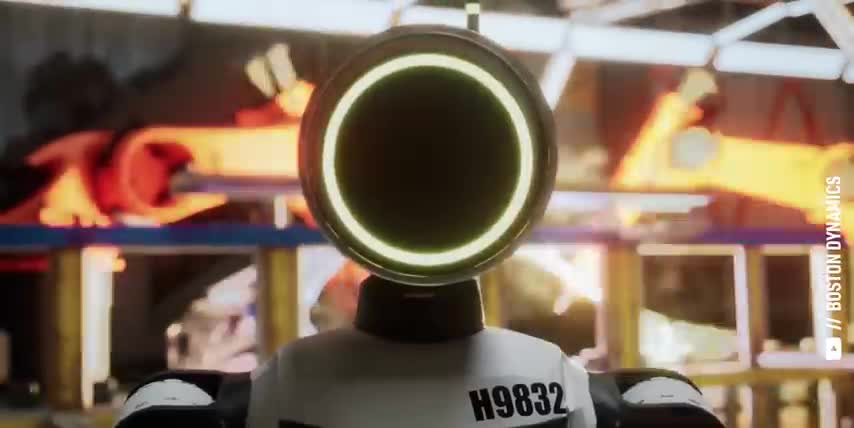
But what really blows my mind is that atlas can rotate its hips torso neck and shoulders a full 360 degrees with no internal cable limits that insane amount of dexterity allows it to instantly turn around without taking a single step making it very useful for tight workspaces it also makes it the second best dancing robot we've ever seen anyway this version of atlas runs a gemini based foundation model made by google deep mind it focuses on coordinated torque control across multiple joints so instead of locking up and then sending one big command at a time this version of atlas continuously blends motion commands across every joint to twist turn and recover in ways that humans can't this is not science fiction hyundai and boston dynamics announced atlas as a commercial product with production already ramping up today initial training and validation deployments scheduled for later this year and factory work starting in 2028 much sooner than i expected but humanoid robots aren't just for heavy industries the other robot that really blew me away was Dynamis by LEMS Surgical.
Dynamis is a commercial FDA cleared robot that's already in routine clinical use for spinal surgeries. This robot is not a prototype. It successfully completed a series of single level and multi spinal fusions alongside human doctors late last year Dynamis is a multi robotic surgical platform specifically designed for hard tissue and spinal surgery Two arms manipulate tools while a third arm carries sensors that give it the best view.
That way it can maintain sub-millimeter precision with its instruments in tight operating conditions even if things change, like if a patient moves during surgery.
patient operating room and surgical team is different making it basically impossible to train on recordings of past spinal surgeries especially without the physical and haptic feedback from the instruments and other sensors instead lem surgical uses nvidia's isaac for healthcare and their cosmos world models to simulate spine anatomy plan procedures and optimize how the robot's arms move and stabilize instruments during surgery think about all the advantages to robots doing surgery.
Robots don't get tired, their hands don't shake, and they can try a surgery 10,000 times in simulation to make the best plan for the real surgery ahead of time. And their higher precision reduces the risk of injury to nerves or blood vessels, fewer misplaced or misaligned screws, less loss of blood, shorter operating times, and even fewer x-rays to align and place the screws.
The big thing I want to point out about these humanoid robots is they're not replacing human workers they're elevating them atlas is filling labor gaps in dull dirty and dangerous jobs handling heavy parts awkward lifting and repetitive part picking and sorting while human workers can focus on designing workflows supervising fleets and quality control and dynamis is an assistive system not an end-to-end spinal surgeon the doctors still plan the case position the hardware and have full control of the operating room but now they get to focus on decision making and managing complications while atlas does the manual drilling the tool placement and the imaging think of it like autopilot in modern day airplanes but in industrial warehouses factories and in operating rooms all right let's recap the biggest insights for investors and if you feel i've earned it consider hitting the like button and subscribing to the channel that really helps me out and it lets me know to do more boots on the ground research like this even if it gets me sick thanks and with that out of the way here's what.
I took away from ces 2026 as an investor robots are not coming soon they're already here robo taxis are already piloting programs and generating real revenues and the hardware for autonomous driving is being baked into more cars every single year but the real upside may not be with fleet operators like uber waymo or even tesla but with platform vendors that sell ai hardware and software to multiple fleets at once industrial robots have been around for decades but they're getting big upgrades thanks to ai caterpillars autonomous earthmovers bobcats ai loaders kubota's self-driving tractors and hyundai's parking robot are turning construction sites warehouses farms and parking garages into software defined spaces and paying dividends to their operators in terms of productivity and scale right now i'm looking into companies like rockwell automation ticker symbol rok and symbotic ticker symbol SYM.
Rockwell provides control systems and software for industrial automation on factory floors, while Symbotic focuses on using robots and AI to automate warehousing and distribution centers. And even humanoid robots are closer than we think. Boston Dynamics is shipping pilot units of Atlas right now, and Lem Surgical's Dynamis successfully completed its first spinal procedures late last year.
But while humanoids have the largest total addressable market, they're also pretty far from being everywhere that humans are today. So for now, my money's on companies like NVIDIA and Google, who provide the hardware, software, and foundation models that other companies build on top of, as well as Microsoft and Amazon, which provide the cloud infrastructure and tooling that many robotic startups use for training, for simulation, and to manage their fleets.
Key Takeaways
- AI is becoming increasingly important in the tech industry, with many companies incorporating it into their products and services.
- Self-driving cars are becoming a reality, with many companies testing and implementing autonomous vehicles on the road.
- Industrial robots are being upgraded with AI, making them more autonomous and flexible.
- Humanoid robots are being developed for a variety of applications, including healthcare and industry.
- Investors should consider companies that provide AI hardware and software, as well as those that provide cloud infrastructure and tooling for robotic startups.
Technology is changing fast, and with those changes come new and exciting investing opportunities, as long as you know where to look. That's why it's so important to understand the science behind the stocks. And if you want to see more science behind the stocks, check out this video next. Either way, thanks for reading, and until next time, this is TickerSymbol: YOU. My name is Alex, reminding you that the best investment you can make is in you..
Checkout our YouTube Channel
Get the latest videos and industry deep dives as we check out the science behind the stocks.