If you bought $10,000 worth of Google stock just three years ago, you'd have over $30,000 today. And if you invested that money in NVIDIA, you'd have over $75,000 right now. That's because these companies are powering the entire AI revolution. But Google and NVIDIA are already worth trillions of dollars. So in this video, I'll show you three smaller AI stocks set to win big for the same reasons. They're becoming the critical infrastructure for the next phase of AI. AI. Your time is valuable, so let's get right into it. First things first, I'm not here to waste your time. This is an update on the top 3 NeoClouds now that they've all reported earnings.
Table of Contents
1. Introduction to NeoClouds
2. CoreWeave Updates
3. Nebius Updates
4. Iren Updates
5. Comparison and Conclusion
6. Key Takeaways
CoreWeave, which has over a quarter million GPUs and 67 billion dollars in contracts, Nebius for sovereign AI and sensitive data, basically the Palantir of AI infrastructure, and Iren, which now has over 4.5 gigawatts of secured power for AI data centers. But over the last few months, all three of these young cloud companies cranked their AI spending even higher, and they missed revenue or earnings expectations, which triggered downgrades, double-digit drawdowns in their stock prices, and even lawsuits. That's why this video is a little late. New information keeps coming out, and I tried to capture it all in one place for you. Either way, these are three of the highest risk, highest reward stocks of the entire AI era.
And by the end of this video, you'll know which ones are actually worth the risk, which which one's to avoid, and which one is the best stock to buy after their massive sell-off. I want to make the best use of your time, so let's start by updating what they all have in common. Their markets, their business models, and the new risks that just showed up in their latest earnings. CoreWeave, Nebius, and iREN are all NeoClouds, which means they sell access to compute infrastructure optimized for AI workloads like training, fine-tuning, and inference. NeoClouds exist because traditional cloud computing companies like AWS, Azure, and Google Cloud were originally built around workloads that run on CPUs. Think email and web servers, processing transactions, database management, and reporting.
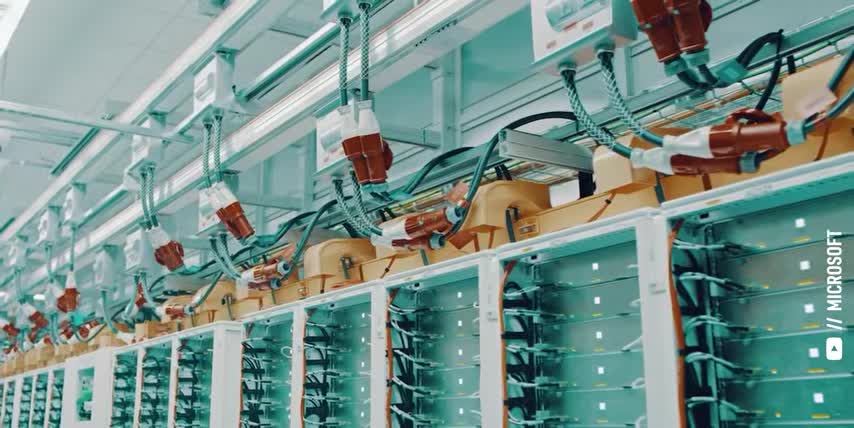
Businesses still need those services, but the general-purpose servers that they run on are too slow and expensive for frontier AI workloads. So, at a high level, NeoClouds are a new class of cloud company with dense racks of GPUs, connected by high-speed networks and filled with advanced cooling, to squeeze the most performance out of every watt, while their software focuses on coordinating clusters of GPUs for AI workloads instead of spinning up CPUs to host websites and databases. All three companies earn revenue when customers rent their AI infrastructure, usually through multi-year contracts, and they're spending so much money because their margins depend on how fast they can acquire land and power, build data centers and deploy GPUs, how much they can keep those GPUs utilized, as well as their pricing power versus their competitors, including Amazon, Microsoft and Google.
Speaking of which, I pointed out that Google and Nvidia made investors rich by powering the AI revolution. Well, the global Neo cloud market is expected to almost 30x in size over the next eight years and become a trillion dollar market by 2034 that would be over a 50 compound annual growth rate for the next eight years which is three times more than the growth of the s p 500 that's the market that core weave nebius and iron are all competing in that's why they have such similar business models and risks and that's why all three underperformed their earnings calls this past quarter, at least according to the headlines. At a high level, they're all spending more money than investors were expecting on land, power, GPUs, and data center infrastructure.
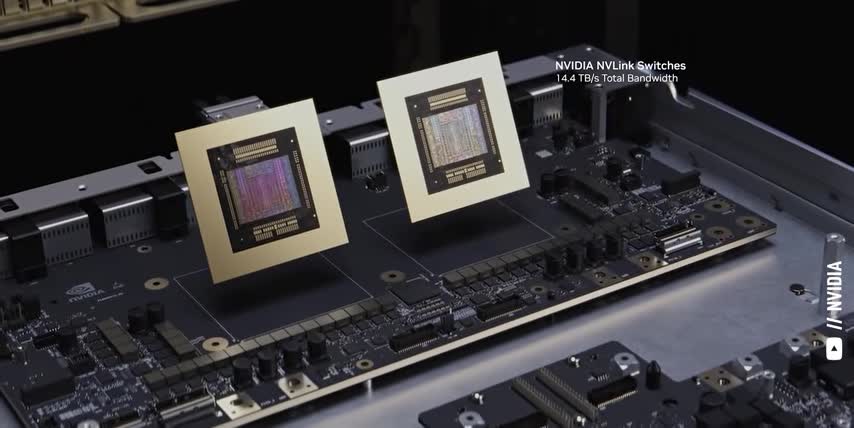
And all three basically told the market that 2026 and 2027 will be years of extremely heavy spending, not maximizing near-term profits. And on all three earnings calls, management said that they're in a race against the clock. They need to lock in land, power, and hardware to turn their multi-billion dollar pipelines into real revenue before their competition can. Remember, in a lot of ways, this is a zero-sum game. Every piece of land, every gigawatt of power, every high-end GPU or memory chip that one company gets is capacity that others can't have, and losing that race is another risk they all share, especially versus the hyperscalers. Corweave, Nebius, and Iren are all still small companies, which makes their stocks very volatile, as I'm sure you've noticed by now.
That's why I'm covering all the risks up front. But we should also talk about their huge upside potential, which is even bigger after their latest earnings calls. So now that we've covered what these companies have in common, let's dive into each one individually to see which stock could be the best investment. But if you've been watching this channel for a while, you know the best investment you can make is in you, especially if you're trying to make a big change in your life. Whether you want to break into a new career and work from home or level up your current job with AI, Careerist has you covered. Their AI automation bootcamp is no joke.
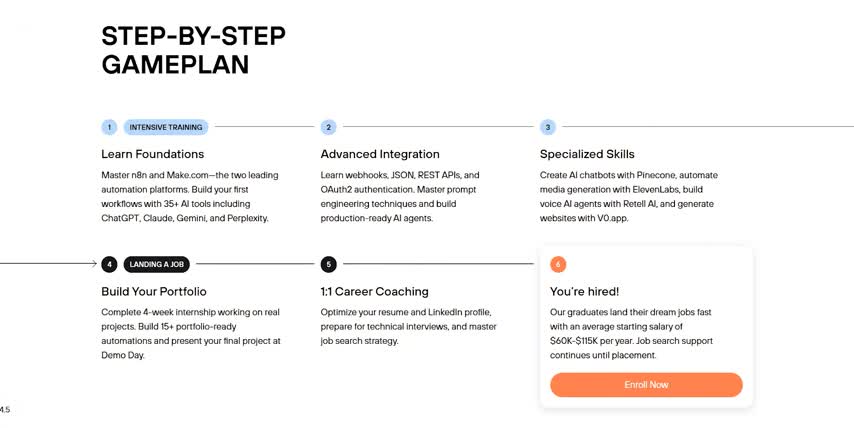
It's about seven hours a week for four months, but it's the fastest path I've found to go from where you are now to making anywhere from 90 to a year working from home with no coding required Careerist got their start at Y Combinator just like Airbnb Dropbox and DoorDash And today they have over a thousand graduates at companies like Google, Amazon, Meta Platforms, Salesforce, and Uber. That's because they don't just train you and leave you hanging. You'll build real automation projects and learn to present them to real employers. They even help you with your resume, cover letter, and interview prep so that you actually get the job. That's why Course Report named them one of the best online boot camps and they have tons of great reviews from their alumni.
Enrollment for the next boot camp closes soon. And spots are filling up fast because big companies need tons of AI and automation professionals right now. So if you're tired of being underpaid and you want a recession-proof career in AI that lets you work from anywhere, invest in yourself today. by using my link in the description to get up to 30% off this awesome AI automation bootcamp. Alright, let's cover CoreWeave's updates first, since they're the current leader of the pack. CoreWeave operates 43 AI data centers with over 850 megawatts of active power generating revenue right now, and over 3.1 gigawatts of total contracted power. NVIDIA Blackwell racks use around 120 kilowatts each.
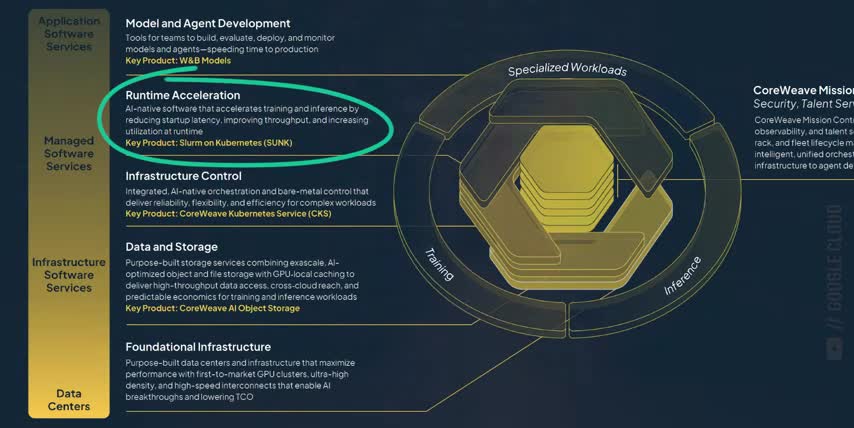
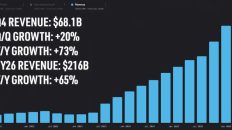
So CoreWeave has enough contracted capacity to power almost 26,000 racks, or almost 1.9 million GPUs across North America and Europe. And CoreWeave sells access to those GPUs either as bare metal chips or full stack instances managed through a mission control pane. CoreWeave's stack has five layers, the GPUs themselves, AI-optimized data storage and networking software to automatically manage and scale AI apps and workloads across many servers runtime acceleration tools to speed up training and inference and application level tools to build test deploy and monitor AI models and agents these full stack instances make their platform much more sticky it gives them higher margins and more pricing power versus their competitors as of their latest earnings call coreweave's quarterly revenue came in at 1.6 billion dollars which is up 110% year over year.
Their full year 2025 revenue was $5.1 billion, up a whopping 168% from the year before. But like I say every time I cover CoreWeave, the special thing about them isn't their revenue growth. It's their revenue backlog, which just hit $66.8 billion after growing by 342% in a single year. And not only is their backlog more than four times bigger than it was a year ago, but their average contract length is now five years instead of four, which is an insane amount of revenue visibility for a company this young. Most of that pipeline comes from a handful of huge AI customers. OpenAI has up to $22.4 billion worth of contracts with CoreWeave across several expansions, making it one of the single largest infrastructure deals in the entire AI ecosystem.
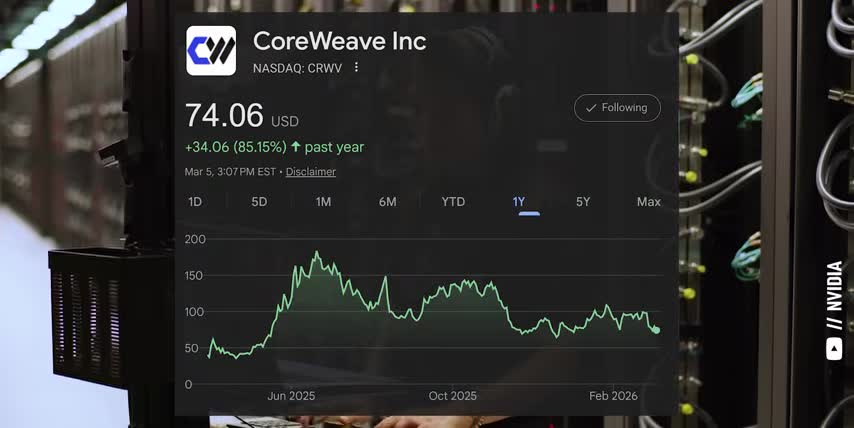
MetaPlatforms has another $14.2 billion agreement to access CoreWeave's Nvidia Blackwell Ultra systems through 2031. And they have a $6.3 billion cloud capacity order from Nvidia themselves, where they'll purchase any unsold cloud capacity from CoreWeave through April of 2032. By the way, Nvidia recently invested another $2 billion into CoreWeave at $87.20 per share, as part of a bigger deal to build more than 5 gigawatts of AI factories by 2030. At the time of this recording, Corweave is trading at $75 per share, or more than 10% cheaper than what Nvidia just paid for the stock. That aside, management is guiding for $12 to $13 billion in revenue for 2026, which would be another 140% year-over-year jump.
The reason the stock dropped after earnings is because Corweave plans to spend 30 to 35 billion dollars in capex this year alone and they already have more than 21 billion dollars of debt on their balance sheet so investors are worried that their backlog doesn't justify all that upfront spending.
On top of that, there are several shareholder lawsuits claiming that Coreweave oversold how fast they could turn their massive backlog into real revenues.
Full disclaimer, I'm not a lawyer and this is just my personal, non-professional opinion on what's going on here.
From what I can tell, these are all civil securities cases, not criminal fraud charges, basically a bunch of law firms want to represent shareholders who bought Coreweave stock after the IPO and then lost money when the stock dropped due to guidance cuts, data center delays, and the recent sell-off around earnings.

The core argument is that Coreweave didn't fully spell out all the risks associated with their data center strategy and supply chain for investors.
This kind of lawsuit is very common for any stock that has a crazy IPO and then falls back to earth, and the cases are almost always about the same thing: big forward-looking statements about growth that later look overly optimistic when reality forces a company's leadership to lower guidance.
Usually, these kinds of lawsuits get dismissed or settled for small amounts of money because the legal bar is so high, the courts would have to find that specific executives either knowingly or recklessly misled investors, not just that they were bullish and then wrong.
If Corweave's disclosures have all the right language and there's no clear evidence that management intentionally hid major problems, the entire case falls apart.
Personally, as a Coreweave shareholder myself who listens to all the earnings calls, I didn't feel blindsided by anything that's come out so far.
So I see these lawsuits as noise rather than something that changes my long-term thesis on the stock, which is still very positive, given CoreWeave's massive $67 billion backlog, their full-stack AI cloud platform, the huge amount of contracted power they have, and their massive data center footprint, all of which make them a clear long-term winner in this quickly growing market. Alright, let's cover Nebius next. Nebius is a neocloud focused on sovereign AI and regulated industries, like healthcare and financial services, kind of like Palantir, but for AI infrastructure. As of their latest earnings, Nebius made about $228 million in quarterly revenue.

That's much smaller than CoreWeave, but it's also growing a lot faster, up 547% year over year, with their core AI cloud revenue growing by over 800%. Nebius hit a $1.25 billion annual run rate at the end of last year, which beat their own guidance, and management is still targeting a 7 to 9 billion dollar run rate by the end of 2026 with 3.2 billion dollars in full year revenue that's another six or seven x jump in a single year and just like core weave the plan together is a mix of massive hyperscaler contracts and very aggressive capex nebius has a 17.4 billion dollar five-year ai infrastructure deal with microsoft and a separate three billion dollar five-year deal with Meta.
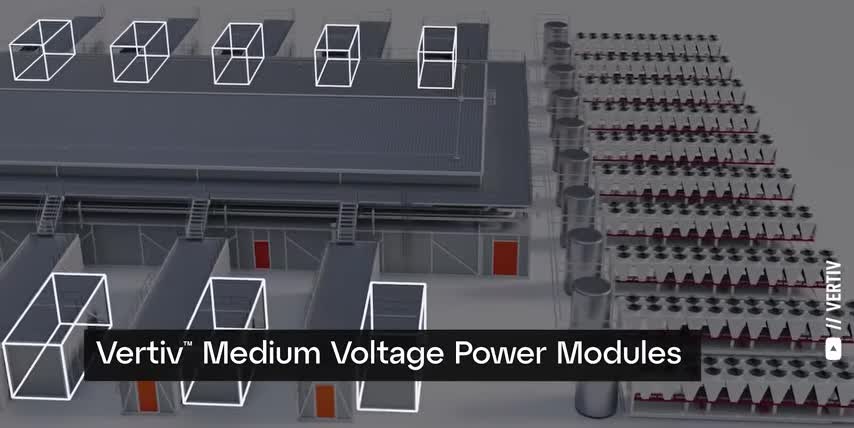
Just those two contracts are roughly $20 billion of committed AI infrastructure revenue, which means that Nebius' capacity is effectively sold out through early 2026. That's exactly why they're spending around $18 billion in CapEx to grow that capacity. By the end of 2025, Nebius had around 170 megawatts of active power, well above their original 100 megawatt target. They deployed five new locations and secured nine additional sites, ending the year with 16 sites and more than two gigawatts of contracted power locked in for their future growth. But Nebius is doing more than just renting GPUs to regulated industries.
In 2025, they acquired AVRIDE, an autonomous vehicle company, and then teamed up with Uber on up to $375 million of investments and contracts for robo-taxis and delivery robots. And just last month, they agreed to acquire an agentic search startup called Tavali for around $275 million. That gives Nebius search infrastructure specifically for AI agents in areas like coding and financial trading, which will bring hundreds of thousands of developers into their ecosystem. Nebius' management is clear about their goal here. They want to be a full platform for building and running AI products and agents, the infrastructure, the software stack, and now agentic search. so big customers don't have to stitch those pieces together from multiple vendors.
For investors, Nebius looks a lot like CoreWeave, but starting smaller and growing faster, with a clear path to billions in recurring revenue and extra upside from businesses like AVRIDE and TAVALI. The risks are even more pronounced here. $18 billion in CapEx and a schedule that can't afford to slip on data center construction or on power delivery, which still needs additional financing even with Nebius' strong cash balance and customer prepayments. But as an investor, I think that Nebius still brings a lot to the table. A strong focus on governments, banks and healthcare, plus real optionality in robo-taxis and a gentic search.
If they can execute on everything they're building, this could be one of the fastest growing and most diversified AI infrastructure stocks to buy for the long term. And that brings us to iREN, the highest risk, highest reward stock of the three. iREN's latest quarter looked bad on the surface. Revenue came in at $185 million, which missed estimates by almost 20%, and is down 23% quarter over quarter. Like I say every time I cover iREN, that decline is due to them shifting capacity away from Bitcoin mining and towards AI. Bitcoin mining revenue fell by about 28%, as IREN lowered their own mining output and Bitcoin prices fell over the quarter.
IREN posted a net loss of about $155 million, but that's mostly due to $219 million of non-cash items related to converting their debt to equity and depreciating their Bitcoin mining infrastructure, all of which I covered in my most recent IREN video. If we remove those one-time non-cash expenses, their adjusted EBITDA was actually a positive $75 million at about 41% margins, so the business isn't actually in any trouble. But their AI cloud revenue jumped to $17.3 million, which is up 137% quarter over quarter, and now accounts for almost 10% of their total revenue.
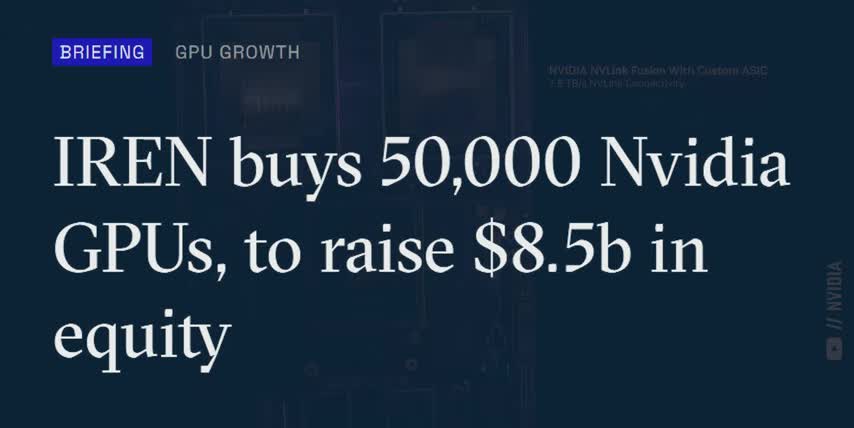
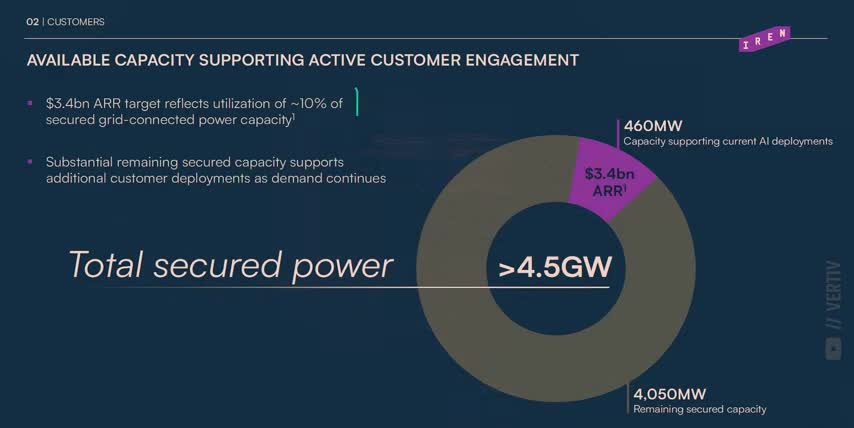
The biggest highlight from their earnings is that IREN now has more than 4.5 gigawatts of secured, grid connected power around 50 more than they had a quarter ago and they still expecting to hit a run rate of 3 of AI cloud revenue by the end of 2026 That would be a 7x revenue increase year over year And that would still only use about 10% of their total power capacity, which means they can keep signing many more multi-billion dollar deals as that power capacity comes online. But right as I was recording this video, IREN announced that it signed contracts for over 50,000 additional NVIDIA Blackwell Ultra GPUs, bringing their total target GPU fleet to 150,000, with deployments happening through the second half of 2026.
That added capacity can support over $3.7 billion in annualized AI cloud revenue, which is slightly up from the $3.4 billion target that I just mentioned. IRON says that they've now secured $9.3 billion in total funding over the past 8 months to support their AI pivot. But now they expect to finance another $3.5 billion of capex for those additional 50,000 GPUs and the related infrastructure. The reason the stock is down is because of the $6 billion at the market equity program they also just announced, which could dilute shareholders by about 140 million new shares or 42 percent of their current flow just to be clear that doesn't mean that shareholders are about to get diluted by 42 percent they just registered for the ability to sell new shares over time at market prices without having to do a big offering all at once nothing says that they have to use the full amount and the higher the stock price the fewer shares that they need to sell to raise the money they need as a long-term investor i think this latest announcement proves that IREN is actually executing on their AI pivot.
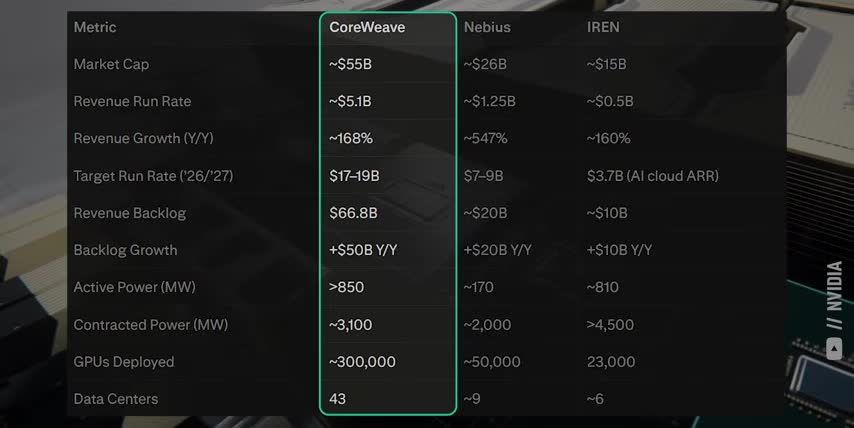
They locked in 50,000 more GPUs and they found new funding pads as they keep ramping down their bitcoin revenues.
They have a fully contracted 9.7 billion dollar deal with Microsoft, over 4.5 gigawatts of secured power, and a concrete plan to scale to 150,000 GPUs and 3.7 billion dollars in ARR by the end of this year if they can hit their milestones on time.
The last few quarters will look like noise but if they slip on construction on power delivery or on financing the stock will stay extremely volatile that's why i think they're the highest risk highest reward investment of the three.
All right before we can decide which of these stocks is the best buy right now here's an updated table summarizing everything i've covered just like last time i built this table myself by pulling numbers from each company's earnings and i tried to make every row as apples to apples as i could.
But remember all three companies have different fiscal calendars different contract lengths with hyperscalers and they ramped their revenues and backlogs from very different starting points the metrics i use like number of gpus and number of data centers are all approximations that depend on what actual gpus they end up deploying the amount of cooling they use and how you count individual facilities versus larger campuses.
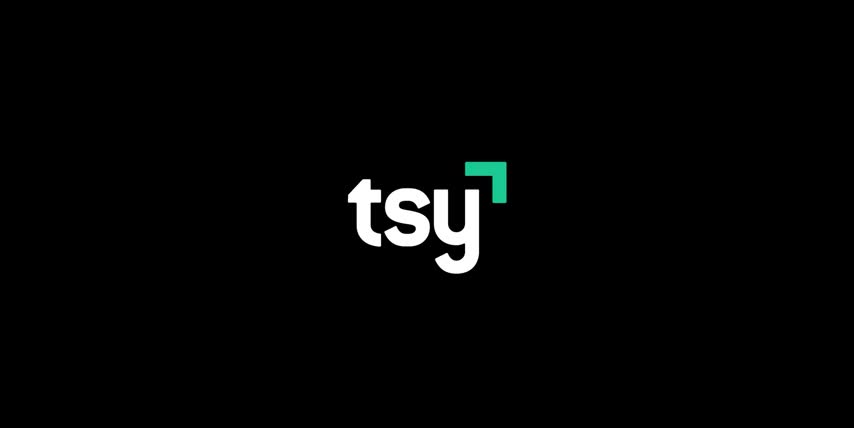
So this table is a good way to compare their size but these aren't official numbers and now that we have all that context we can finally answer the big question which of these three neoclouds is the best investment right now and if you feel i've earned it consider hitting the like button and subscribing to the channel that really helps me out and it lets me know to make more content like this.
Thanks now let's compare these three stocks in my opinion core weave is still the clear winner of the pack they have the biggest revenues the deepest backlog the most gpus the broadest data center footprint and nvidia directly backing multiple gigawatts of their build out.
If you're a growth investor who wants a company to prove their product market fit and have huge partners de-risking their spending core weave is still the company for you nebius is quickly growing into the go-to neo cloud for sovereign and regulated ai smaller revenue today but now already over a billion dollar run rate with multi-year multi-billion contracts with microsoft and meta.
So if you're already all right with the risks and the volatility but you want to own the palantir of ai infrastructure nebius is the way to go especially with the extra potential upsides from autonomous vehicles and agentic search iron is still the stock for investors who like optionality and diversification in a world where data centers are power limited.
Iron has 4.5 gigawatts of secured power giving them a ton of flexibility in how they monetize their infrastructure over time personally i'm still happy dollar cost averaging into all three because i believe that this capital intensive build out is laying the foundation for the entire ai revolution.
If i had to pick a winner now based only on the current price and scale i'd still go with iron since they have the most power secured while also being the smallest of the three but i still think that core weave is the best stock for newer portfolios since they already have their scale and nvidia as a serious partner giving them the best risk to reward ratio of the three.
Let me know which of these stocks you're buying below or if you want me to make another deep dive video on any of them and if you want to see even more science behind the stocks check out this video next either way thanks for watching and until next time this is is ticker symbol you my name is alex reminding you that the best investment you can make is in you.
Key Takeaways
- CoreWeave, Nebius, and Iren are three NeoClouds that are becoming critical infrastructure for the next phase of AI.
- They have similar business models and risks, but differ in their approach and focus.
- CoreWeave is the current leader, with a strong backlog and Nvidia's backing.
- Nebius is growing fast, with a focus on sovereign AI and regulated industries.
- Iren is the highest risk, highest reward stock, with a strong focus on power and infrastructure.
- The best investment depends on individual risk tolerance and investment goals.
Checkout our YouTube Channel
Get the latest videos and industry deep dives as we check out the science behind the stocks.