Table of Contents
1. Introduction to Quantum Computing
2. IonQ
3. Regitti Computing
4. D-Wave
5. Key Takeaways
Introduction
If you put ,000 into Apple at the start of the smartphone era, you'd have over half a million dollars today. If you invested that money in NVIDIA, when ChatGPT started the AI era just three years ago, you'd already have over a hundred grand. Well, three big breakthroughs just kicked off the quantum computing era, and it's already something we can invest in. My name is Alex, and I spent eight years as an electrical engineer and AI researcher at MIT, And I've never seen back-to-back breakthroughs this big. So let me show you what just happened and how I'm investing in it. Your time is valuable, so let's get right into it. I want to start this post in an interesting place. CES 2025, the consumer electronics show in Las Vegas.
I was there in person when, during a press Q&A session, Jensen Huang told the world that useful quantum computers were 15 to 30 years away. The market reaction was instant and it was brutal. Ion Q dropped by about 39% in one day, Regetti fell by 45%, and D-Wave crashed by 36%. One sentence from one CEO cratered an entire class of stocks. And then, something strange happened. Two months later, when I was at NVIDIA GTC 2025, I saw Jensen change his tune. He said that quantum computing was closer than he thought, and he hosted the first ever NVIDIA Quantum Day. Three months after that in Paris, he said that quantum was reaching an inflection point, and that it was going to solve some real problems in the coming years.
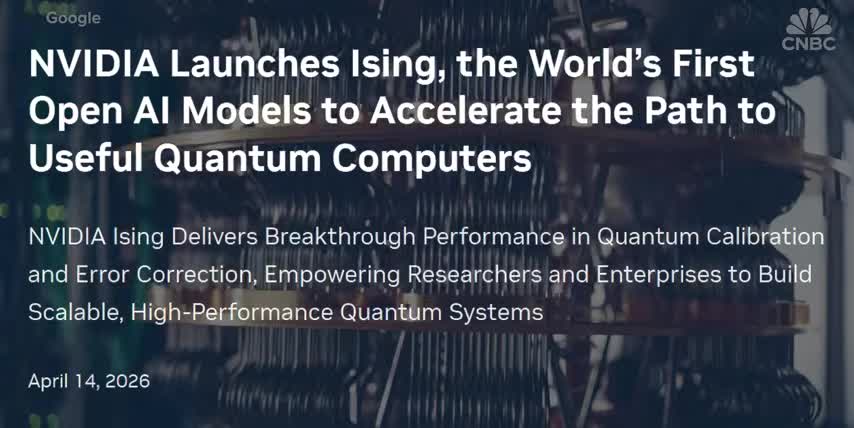
Those comments ended up fueling the massive bubble in quantum computing stocks late last year. That bubble was so big that I decided not to cover quantum at all. Everything was already priced to perfection. But now, the bubble is behind us, and something big just happened. Just two weeks ago, NVIDIA shipped an open-source software stack called iSing, which figures out how to split a problem between GPUs and quantum computers to get the best of both worlds. And they put IonQ on the shortlist of early adopters. In the 10 years that I've been investing in NVIDIA, I've never seen Jensen change his stance on any technology so fast. But now, I understand why.
On the same day that NVIDIA shipped Icing, IonQ announced the first photonic interconnect between two separate commercial quantum processors. In English, that means that IonQ linked two quantum chips together and got them to act like one. Kind of like how Nvidia's Blackwell GPUs get two compute dies to act like a single chip. That same day, DARPA picked IonQ for a two-year program called Hark, effectively giving them federal funding to scale their quantum systems. And just one week before that, Regetti made the first 100-plus-qubit quantum computer generally available on AWS, which means you can now rent a state-of-the-art quantum computer the same way you'd rent a regular server.
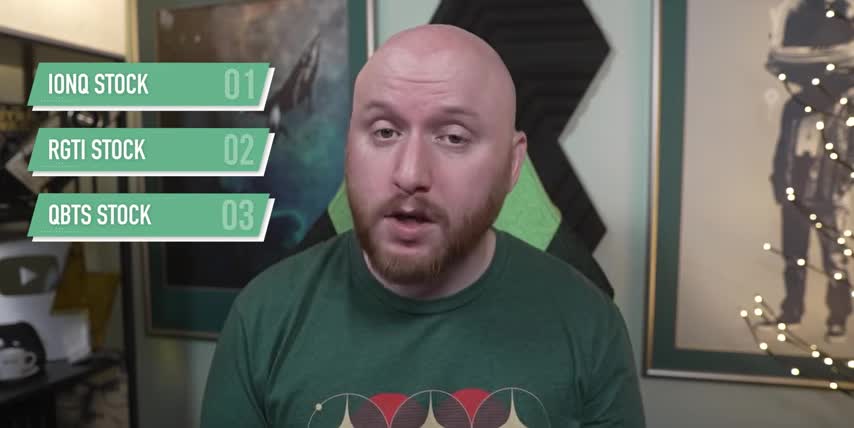
So, in just one week, NVIDIA released software to control quantum computers along with GPUs, IonQ figured out how to connect theirs together, and Rigetti put theirs on the cloud. Quantum computing is no longer science fiction; it's an entire market sector that's finally worth investing in. Here are the three stocks I'll use to explain the market: IonQ, ticker symbol IONQ, which uses photons to scale beyond single quantum chips; Rigetti Computing, ticker symbol RGTI, which has a 108-qubit processor you can already rent on AWS; and D-Wave, ticker symbol QBTS, a quantum company already solving big problems for major customers.
I want to make the best use of your time. So let's start with what these companies have in common. And what a quantum computer even is. In classical computing, a bit can either be a zero or a one. Just like a coin can either be heads or tails. That's it. Every piece of software you've ever used, every app on your phone, every AI model, every spreadsheet, runs on those two binary numbers, one or zero, heads or tails, flipped billions of times every second. A qubit is like a weighted coin where you can choose the weight. Before you flip it, it has some probability of heads and tails at the same time. You only know which way it landed once you flip the coin and you look at it.
So until you see the result by measuring a qubit, it still has the probabilities of both 1 and 0, heads and tails. Now take a bunch those quantum coins and link them all together so that when you check one you instantly know how all the other coins could land they follow a shared pattern instead of flipping independently that's quantum entanglement or at least it's my best attempt at understanding it and when you entangle a system of qubits together the math gets wild really fast a single qubit has two possible states 0 or 1, heads or tails. A system of 2 qubits has 4 states, 00, 01, 10, or 11.

A system of 3 qubits has 8 states 8 is 2 to the 3rd power That means a system of 300 entangled qubits has 2 raised to the 300 different possible states which is more possibilities than there are atoms in the observable universe That why quantum computers are exponentially more powerful than classical ones, at least for certain kinds of problems, like optimization, simulation, cryptography, and certain kinds of machine learning. But there's a catch. Qubits are insanely fragile, and things like heat, vibration, or even a single stray photon can knock them out of their shared pattern.
them back into regular ones and zeros that's called decoherence keeping a qubit stable long enough to actually run a useful calculation is the entire name of the game and every company in this video is making a different massive bet on the best way to do it.
at the start of this video i pointed out that apple and nvidia made investors rich by being the cornerstone companies of the mobile and ai computing eras well the global quantum computing market is expected to more than 20x in size over the next 10 years and could become a 40 billion dollar market by 2035 that's almost as fast as the growth of the ai market itself.
according to market us the global artificial intelligence market is expected to almost 19x in size over the next nine years which is a compound annual growth rate of 38.5 percent through 2034 but many of the companies building next generation ai applications are not publicly traded think about the 90s and early 2000s companies like amazon and google went public very early in their growth cycle but today they're waiting an average of 10 years or longer to go public.
that means investors like us can miss out on most of the returns from the next amazon the next google the next nvidia
they have an impressive track record already investing over 500 million dollars in some of the largest most in demand ai infrastructure and space launch companies so if you want access to some of the best late stage companies before they ipo check out vcx by fundrise with my link below today.
all right so the quantum computing market is expected to grow at a 36 compound annual growth rate for the next decade over two times faster growth than the s p 500 and that's before nvidia started building infrastructure to support it which will obviously increase adoption and that brings us to nvidia themselves.

nvidia isn't building a quantum chip they're building the infrastructure between everyone else's quantum chips and their own gpus late last year at nvidia's gtc dc conference they announced something called nvqlink a super fast connection that lets gpus send instructions and read results in just a few millionths of a second.
That's fast enough for GPUs to watch the qubits, correct their errors, and adjust things along the fly before the system decoheres. And then, just a couple weeks ago, they released iSing. That's an open-source AI toolkit that helps quantum chips fix their own errors in real time. iSing also speeds up quantum calibration, which is a process that took days but now takes just hours. As an investor, this made one thing crystal clear for me. NVIDIA doesn't think quantum computers are going to replace GPUs, or else they obviously wouldn't build systems to support them. Instead, they see quantum computers plugging into our current data center infrastructure to help with very specific kinds of workloads.
So the future will be about hybrid computing, a mix of CPUs, GPUs, and QPUs all working together. But even if that happens, these companies still have some serious risks that you need to know about. First, their revenues are still small. IonQ is the only one over $100 million in revenue. Rigetti made just $7 million last fiscal year, and D-Wave made around $25 million. That's why their stocks can move by 30, 40, even 50% in a single day, in either direction, just like we saw over the last year. Second, they have serious customer concentration. Most of their money today comes from government and defense contractors, so any budget cuts would hit all three at once.
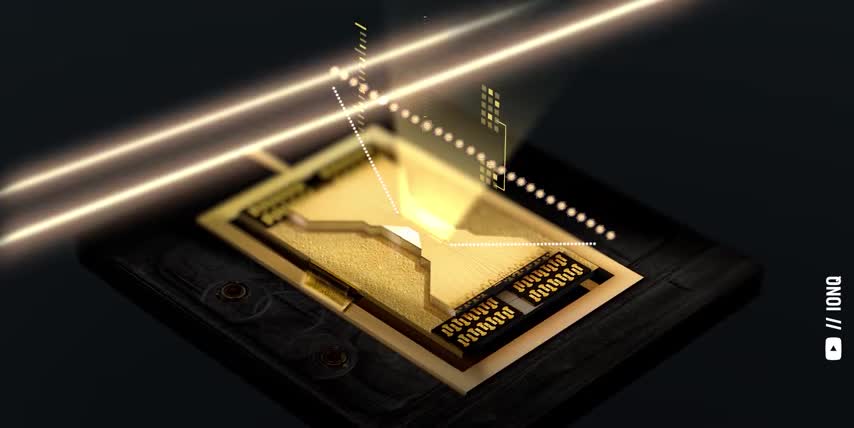
And third, like I'm about to explain, well, explain, all three companies have fundamentally different approaches to quantum computing. That means today's winners could be tomorrow's losers, and you need to know that going in. Alright, IonQ is the current front-runner in public quantum hardware. If I had to boil them down to a single sentence, IonQ is the closest thing to being the nvidia of quantum computing if their approach ends up being the right way to go ion q uses something called trapped ion systems which uses charged atoms as the qubits the coins we talked about before it holds them in place with electromagnetic fields and it controls them with lasers this trapped ion approach gives ion q some of the highest quality qubits in the industry they run slower but they also have fewer errors which means you can run them longer before the decoherence kicks in And importantly trapped ion systems are the easiest kind to network multiple chips together.
Here's why that matters. The hard part about scaling quantum computers is that a single chip tops out at a few hundred qubits. But it takes tens of thousands of qubits to do things like certain kinds of cryptography, simulate real chemistry, and optimize global supply chains. So how do you scale from 100 to 10,000? You can try to build one giant chip, but nobody's figured out how to do that. Or you can network multiple chips together. That's exactly what IonQ just did last week, when they announced the first photonic interconnect between two quantum processors. Proving this could even be done is a serious milestone the entire industry has been chasing since the 1990s. The path from 100 qubits to 10,000 is no longer science fiction. It's just a matter of time, money, and engineering.
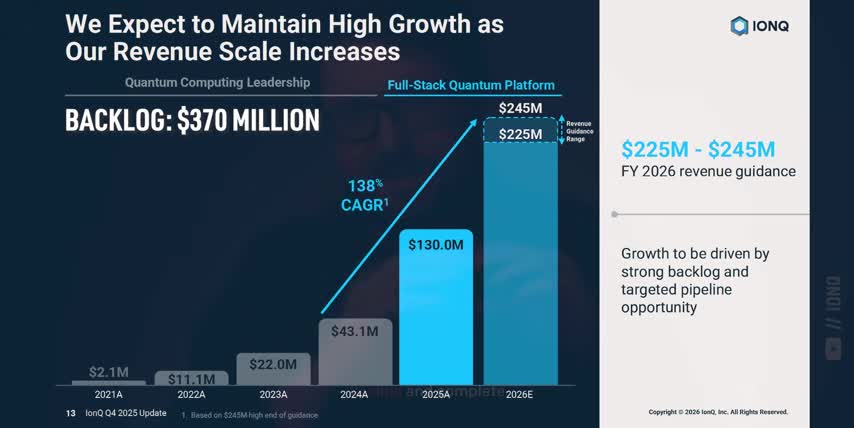
On the same exact day, DARPA added them to a program called HARC, Harnessing Quantum Computing at Scale, which basically means the U.S. Department of Defense is willing to bet real money on IonQ's solutions. And speaking of money, week, IonQ reported $62 million in revenue last quarter, which is up a massive 429% year over year. They made $130 million for the full year, which is more than triple their year before, making them the only public quantum computing company to cross the $100 million mark. But the special thing about IonQ isn't just their revenue, it's their backlog, which grew to about $370 million, or almost three times their last year's revenue. And they're guiding for $235 million this year, which would imply around 80% revenue growth for 2026.
One thing to be careful with, they reported a net income of $754 million. But that number was driven by a non-cash warrant re-evaluation gain of $950 million. That means they actually had an operating loss for the quarter, and their management actually expects larger losses in 2026 as they keep investing in their systems. On the balance sheet, IonQ has roughly $3.3 billion in cash and short-term investments. That's a massive war chest for a company this small, and exactly what you want to offset so much execution risk. For investors, the takeaway here is simple. IonQ has the biggest backlog and the strongest balance sheet in quantum computing, but you're still betting on an unprofitable, highly volatile stock where the core technology has real risks and the market is still very small.

That's what I mean when I say get in early, but getting in early is a double-edged sword. Alright, let's talk about Regetti computing next. If Jensen Huang is right that quantum computers will work with GPUs instead of replacing them, then Regetti is set up to win big. It's already plugged directly into Nvidia's NVQ Link and CUDAQ stack for hybrid workloads. So any enterprise that wants Nvidia's stack and quantum computing will be running on Regetti's hardware. Quantum computers from Google, IBM, and Regetti all rely on superconducting systems, which use tiny electrical circuits that are cooled so close to absolute zero that they behave like artificial atoms.
They run around 4,000 times faster than the trapped ion qubits from ion q, but their errors are so much harder to control that they only end up being something like 10 times faster in practice.
Those errors also make superconducting systems much harder to scale, but unlike IBM or Google, Rigetti is the only way to invest directly in this technology without investing in all the other much bigger business units as well.
Rigetti also has the first 100 plus qubit processor available on AWS, AWS is the default cloud computing infrastructure for millions of developers around the world, and they all just got access to Rigetti's quantum computer.
Now, here's where Rigetti looks very different from a company like IonQ, their Q4 2025 revenue was just 1.9 million dollars, and it was down 18 year over year.
Their full year 2025 revenue was just 7.1 million dollars, so Rigetti is still a pre-commercial company, and valuing them based on revenue won't get you very far.
Instead, I'm watching their cash position and their milestones, are they increasing the number of qubits in their systems, are more AWS customers using their chips, and are they getting more partnerships with hyperscalers, in general, with government agencies, and are they getting more integrated with Nvidia.
Rigetti finished the year with about 590 million dollars in cash, and they're burning about 20 million dollars a quarter, that means they have about 30 quarters of cash runway, or about 7.5 years.
So, don't mistake their lack of revenue for a lack of funding, and that brings us to D-Wave, the only company with a commercial product that customers actually pay for today, not pilots and not research partnerships.
Quantum annealing, like the kind in D-Wave's Advantage line of systems, isn't really a general-purpose computer, it's a specialized machine built to solve optimization problems like scheduling, routing, and materials design.
The important thing for investors to know about this one is that companies like Volkswagen, Google, NASA, and Lockheed Martin already pay to run workloads on D-Wave's systems today.

In January of this year, D-Wave closed a 550 million dollar acquisition of Quantum Circuits Inc, which gives them a gate-based quantum platform on top of their existing annealing business.
Gate-based superconducting is more of a general-purpose quantum computer, which complements D-Wave's more specialized quantum annealing systems, for investors, that means that D-Wave has two different quantum architectures under one roof.
So, D-Wave doesn't have to win the war to survive, they only need one of them to work out long term, that optionality is the unique thing about D-Wave.
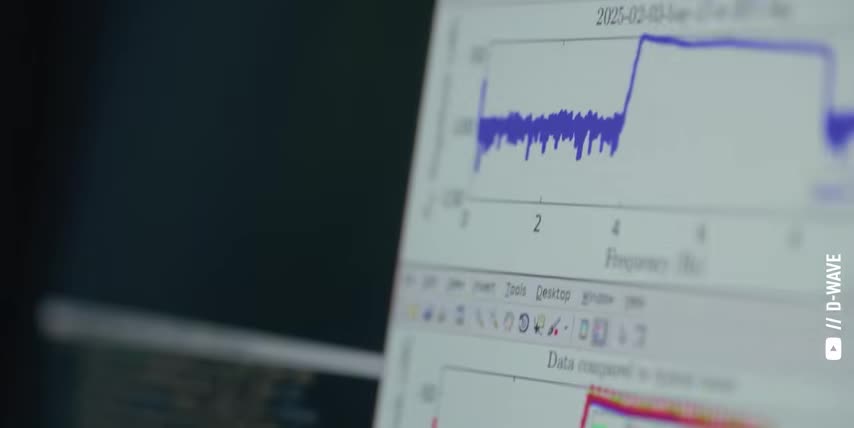
Last quarter, D-Wave's revenue came in at $2.8 million, up 19% year-over-year. But their business is still spiky and driven by big deals. Full-year 2025 revenue came in at $24.6 million, which was actually up 179% year-over-year. In January and February of this year alone, they reported $32.8 million in new bookings, already more than their entire 2025 revenue in just two months on april 14th at the semaphore world economy summit d-wave's ceo said that nvidia should be shaking in their boots when it comes to quantum that line landed on the same day that nvidia launched icing and d-wave stock skyrocketed by around 50 percent that week d-wave has around 630 million dollars on their balance sheet and and that's after acquiring Quantum Circuits Inc.
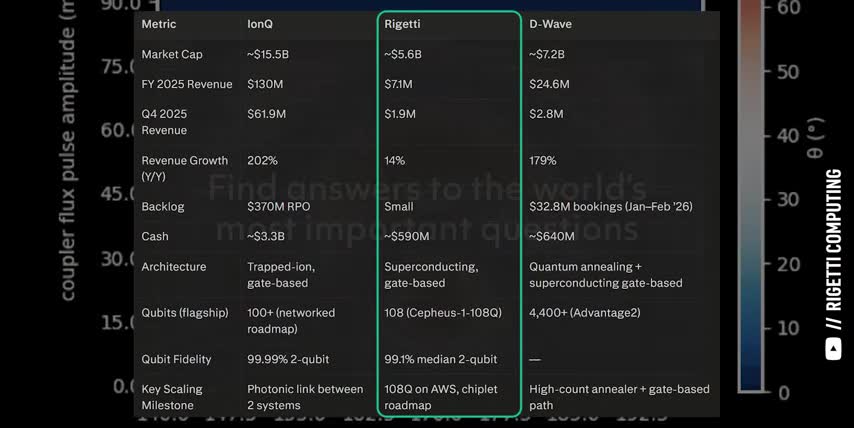
They're currently burning around $70 million a year, which gives them almost a 9-year cash runway. So, as an investor, I like that D-Wave has all the funding they need until they can become profitable themselves. Alright, before we can decide which of these three stocks is the best buy right now, here's a table summarizing everything I covered. As you read through it, just keep a few things in mind. I built this table myself by pulling numbers from each company's latest earnings call, and I tried to make each row as apples to apples as possible. But IonQ, Regetti, and D-Wave all have different customers, different contract lengths, and fundamentally different approaches to quantum computing. So take this table as a good way to compare them, but not as official audited numbers.
And now that we have all that context, we can answer the big question, which quantum computing company is the best investment right now? And if you feel I've earned it, consider hitting the like button and subscribing to the channel. That really helps me out and it lets me know to make more content like this. Thanks, now let's talk about IonQ, Regetti and D-Wavestock. IonQ is the clear leader of the quantum computing pack. Their revenue grew by 428% year over year. They have a backlog of $370 million and they're the only public company to link two commercial quantum computing chips together.

So if you're the kind of growth investor who waits for a company to prove its product market fit at scale before risking your own money, ionq is probably for you.
If you believe that the future of quantum computing isn't overtaking cpus and gpus but working alongside them, then ruggedi is the company connected to nvidia's stack with nvq link and cuda q, and they already have a quantum processor that any aws customer can rent.
Just remember this is the smallest company with the smallest revenue and cash position of the three, so if you can stomach some execution risk and volatility in exchange for a shot at owning nvidia's quantum future, righetti may be the stock for you.
And d-wave is for investors who like having their cake and eating it too, they already have paying customers today and you get exposure to two different quantum architectures instead of betting on one, quantum annealing and the gate-based superconducting architecture from their quantum circuits acquisition.
D-wave is growing almost as fast as ion q, but from a much smaller base, which isn't that big of a deal since they already have enough cash to last for almost nine years.
Personally, I want to own all three stocks for one simple reason, all three companies have fundamentally different approaches to building quantum computers at scale and I don't know enough about the space to reliably pick a winner, so this is one of those times where I'd rather own the entire market than bet on a single stock.
If I had to pick a winner based purely on market cap versus revenue backlog and growth potential, I'd pick ionq because they're already over a hundred million dollars in annual revenue, they have a 370 million dollar backlog and they're still growing by over 200 per year, so to me they have the best risk to reward ratio of the three.
But one thing's for sure, quantum computing is quickly moving from science fiction to a future worth investing in, let me know which stock you're buying below, all three companies report earnings in early may, so let me know if you want me to follow up with a deep dive video on any one of them.
And if you want to see more science behind the stocks, check out this video next. Either way, thanks for watching and until next time, this is ticker symbol U. My name is Alex, reminding you that the best investment you can make is in you.
Introduction to Quantum Computing
Quantum computing is an emerging technology that uses the principles of quantum mechanics to perform calculations and operations on data. It has the potential to revolutionize various fields, including medicine, finance, and cybersecurity.
IonQ
IonQ is a leading company in the quantum computing industry, known for its trapped ion systems and high-quality qubits. Its revenue has grown significantly, with a backlog of $370 million and a strong balance sheet.
Regitti Computing
Regitti Computing is another key player in the quantum computing market, with a focus on superconducting systems and a partnership with Nvidia. Its revenue is smaller compared to IonQ, but it has a significant cash position and a growing customer base.
D-Wave
D-Wave is a company that specializes in quantum annealing and has a commercial product that customers can use today. It has a unique approach to quantum computing and has acquired Quantum Circuits Inc to expand its offerings.
Key Takeaways
Here are the key points to consider when investing in quantum computing companies:
- Ioniq has a strong balance sheet and a growing revenue backlog.
- Regitti Computing has a partnership with Nvidia and a growing customer base.
- D-Wave has a unique approach to quantum computing and a commercial product.
- Quantum computing is a rapidly evolving field with significant growth potential.
- Investors should consider the risks and opportunities of each company before making a decision.
Checkout our YouTube Channel
Get the latest videos and industry deep dives as we check out the science behind the stocks.