This is one of the biggest wealth opportunities I've seen in over 10 years of investing. And it's much bigger than most investors realize, because it'll hit the market three separate times. Wall Street isn't ready for it. The media doesn't see it coming. The signs are already showing, but almost no one is paying attention. My name is Alex, and I spent eight years as an electrical engineer and AI researcher at MIT, which helped me find stocks like Nvidia, TSMC, and Micron years before the rest of the market. This is the kind of setup that will make investors rich, as long as they know what to look out for and when. That's exactly what I'll show you in this video, because it's the best way to get rich without getting lucky. Your time is valuable, so let's get right into it.
Table of Contents
1. Institutions and Fund Managers
2. Nasdaq Rule Update
3. Impact on Nasdaq 100
4. Forced Selling Explained
5. Nvidia Analysis
6. Alphabet / Google Insights
7. Key Takeaways
Institutions and Fund Managers
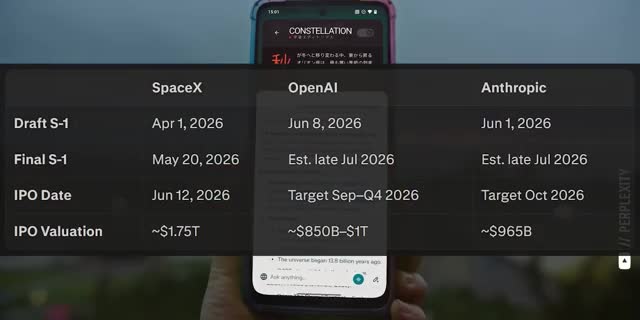
Institutions and fund managers are about to sell trillions of dollars worth of great stocks against their will, which could present a huge buying opportunity for us. You probably already know that SpaceX is listing on the NASDAQ on June 12th at a $1.75 trillion valuation, making it the biggest IPO in stock market history. But there are two more massive IPOs right behind it. On June 1st, Anthropic, which is the frontier AI lab behind Claude, filed their draft S1 paperwork to kick off the IPO process at a valuation of $965 billion. And on June 8th, OpenAI filed their draft S1 as well, targeting a valuation of over a trillion dollars. While Anthropic and OpenAI don't have listing dates yet, SpaceX took about 10 weeks to go from their first draft to their first day of trading.
Nasdaq Rule Update
If the others follow a similar schedule, we're looking at two massive IPOs this fall, Three of the most valuable private companies in history, all heading to the same one exchange, all inside the same four-month window. They're expected to be worth close to $4 trillion combined. And every dollar of that is about to be in the NASDAQ 100 index, which means the stock already inside it have to get sold to make room. That's the part that Wall Street isn't ready for. That's the part the media is ignoring. And it could happen way sooner than most investors expect. On May 1st, the Nasdaq quietly updated the rules that decide how and when a company can join the Nasdaq 100, the index that tracks the 100 largest non-financial companies on the exchange.

Before May 1st, a newly listed company had to wait for at least three months before it could even be considered for the index, a waiting period that the Nasdaq calls seasoning. This rule exists for good reasons. Newly listed stocks are notoriously volatile. IPOs are often oversubscribed, first-day stock prices almost never reflect the fundamentals of the underlying company, and the real selling pressure doesn't even start until the lock-up period ends, allowing insiders and early investors to finally sell their shares, usually 90 to 180 days after the IPO. Without that seasoning period, index funds tracking the Nasdaq 100 could be forced to buy a stock at its most inflated price, right as a wave of insider selling hits the market.
But SpaceX's advisors lobbied the Nasdaq directly for these rule changes that would fast-track index inclusion as part of their IPO. To be clear, these changes are designed to benefit insiders that already hold shares, not the outsiders trying to buy them once the company goes public. In fact, the president of the New York Stock Exchange went on the record to call these changes questionable and explicitly block the idea of fast entry into the S&P 500. That's why SpaceX is only listing on the NASDAQ, despite having an almost $2 trillion valuation and being one of the most sought-after stocks of all time. But here's the part they didn't really think about. This rule change doesn't just apply to SpaceX.

It applies to every mega-cap company listing on the Nasdaq going forward, including Anthropic and OpenAI, SpaceX's two biggest competitors in the AI space. According to their own S1 filing, 93% of SpaceX's total addressable market is AI and they just fast the two biggest AI labs into the Nasdaq 100 That why the index is about to absorb close to trillion in new market cap over the next few months And the big question is what that means for every stock already inside the index. And to understand that, you need to know how the index is balanced. The NASDAQ 100 is market cap weighted, which means the amount of each stock in the index depends on the company's size. When a new company gets added to an index, Every fund tracking it has to buy it to stay in line with that index.
Impact on Nasdaq 100
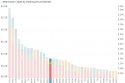
And to buy it, they have to sell a little of everything else in the fund to give that new company the right weight. The bigger the new company, the more the fund needs to sell to fit it in. And the bigger the weight of a company already in the index, the more of that stock gets sold. Nvidia is the largest holding in the NASDAQ 100 by far, representing almost 13% of the entire index by itself. Other stocks at the top of the index include Microsoft, Amazon, Google, Broadcom, Meta Platforms, Micron, and AMD, which together account for 52% of every dollar tracking it. These are the AI companies that will get hit the hardest. By the way, traditional chips waste over 90% of their energy moving data between processors and memory.
One way to increase AI performance is computing right where the data is stored, not just in data centers, but in the devices we use every day. For example, the Anker Thus AI chip fuses a tiny CPU and memory to deliver 150 times more compute power. That's not a gimmick. It's what powers the Anker Soundcore Liberty 5 Pro Max earbuds, which are the sponsor of this video. I just flew from Florida to Alaska and back, and these things made it a breeze. The act of noise cancelling is so good, I could barely hear the airplane's engines, even though my friends and I sat right next to them. And whenever I'm on a call, people ask me how I always sound so crystal clear, even in noisy environments, so I never have to worry about not being heard.
Forced Selling Explained
They actually hold the Guinness World Record for call clarity in noisy environments. I tested out the voice control features and AI NoteTaker, and everything just worked. I didn't even need my phone, I just started talking, and by the end, I had a full transcript on my phone. So, if you want to protect your hearing and your sanity, check out the Anker Soundcore Liberty 5 Pro Max earbuds with my link in the description. Alright, so the biggest companies at the top of the Nasdaq 100 are about to get trimmed to make room for SpaceX, OpenAI, and Anthropic. And since they all have market caps measured in the trillions, even a small percentage cut means billions of dollars in forced sales. Remember, this isn't a fund manager making a judgment call. It's a machine that's following a rule.
Index funds make money by tracking their index precisely. So this selling will happen at scale, on a fixed schedule, whether the company's being sold deserve it or not. And this could be a real double whammy. Because if everyone keeps buying SpaceX, OpenAI, and Anthropic stock after they IPO, they'll take up an even bigger portion of the index, forcing even more sales of the existing top stocks, which lowers those prices even more. And now that you have all that context, there's really only one question left to ask. If every stock at the top of the Nasdaq 100 is about to go on sale, which stocks are the best ones to buy? Well, I did some digging, and I found some surprising answers. So, here's what I'll be buying.
Nvidia Analysis
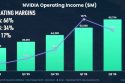
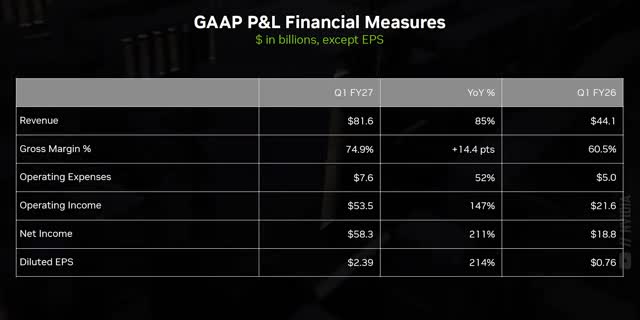
Let's start with NVIDIA, since it's the single largest position in the NASDAQ 100, at about 13% of the entire index by weight. Said another way, more than one out of every $8 in the NASDAQ 100 is held directly in Nvidia. So when those forced sales hit, this stock gets hit the hardest. You probably already know that Nvidia has over a 90% share of the data center GPU market. No other company comes close. But here's why it's in my sights at this unique moment in time. On their latest earnings call, they reported record revenues of $81.6 billion, which was up 85% year over year.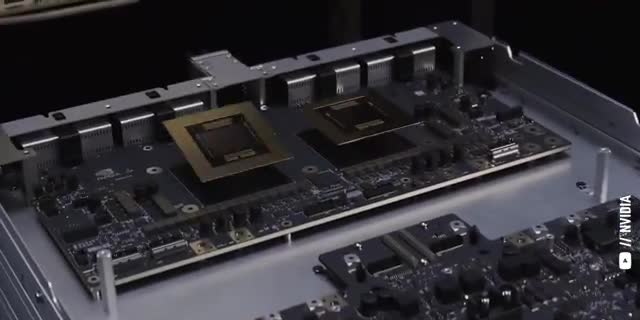
Alphabet / Google Insights
They also reported 75% gross margins, which was an increase of more than 14 points from a year ago That means their margins are more like a software company than a hardware one Their operating income grew by almost 150 and their earnings per share grew by over 200 That's why their forward price-to-earnings ratio is just over 20, which is the lowest out of all the big chip makers. So, if Nvidia stock gets hit hard with the forced selling thanks to three back-to-back trillion-dollar IPOs, it'll be an absolute steal given its high margins and higher growth rates. Next up is Alphabet, the parent company of Google. Here's the thing most investors are missing about Google. It's in the Nasdaq twice, because it actually has two tickers.
GOOGL, which is for Class A shares that come with one vote each, and GOOG, for Class C shares, which have no voting power. When you combine them, Alphabet represents over 11% of the entire index, second only to Nvidia, which means this stock will get hit almost as hard by those same forced sales. At Google I.O. last month, their CEO Sundar Pichai announced that they're processing 3.2 quadrillion tokens per month across all of their AI services. That's a 7x increase in AI processing year over year and still growing fast. The Gemini app has 900 million monthly active users, and AI Overviews has 2.5 billion monthly active users, which is over 30% of the world's entire population. And Google doesn't just use NVIDIA's chips to run their AI, they also build their own.
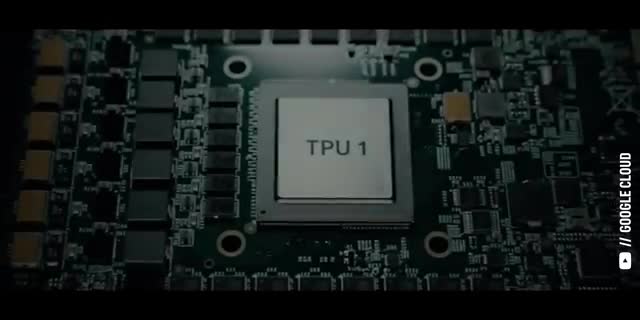
Google's custom AI processors are called TPUs, or Tensor Processing Units, and they're already on their 8th generation of chips. But while Amazon and Microsoft only use their custom chips internally or sell access through cloud services, Google has begun selling their TPUs directly to other companies, including Anthropic. So even though Cloud competes directly with Gemini, Anthropic has to pay Google to run it. Google's TPUs also power Google Cloud. Last quarter, Google Cloud's revenue hit $20 billion, which is up 63% year over year. And their enterprise AI revenue from products that are built on their own AI models within Google Cloud grew by 800%. Google Cloud operating income tripled year over year, and their backlog nearly doubled in a single quarter.
And on their latest earnings call, Sundar said that growth would be even higher if they could meet all of the demand. So Google is officially supply-constrained. Alphabet's total revenue came in at $110 billion for the quarter, which is up 22% year over year. Total operating income grew by 30%, and earnings per share grew by 82%. Investors don't usually see that kind of growth from companies worth over $4 trillion. So, when $4 trillion worth of new IPOs hit the NASDAQ 100, Google is the second stock I'm buying. I should also mention Meta Platforms, since they reported $56.3 billion in revenue, which is up 33% year over year. That's their fastest growth since 2021. And that's with operating margins of 41%.
Meta's family of apps, which include Facebook, Instagram, Messenger, and WhatsApp, have over 3.5 billion daily active users. Ad impressions are up 19%, and the average price per ad grew by 12%. So Meta Platforms is commanding serious pricing power at a truly global scale. In my opinion, the reason that Meta's stock is underperforming this year is because of their aggressive spending. Reality Labs lost another $4 billion this quarter and cost the company over $80 billion in total so far. And they just raised their CapEx guidance to a range of $125 to $145 billion for this year alone. That's more than the last two years put together, which definitely scared investors on their latest earnings call.
But the thing is, that money is going towards AI infrastructure, like the data centers powering online platforms with 3.5 billion daily active users, like their AI glasses where daily usage has tripled year over year, and like their own custom training and inference chips that are co-designed with Broadcom and built on TSMC most advanced 2 nanometer process The market treats Meta capex like they overspending but Meta sees it as an existential race that they have to win Meta Platforms trades at a forward price ratio of about 18. That could get even lower as these three blockbuster IPOs add even more downward pressure to the stock. And if it does, I'm jumping on it. When most people think of AI chips, they think of GPUs made by Nvidia.

But Broadcom has been building its own AI empire based on custom silicon while nvidia sells the same gpus to everyone broadcom co-designs custom chips based on the specific architecture the specific applications and the specific data center that they'll go in said another way broadcom's ai business is about designing application-specific integrated circuits or asics for companies like google meta apple and open ai when any company wants to build their own custom chips, they call Broadcom. And it's showing in their numbers. Broadcom just reported earnings last week, and they generated $10.8 billion in AI chip revenue, up 143% year over year. Their total revenue hit $22.2 billion, which is up 48% year over year.
And their guidance for next quarter is $16 billion in AI revenue, which would be over 200% growth for that segment from last year. That means Broadcom's AI chip revenue will hit a $100 billion run rate next year. On top of that, they own VMware, which comes with software margins north of 90%. So they've got a ton of cash flow to fund their AI build-out as it keeps accelerating. That's why Broadcom stock, ticker symbol AVGO, should be on every investor's radar. And if you feel I've earned it, consider hitting the like button and subscribing to the channel. That really helps and it lets me know to make more content like this. Thanks, now let's talk about the fastest growing and cheapest stock on my list.

Whether you're talking about Nvidia's GPUs, Google's TPUs, Meta's training and inference chips, or Broadcom's custom ASICs, none of them work without memory. Micron makes that memory. Specifically, high bandwidth memory for AI accelerators. I cover Micron often and they have earnings later this month, but their last earnings were already hard to believe. Micron reported $23.9 billion in revenue last quarter. That's up 196% year over year. Their earnings per share came in at $12.20, which beat estimates by 42%. Gross margins hit 75%, literally the same gross margins as NVIDIA. And their revenue guidance for next quarter is $33.5 billion, which would be 260% growth year over year. I see so many investors make the same mistake over and over again.
They think that just because a company is big means it has no more room to grow. So let's do what we always do and just look at the data. If you bought Nvidia stock a year ago, you're up 40% today, double the returns of the overall market. If you bought Google stock a year ago, you've literally doubled your money. Micron stock is already up by over 200% this year alone, but it still trades at a forward P-E ratio of just 11, making Micron the cheapest stock in this video. Just because it's already a trillion dollar company doesn't mean it can't get bigger, just like Google and just like Nvidia. And every dollar of selling pressure will make Micron stock even more attractive. This is one of the biggest wealth opportunities I've seen in over 10 years of investing.

Much bigger than most investors realize, because it'll hit the market three separate times. As SpaceX, OpenAI, and Anthropic each go public and enter the NASDAQ 100. Wall Street isn't ready for it. The media doesn't see it coming. But now you do. All that's left to do is get ready and wait. Let me know in the comments which stocks you're watching and what your plan is as each of these AI giants go public. And if you want to see what other stocks I'm buying to get rich without getting lucky, check out this video next. Either way, thanks for watching and until next time, this is Ticker Simple You. My name is Alex, reminding you that the best investment you can make is in you.
Key Takeaways
Here are the key points to consider when evaluating investment opportunities in the NASDAQ 100 index:
- SpaceX, OpenAI, and Anthropic are going public and entering the NASDAQ 100 index.
- The NASDAQ 100 index is market cap weighted, meaning the amount of each stock in the index depends on the company's size.
- Nvidia, Alphabet, Meta Platforms, and Micron are potential investment opportunities.
- Broadcom is building its own AI empire based on custom silicon.
- Micron makes high bandwidth memory for AI accelerators.
Checkout our YouTube Channel
Get the latest videos and industry deep dives as we check out the science behind the stocks.