Key Takeaways
- ASML and TSMC see AI chip demand outpacing supply for at least the next two years, creating a disconnect with the current market sell-off.
- Stocks like TSMC, Micron, Broadcom, and Applied Materials now trade at lower forward P/E ratios than the NASDAQ 100 despite strong growth.
- ETFs such as SMH, CHAT, EUV, and DRAM offer diversified exposure across the AI supply chain with blended fees around 0.5% per year.
- Memory stocks were hit hardest after CXMT announced 4F-squared chips, but Micron trades at just five times forward earnings.
- A 40-30-20-10 split across SMH, CHAT, EUV, and DRAM provides balanced coverage from chip making to data centers without overconcentrating in any one area.
Table of Contents
1. TSMC and ASML Earnings Signal Strong Demand
2. Memory Sell-Off and the CXMT Announcement
3. Chip Industry Stocks and Applied Materials
4. AI Data Centers and Infrastructure Stocks
ai stocks have been crashing hard with some of the best companies losing 10 20 even 30 percent over the last two weeks but while most of wall street is panic selling i think this is a huge opportunity to buy great companies at even greater discounts talk about an obvious way to get rich without getting lucky my name is alex and i spent eight years as an electrical engineer and ai researcher at mit let me show you what i'm investing in when everything's on sale your time is valuable so let's get right into it i want to start this video in an interesting place the korea exchange on thursday october 15th south korea's stock market fell so fast that it triggered a 20-minute trading halt samsung nsk hynix which are two of the biggest memory makers on earth each lost close to a hundred billion dollars in value because investors are scared that china is catching up in memory and that ai spending won't pay off but while wall street is focused on the sell-off
two of the most important ai companies quietly reported earnings.
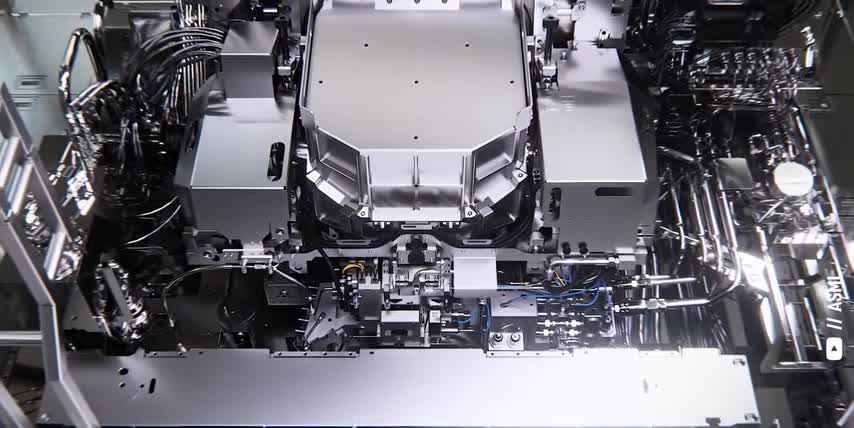
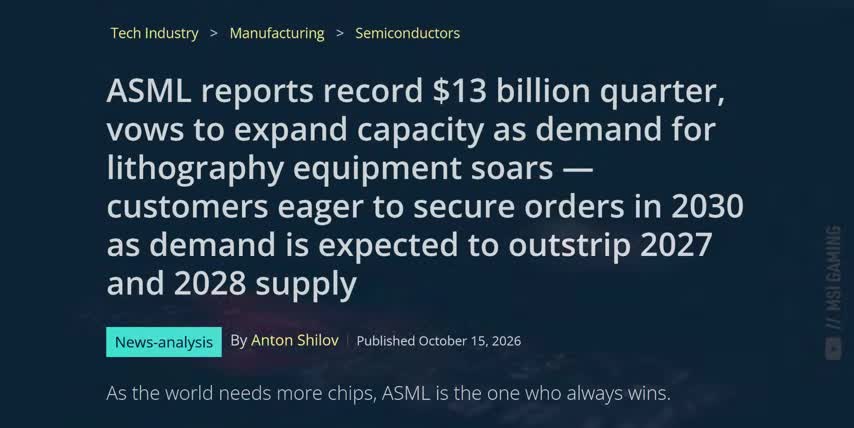
TSMC and ASML. TSMC builds the chips for Nvidia and AMD, for Apple and Qualcomm, and for all the hyperscalers so it sees what AI companies are ordering far into the future. And ASML makes the machines that every advanced chip factory needs so it sees what chip makers are ordering years in advance. ASML's biggest customer is TSMC. so looking at their earnings calls together gives us a real gauge of future demand not what the stock market is worried it will be long story short asml reported record sales and their customers are already placing orders for 2028 asml said their plant supply for 2027 and 2028 won't fully meet demand and memory makers made up nearly half of their machine sales last quarter and one day later, TSMC beat its own forecast and said that next quarter's revenues should be up by about 58% from a year ago, with no signs of a slowdown.
These two companies see demand signals furthest into the future because they sit at the very start of the AI supply chain, and they're both saying the same thing. Demand for advanced chips will be far bigger than what the industry can supply for at least the next two years. That big disconnect between the sky-high demand reported by ASML and TSMC and what the market is pricing in right now is the big opportunity. But when everything's on sale, we need to be even more picky about our investments. So for each part of the AI supply chain, I'll show you which stocks I think look like the best value right now.
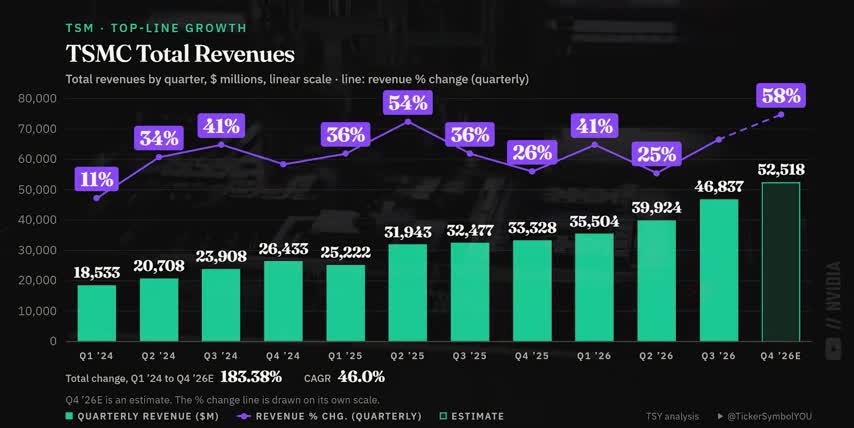
And if you're worried about prices falling even further, I'll also highlight the best funds that own them and still focus on the right parts of the supply chain without having to worry about individual dual winners. That way we can have our cake and eat it too. The top stocks can rebound faster, but they can also fall harder, while the funds give more weight to their biggest winners, diversify away some of the risk, and even include some companies that we can't easily buy in the US, like South Korea's Samsung or China's memory maker CXMT. So let's start with the canary in the coal mine itself, Taiwan Semiconductor. TSMC just reported earnings where they told investors they expect around $53.3 billion in revenue next quarter.
That would be up by 58% year over year, which is massive for a roughly $2 trillion company. And on the call, TSMC's CEO said that they'll probably see even faster growth all the way through 2029. Remember, this is one of the two companies that sees AI demand furthest into the future. And now customers are coordinating with TSMC two to three years in advance. That's why they also expect to spend around $62 billion in capex for 2026, about 50% more than they spent last year, and they say they'll spend significantly more than that through 2028. On top of that, TSMC's gross margins slipped from 67.7% down to 66.4% as they keep ramping up their new 2nm chipmaking processes, and they expect another small dip in margins next quarter.
stock is down 14% since this sell-off started and it now trades at about 18 times next year's earnings, which I see as a great opportunity. But while Wall Street is punishing the stock, I think increased spending and a dip in margins is just the cost of being the single most important chipmaker of the entire AI era. And if you want a stock at an even deeper discount, Coherent makes optical networking components to move data around AI data centers with light instead of copper data centers and communications made up 79 of their sales last quarter their revenues grew by 34 year over year and they expect up to 2.4 billion dollars in revenue in their next report which would imply 52 year-over-year growth coherent stock ticker symbol cohr is down by 31 since the start of the sell and it trades at a forward p ratio of about 25 The catch here is thinner margins Coherence gross margins are about 40 compared to 66 for TSMC But there are a couple ways for us to have our cake and eat it too First, while credit cards might reward you for spending, Silo Markets rewards you for investing.
That's why they're the sponsor of this video.
You just transfer the stocks and ETFs you already own, and Silo pays you points every month based on your account value so you earn points separate from your investment returns and your assets are held at Interactive Brokers, not some no‑name exchange. Say you’ve got fifty thousand dollars invested – that’s twenty‑five thousand points a year paid out monthly, worth two hundred and fifty dollars in cash just for holding your portfolio. Plans start at just ninety‑five dollars per year with their new Blue Plan; you can also book travel through Silo’s portal and their first airline transfer partner, a Star Alliance carrier, is coming soon, transferring points one‑to‑one and opening up flights on United and Lufthansa starting in November. New members will earn one point a year for every four dollars, but you can double that rate for your first year and get up to a 250 000 new‑member bonus with my link by the end of October, so if you want to earn points on stocks you already own, check out Silo Markets with my link below today.
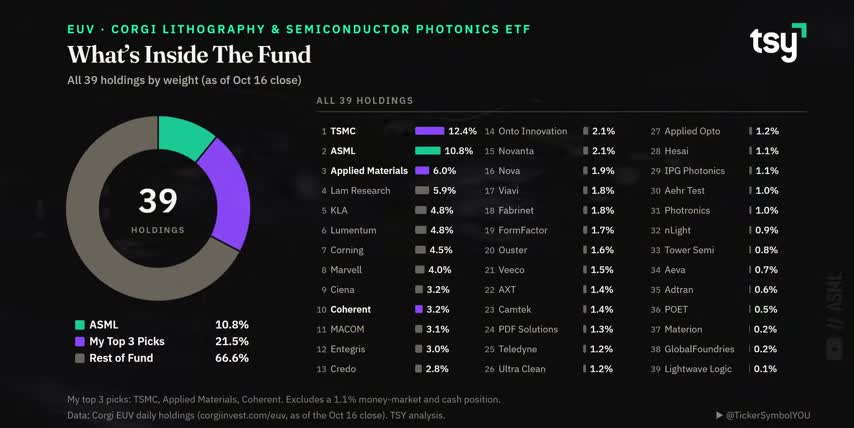
The second way to have our cake and eat it too is with the EUV ETFs, named after the extreme ultraviolet light that ASML’s machines use to make the most advanced chips. The fund is built around the part of the supply chain that works with light, which is why TSMC and ASML make up over 20 % of the fund by weight, and the top ten holdings include Applied Materials, LAM Research, KLA, Lumentum, Corning, Marvell, Sienna and Coherent – all companies I cover because they sit near the start of the AI supply chain: the chips, the machines that make them, and the optical components that connect them. EUV is actively managed but only charges 0.35 % per year in fees, cheaper than most popular active funds, and it started trading in May, peaked in June and is now about 20 % cheaper than when it launched.
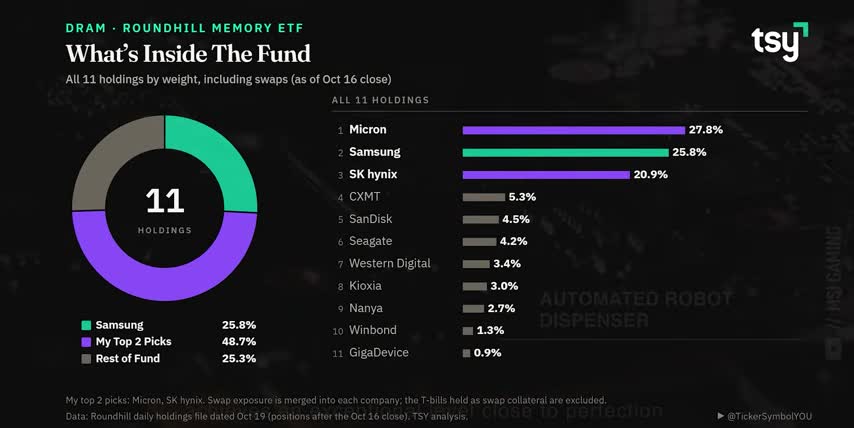
The next part of the AI supply chain is memory, where the sell‑off began on Saturday, October 10th, when Chinese chip maker Changshin Memory Technologies (CXMT) announced it expects its first 4F‑squared memory chips to launch by year‑end. 4F‑squared fits each memory cell into about a third less space than today’s chips; Samsung isn’t planning mass production until 2028, making this a big deal. CXMT is already the world’s fourth‑largest DRAM maker and the most valuable company on China’s mainland stock market after its July IPO. When trading opened the following Monday, investors dumped memory stocks harder, with SK Hynix down 10 % in a day. Despite CXMT not sharing speeds or capacities, front‑chain firms like ASML expect memory‑maker sales to grow ~75 % this year. Micron, the biggest U.S. memory maker, posted $54.2 B revenue (+379 % YoY) and expects a record $61.5 B next quarter, yet its stock is down 16 % since the sell‑off and 28 % from its June high, trading at just five times forward earnings. If you want broader exposure, the Round Hill Memory ETF (DRAM) holds ~75 % micron, Samsung and SK Hynix, avoids the U.S. premium, and its fourth‑largest holding is CXMT. DRAM is actively managed with a 0 % fee, launched in April, up 67 % from day one, but still down 42 % from its June peak.
Next let's zoom out to the entire chip industry, starting with Applied Materials, ticker symbol AMAT. materials makes many of the machines inside chip factories, including the ones that do deposition, etching, and inspection for every layer on a chip. Last quarter, they posted record revenues of $9.1 billion, up 25% year over year, and they expect about $10.25 billion this quarter, which implies 51% growth. A lot of TSMC's $62 billion capex budget goes to machines like these, but AMAT That stock is down by 23% since the sell-off started, 43% from its high, and it trades around 22 times forward earnings. Another chip company that I think is undervalued right now is Broadcom, ticker symbol AVGO.
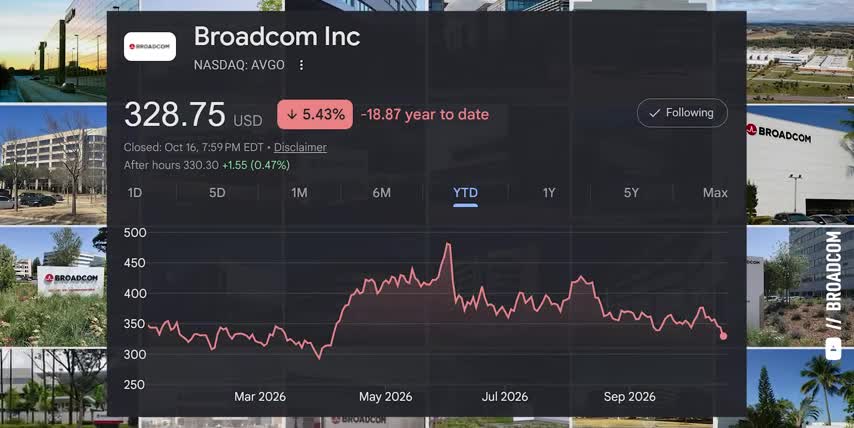
Broadcom designs custom AI chips for the biggest tech companies like Google's TPUs and OpenAI's Jalapeno Accelerators, as well as the networking chips that connect them all together. AI chip revenue hit $16.7 billion last quarter, which is up 221% year over year. Broadcom expects $21.7 billion this quarter, implying 236% chip revenue growth. But the stock is down 13% in the sell-off so far, 32% from its high, and it trades at just 18 times forward earnings.
This is the industry where a lot of investors look to reduce their risk and they avoid picking winners mostly because there's so much direct competition with Nvidia, so my pick for a fund that tracks the entire chip industry is the VanEck Semiconductor ETF (ticker symbol SMH). It holds the 25 biggest chip companies listed in the US weighted by their market cap, and each company is capped at about 20 percent of the fund. That's why Nvidia is around 20 percent of the fund while the rest of the holdings include Taiwan Semiconductor, AMD, Micron, and almost every other company I've covered in this video so far. Unlike the other funds I've mentioned, SMH is passively managed and charges 0.35 % per year, even though it outperforms indexes that tend to charge more. Even after the sell‑off it’s up by over 40 % year‑to‑date and 100 % since I covered it earlier last year, showing that smartly concentrated and well‑put‑together funds are a great way to get rich without getting lucky.
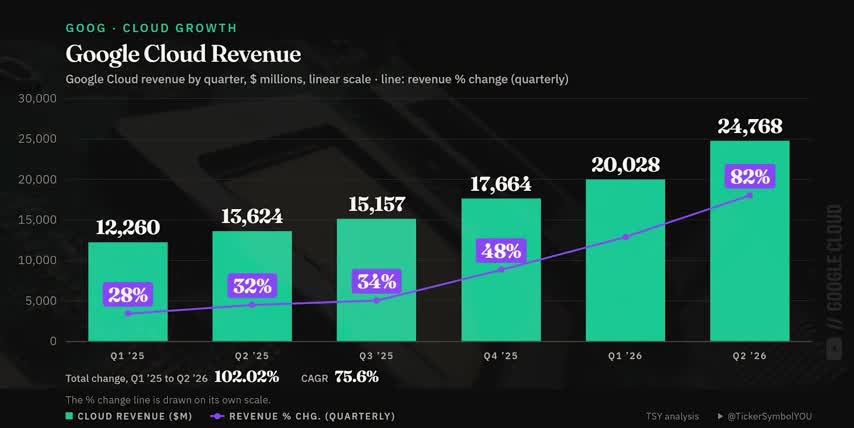
At the other end of the AI supply chain are the AI data centers themselves. If you feel I’ve earned it, consider hitting the like button and subscribing to the channel; that really helps and lets me know to make more content like this, thanks. Now let’s talk about the companies running the biggest AI data centers and the companies they’re buying from. One of the biggest AI infrastructure buyers is Google. By some estimates Google owns and operates around a quarter of all AI compute on Earth. Last quarter Google Cloud revenue grew 82 % year over year to $24.8 billion, and the Gemini app now has 950 million monthly active users. Google stock is only down about two percent since the sell‑off started because investors clearly aren’t worried about their future. The stock still trades at around 24 times forward earnings even though Google expects to spend about $200 billion in capex this year, more than double what they spent last year, and they say that’ll increase significantly in 2027.
so where is all that money going a lot of that money goes to companies like celestica ticker symbol cls celestica builds the server racks and networking gear inside ai data centers and they're a preferred manufacturing partner for google's data center hardware including their tpu systems they also help openai and broadcom build the racks for jalapeno last quarter celestica's revenue grew by 62 percent and they're expecting 65 growth for the full year but the stock is flat for the year down over 30 from its high in june and trades around 18 times forward earnings
and every one of those racks need power and cooling which is why i often cover vertiv ticker symbol vrt vertiv makes the power and cooling systems that keep high density ai data centers running last quarter they raised their full year guidance to about 31 organic growth with adjusted earnings per share up by 60 but the stock is down 19 in the sell-off 45 from its may high and it trades at about 24 times forward earnings.
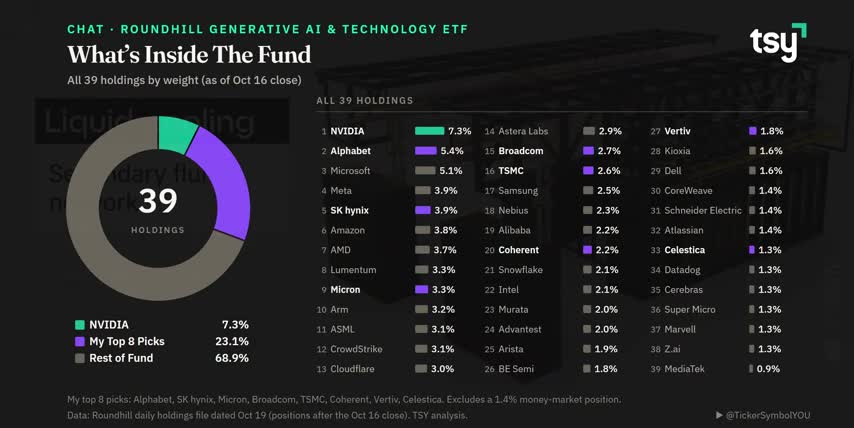
But if you want to own the top AI hardware and software companies without worrying too much about which one wins each market, there's the Roundhill Generative AI and Technology ETF ticker symbol CHAT NVIDIA Google Microsoft Meta and Amazon make up about 25 of the fund and the four hyperscalers plan to spend roughly 700 billion dollars in AI capex this year which is up 80 from 2025 And now we've come full circle because that's exactly the massive demand ASML and TSMC are being. Chat also has Celestica, Vertiv, TSMC, ASML, Coherent, Micron, SK Hynix and Broadcom in it, which is why this fund is a great way to own the entire AI supply chain end to end. Chat is actively managed with a 0.75% annual fee, making it the most expensive fund in this video.
Even though it's down by 24% from its June high, it's still up around 200% since the fund launched in May of 2023. Alright, now let's put everything together. If you're somebody who just wants to set it and forget it, here's how I'd invest in the four funds I covered in this video. The main thing to consider is how much they overlap. For example, SMH overlaps with both EUV and chat by about 30%. So if you split your allocations evenly across all four funds, almost 30% of your money would be in memory stocks, and Micron would be your single biggest holding. So, I would do a simple 40-30-20-10 split instead. SMH gets about 40% because it covers the entire chip industry, it's passively managed, and it has a very low fee.
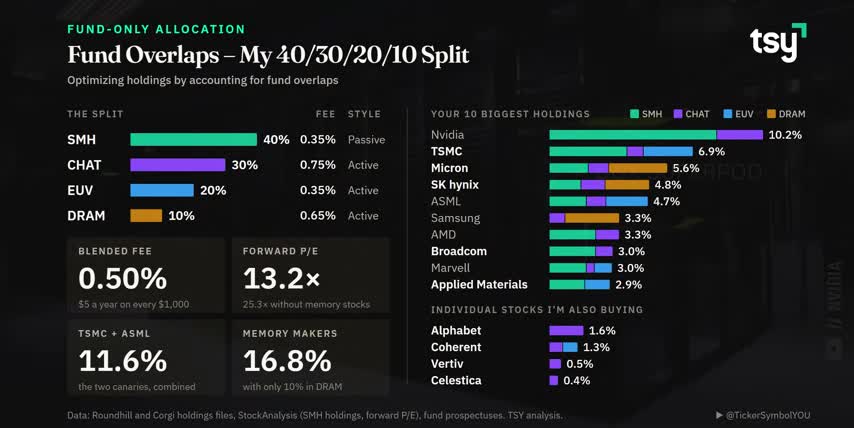
Chat gets 30% since it's the only fund here with the AI data center infrastructure companies like Google, Celestica, and Vertiv. EUV gets 20% because it's another great way to hold chip making and machine companies like tsmc asml and applied materials and dram gets 10 because i already have solid exposure to micron and sk hynix through chat and smh and i don't want to overweight memory too much in case we really are at the top of the cycle when i put these four funds together this way i pay a blended fee of 0.5 per year or five dollars for every thousand i invest but what i get is a portfolio of almost all the stocks i want to hold with reasonable weights at a lower average forward p e ratio than both the s p 500 and the nasdaq 100.
my biggest holding would still be nvidia and five of the nine stocks i talked about in this video all land in the top 10 while the other four google coherent vertiv and celestica are each less than two percent of the mix so those are the positions i could add to over time if i wanted to and here are the individual stocks I covered, sorted by how much each one of them I'd already own through the funds. Remember, the goal here is to cover every part of the AI supply chain that we talked about, from the chips, memory, and optics, to the machines that make them and the data centers buying them.
TSMC, Micron, SK Hynix, and Broadcom are all trading at lower forward P‑E ratios than the NASDAQ 100, while being some of the highest growth companies in their parts of the supply chain. Further down the list, Applied Materials, Google, Coherent and Vertiv all trade at 22 to 25 times forward earnings, about the same as the overall NASDAQ 100. Celestica looks cheaper at 18 times, but almost two‑thirds of its revenue comes from just three customers, so there’s extra risk there and I think they’ll keep getting punished for it if the sell‑off continues.
That’s why this is actually the order that I’d personally buy these stocks in as well. I also figured I’d share some of the honorable mentions that came close to being on this list: Dell trades at just 16 times forward earnings but the stock is already up over 250 percent year‑to‑date. Marvell, Lattice, Lumentum and Teradyne are all more expensive than the stocks that I picked from their parts of the supply chain; for example, Marvell trades at 40 times forward earnings while Broadcom is at 18.
and coreweave got hit really hard during this sell-off but that's partly because they're still unprofitable and their corporate bonds yield around 15 which means they're effectively borrowing money at a crazy rate relative to their peers nvidia didn't fall that much and it's already the number one holding in my portfolio as well as across the funds i just covered investors should be the pickiest when everything goes on sale stocks like amd arm and palantir are all still really expensive relative to their peers trading at anywhere from 48 to almost a hundred times forward earnings asml and tsmc see ai demand further into the future than almost any other company and they both just said demand for advanced chips will keep outpacing supply for at least the next two years but ai stocks sold off anyway and the more they fall the bigger the disconnect between how the ai industry is doing and how the market is pricing it
that gives long-term investors like us a great way to get rich without getting lucky and if you want to see what else i'm buying to get rich without getting lucky check out this video next either way thanks for watching and until next time this is ticker symbol you my name is alex reminding you that the best investment you can make is in you.
Checkout our YouTube Channel
Get the latest videos and industry deep dives as we check out the science behind the stocks.