
Table of Contents
1. Introduction to AI Shock
2. TSMC and ASML
3. Nvidia Kyber Rack
4. Chip Making Process
5. Stocks to Buy
A huge shock just hit the market and Wall Street isn't ready for it. The media isn't covering it, and it's much bigger than most investors realize, because it'll hit every stock from three angles at once. The cracks are already showing, but no one is paying attention. My name is Alex, and I've been investing in AI stocks for over 10 years now, and I've seen enough of these drawdowns to know what real buying opportunities look like. Let me walk you through what's happening, and how I'm investing in it.
Introduction to AI Shock
your time is valuable so let's get right into it the entire ai trade is built on one assumption the amount of compute power that the ai industry can build is only limited by money every stocks market cap every capex budget and every earnings call follows the same pattern build it and they will come but over the last couple weeks those assumptions have started to crack and ai stocks did too tsmc is the company that actually makes the world's most advanced chips so every ai company depends on them to do their job. They reported earnings on July 16th, and they had a blowout quarter. Revenues came in at over $40 billion, which was up 34% year over year, while their earnings per share jumped 77% from last year.
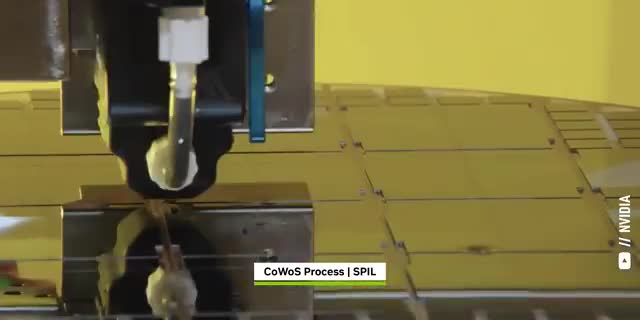
Both numbers beat analyst expectations, and management even raised their guidance for the rest of the year. Results like these are exactly why Wall Street isn't ready for what's about to happen, and why the media is missing it altogether. Chip on Wafer on Substrate, or COOS, is an advanced packaging technique where TSMC mounts a finished chip and its memory onto a single base. That way, everything sits extremely close together to transfer data as fast as possible. This is the step that turns parts into working processors. On that same earnings call, TSMC's CEO said that their COOS nodes are running at max capacity already, and they're sold out into 2027. For investors, that means two important things. First, all the money in the world won't produce more chips, at least in the near term.

TSMC and ASML
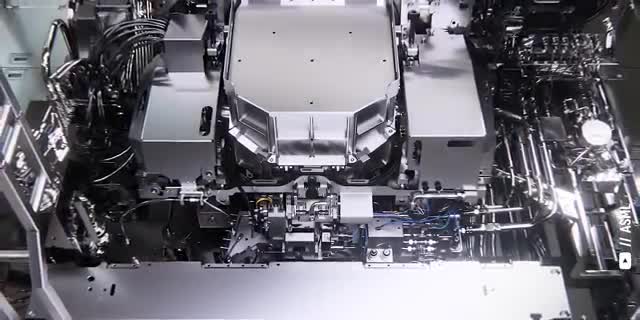
Some of TSMC's customers are already waiting for more than a year for their chips to clear this COAS packaging step, which creates a fundamental limit on how fast other AI companies can deploy their own hardware infrastructures. And second, increasing production capacity won't solve this problem in the near term either, since securing land and power, building chip factories, and filling them with specialized machines is a multi-year process. And speaking of specialized machines, ASML also reported earnings last week. ASML is the only company on Earth that can build EUV lithography machines. These machines are the size of a small apartment and contain over 100,000 parts that come together to print microscopic circuits onto chips using extreme ultraviolet light, or EUV light for short.
And since ASML is the only company that makes them, AI chip production can only grow as fast as the number of these machines. On their latest earnings call, ASML said that they'll build around 65 EUV machines this year, and around 85 next year. That sounds like a big jump, but remember what I just said. This machine ships in hundreds of crates and takes months just to assemble. After that, it still has to be calibrated, tested, and tuned for the specific chip it's going to be making. By the way, lithography machines can only run in clean rooms, special sealed and filtered facilities with essentially zero dust in the air, because a single speck of dust landing on the wafer can interfere with the light and ruin the entire chip.
Nvidia Kyber Rack
Oh yeah, and on top of that, extreme ultraviolet light gets absorbed by air, so EUV lithography machines have to operate in a vacuum where absolutely nothing can interfere with the beam, no particles, no stray molecules, and no vibration. It can take up to two years to go from delivery to producing chips with these machines at full volume. So current advanced chip making machines are already at capacity. And new machines can take years to come online. And then there's the racks that the chips go into. Earlier this month Semi reported that Nvidia Kyber rack has been delayed by more than a year Kyber is Nvidia next server rack that holds compute trays vertically kind of like books on a shelf in order to pack a whopping 576 GPUs into a single rack running at around 600 kilowatts.
What makes the Kyber system so special is that it does away with all the high-speed network cables connecting every GPU together, and instead, it uses a printed circuit board backplane. If you've been reading this blog for a while, you've seen me cover this backplane a few times already, because it's one of the biggest innovations of the entire AI era. But if you haven't, that backplane is a circuit board with 78 separate layers laminated together. 72 of those layers connect each compute tray to the rest of the rack. 8 chips per tray, times 72 trays per rack, is how Nvidia gets 576 chips to work together, like their one massive GPU. GPU.

Chip Making Process
Compared to Blackwell, that means datacenters can pack 8 times the GPUs in a single rack, while drawing about 5 times the power, giving them a lot more use out of the same physical space when they move to Rubin Ultra and power the next generation of AI tools. By the way, more and more people are using Claude to build apps, design presentations, automate their job, and make more money on the side, all without writing any code. That That means AI isn't optional, it's an advantage that you either have, or others have over you. That's where Outskill comes in, the sponsor of this video. Outskill is running the Clawed AI Mastery Workshop this weekend. 16 hours of hands-on training to make you confident using AI on your own.
Staying ahead as tools rapidly evolve and turning your AI skills into higher value, better paid work. And they're giving the first 1000 people who sign up with my link a free seat. Whether you work in tech or sales, management or marketing, you'll learn to use Claude to do deep research, generate high-quality reports and dashboards, set up connectors to automate tasks and even build custom agents. This is a great way to level up your AI knowledge, gain a real competitive advantage, and understand the science behind the stocks.

Stocks to Buy
Over 10 million people all over the world have already attended, and slots for this one are filling up faster than ever because you also get free bonuses like a full ai prompt library and a personalized ai toolkit builder so make sure to register for your free seat with my link below today alright so nvidia's next generation kyber systems are how they plan to pack 576 gpus into a single rack that density is the whole point of the system but it's also a big problem cramming so many chips so close together is exactly what's straining that circuit board that they all plug into, which is the cause of this reported delay. Importantly, Nvidia denied the delay, but they used pretty vague language. All they said was that their roadmap remains intact, without any other details.
Currently, Nvidia's Vera Rubin systems are in full production, but this delay would push their Rubin Ultra systems back to 2028. And even if their roadmap is intact, the first Kyber racks could ship on time, but take longer to roll out at scale. So, under the current wave of strong earnings calls, there's an undercurrent of three major bottlenecks to AI growth all hitting the market at once. ASML can only ship dozens of chip-making machines per year, TSMC's AI chip packaging is already running at its limit into 2027, and the next generation NVIDIA racks those chips go into might be delayed altogether. Then, add in the Strait of Hormuz, which has been closed to shipping since the Iran war began earlier this year.

And it was tightened again this past month when President Trump reinstated the naval blockade of Iran's ports. Like I covered in previous videos, Taiwan imports over 90% of its energy. It keeps less than a month of gas in reserves, and a third of the world's helium ships through that same passage, all of which TSMC needs to keep making chips at full volume. So that's the setup in the market right now. AI stocks are priced for compute to keep scaling as fast as companies can spend their money. But the machines building and running the AI chips have a hard ceiling This is what I think the market is finally starting to price in as of last week which could be a great buying opportunity for long investors that are patient enough to wait for the payoff So, here are the 5 stocks I'm buying when the rest of the market panics.
Let's start with ASML itself, since their stock is down by 10% over the last month. It's worth repeating that ASML is the only company on earth that makes EUV lithography machines. When there's unlimited demand for something only you can supply, it doesn't just mean that you can raise your prices. It means your customers can't rush you. They can't replace you, and they can't negotiate you down. ASML is expanding their production capacity by about 30% per year, and demand is still growing faster than that. So as long as chip makers need more machines than ASML can make, ASML gets to set the price. When your customers don't have a choice, you don't have a problem. ASML's biggest and most important customer is TSMC, the Taiwan Semiconductor Manufacturing Company, ticker symbol TSM.
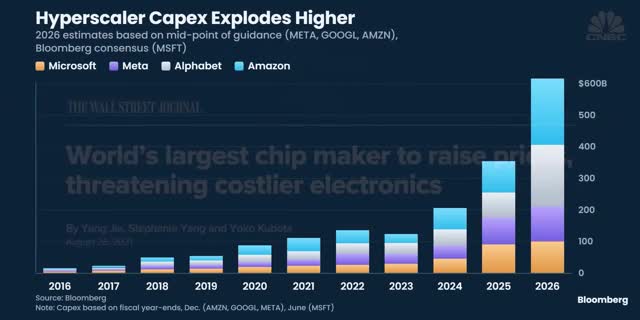
They run ASML's machines, and their COAS chip packaging processes are fully booked into 2027. But this dependency cuts both ways. ASML's machines don't matter until TSMC packages and ships the finished chips, and TSMC can't expand their own production capacity without ASML's machines in the first place. So again, when there's way more demand than supply, TSMC's margins and earnings get to skyrocket. 67% gross margins and 77% earnings growth, exactly the kind of numbers you'd expect to see from a company that gets to set its own prices. But the risks are just as real. The longer the Strait of Hormuz stays effectively closed, the more exposed TSMC becomes to supply chain shocks that could slow down their chip production even further.
On top of that, the jump to their next generation 2 nanometer chip production is expensive and risky. It's the first time they've changed the fundamental shape of their transistors in over a decade and only the second time in the company's almost 40 year history. Long story short, TSMC is replacing their FinFET transistors with a new structure called GATE All Around (GAA). These new chips, built on the 2-nanometer node, run about 15% faster at the same power or draw about 30% less power at the same speeds, compared to the 3-nanometer chips currently shipping. Saving power is crucial in AI, as data centers are limited by their power access; thus, using 30% less power is a significant advantage.
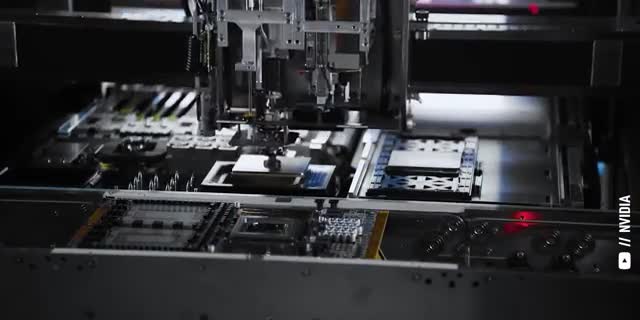
The reason this is a risk and not just a win is because brand new chip manufacturing nodes take a long time to ramp up. Yields start low and every wafer that breaks is a cost that tsmc has to eat themselves and two nanometer wafers cost around 50 more than the current three nanometer ones so until these two nanometer fabs can fully ramp up over the next few quarters they actually drag tsmc's margins down that short-term pain for long-term gains is why i said this is a great buying opportunity for long-term investors that are patient enough to wait for the payoff. TSMC stock is currently down by almost 15% over the last month. But there's more to chip making than just ASML and TSMC, which is where the next stocks on my list come in.
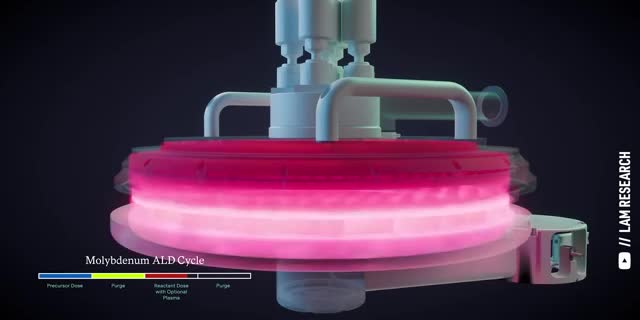
And if you feel I've earned it, consider hitting the like button and subscribing to the channel. That really helps, and it lets me know to make more content like this. Thanks, now let's talk about another important part of the chip making process, deposition and etching. The next stock on my list is LAM Research. ticker symbol LRCX, and their core business is selling machines for etching, deposition, and wafer cleaning. Deposition is the step where ultra-thin films of material like metals, insulators, and silicon compounds are laid across the wafer, one layer at a time. Think of deposition kind of like spray painting the wafer in perfect uniform layers, except instead of paint, it's the actual wiring and insulation the chip is built from.
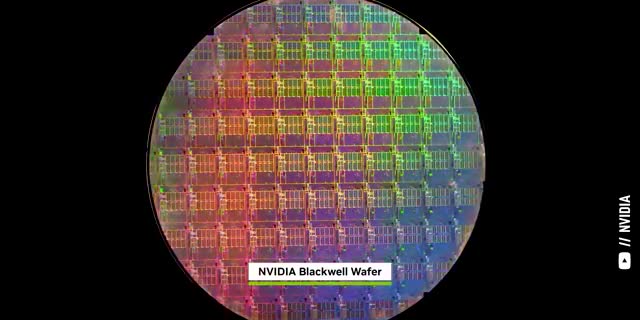
A finished chip is made up of hundreds of these layers stacked on top of each other one layer at a time The etching process is the opposite After a layer is placed during deposition etching selectively removes material to cut the circuit pattern into the wafer. Trenches, holes, and channels where electrical connections need to run. So deposition adds a layer, and etching carves away everything that isn't part of the design, down to features that can be smaller than a virus. Chipmaking is essentially these two steps repeated in many cycles, layer by layer, until the full 3D circuit is done. When chip-making companies like TSMC, Intel, Micron, Samsung, and SK Hynix expand their fabs, they're expanding them with machines made by LAM Research. And the risks work the same way.
If these companies start expanding slower, LAM will feel it first. LRCX stock is down by 25% over the last month.
And buying it is basically a bet that demand and production for AI chips will keep accelerating and right next to Lam Research is KLA Corp, ticker symbol KLAC, and their stock is also down by more than 20 over the last month.
KLA builds the inspection and measurement machines to quality control the chips coming out of a fab, their systems can scan each wafer for defects that are invisible to the naked eye, they can flag particles and pattern flaws that are just nanometers across and they can measure whether every layer landed at the right thickness and lined up with the layer beneath it.
In practice, these machines use optical and electron beam inspection tools to hunt for flaws, metrology systems to measure the microscopic dimensions of each layer, and highly specialized software to tie it all together by telling the fab what's wrong in the process and where to fix it.
KLA has over a 50% share of the overall semiconductor process control and inspection market, and over an 80% market share when it comes to optical wafer inspection specifically, its next biggest competitor is Applied Materials, ticker symbol AMAT, which holds just 10% of the market.
KLA expects their advanced packaging inspection business to hit about a billion dollars this year, which would be an increase of more than 50% year over year, when a fab is packing billions of transistors onto a single chip, catching one bad step early can be the difference between a profitable wafer and a multi-million dollar brick, which is why every chip making company that's expanding their fabs needs KLA's machines.
And once those machines are part of the process, ripping them out becomes expensive and risky. So chip makers keep buying them to make the most out of KLA's ecosystem, which further increases their market share in the process. And the fifth stock on my list is Vertiv, ticker symbol VRT, for one obvious reason.
Once the chips exist, they need power and cooling, which is Vertive's entire business, liquid cooling is now the default for new AI data centers.
Remember, Nvidia's Kyber rack will hold 576 GPUs and use 600 kilowatts of power, it'll also change how electricity even makes it to the rack in the first place, since 600 kilowatts is too much for current power delivery systems.
Vertive is one of Nvidia's partners building that new power architecture, and their 800 volt DC power portfolio is set to roll out right ahead of Nvidia's Kyber racks and their Ruben ultra chips.
I put Vertive last on this list for two key reasons, first, if Nvidia‘s Kyber rack really is delayed, Vertive will feel it too, that's one reason the stock could be down by almost 20 over the last month.
And second, they're about to report earnings at the end of this month, so I'm waiting for their latest numbers before buying this dip.
A big market shock is here and Wall Street isn't ready for it, because it's hitting every stock from three angles at once.
ASML's machine deliveries, TSMC's chip packaging capacity, and potential delays to Nvidia's next generation data center racks. The media doesn't see it coming, but now you do. Let me know which stocks you're buying and what your plan is if this market drawdown continues. And if you want to see what other stocks I'm buying, check out this article next. Either way, thanks for reading and until next time, this is TickerSymbol: YOU. My name is Alex, reminding you that the best investment you can make is in you.

Key Takeaways
The AI industry is facing a major shock due to bottlenecks in chip production, with ASML's machine deliveries, TSMC's chip packaging capacity, and potential delays to Nvidia's next generation data center racks all contributing to the issue.
Investors should consider buying stocks such as ASML, TSMC, LAM Research, KLA Corp, and Vertiv, which are all involved in the chip making process and are likely to be affected by the market shock.
It's essential to stay informed and adapt to the changing market conditions, and to consider the potential risks and opportunities presented by the current situation.
The best investment strategy is to be patient and wait for the payoff, as the market shock is likely to create buying opportunities for long-term investors.
Investing in AI stocks requires a deep understanding of the industry and the companies involved, as well as the ability to navigate complex market trends and conditions.
Checkout our YouTube Channel
Get the latest videos and industry deep dives as we check out the science behind the stocks.