Table of Contents
1. The Bottleneck Shift
2. The Laser Shortage
3. Coherent (COHR)
4. Lumentum (LITE)
Key Takeaways
- The bottleneck in AI data centers has shifted from GPU compute power to the networking infrastructure that feeds data to the GPUs.
- Optical networking using indium phosphide (InP) lasers is essential for moving data at high speeds over long distances in AI data centers.
- Coherent (COHR) has developed 6-inch InP wafers, quadrupling output at half the cost, and is backed by a $2 billion Nvidia investment.
- Lumentum (LITE) makes electro-absorption modulated lasers (EMLs) and other laser types, with revenues up 109% year over year and 50.4% gross margins.
- Both companies face risks from supply chain concentration (China export controls on InP) and hyperscaler spending dependency.
If you invested $10,000 into Nvidia just four years ago, you'd have over $125,000 today. If you put that money into Palantir, you'd have close to a quarter million dollars right now. That's because these companies had the perfect products for the fastest growing market on the planet. But Nvidia and Palantir are two of the most well-known companies on Earth. My name is Alex and I spent eight years as an electrical engineer and AI researcher at MIT. and in this video, I'll show you two smaller stocks set to grow even faster, making them a great way to get rich without getting lucky. Your time is valuable, so let's get right into it. First things first, I'm not here to hold you hostage.
This video is all about moving information inside AI data centers at the speed of light, and there are two stocks that I'll use to explain the market. Coherent, ticker symbol COHR, which found a way to make four times more lasers out of every wafer at half the cost, and Lumentum, ticker symbol LITE, which makes lasers to replace copper wires inside data center racks. And of course, I'll share which one of these stocks I think is the best buy right now. I want to make the best use of your time. So let's start with what these companies have in common, like their markets, their customers, and their risks. When OpenAI released ChatGPT almost four years ago, the biggest bottleneck was compute.
How fast new AI models could be trained, and how fast they'd respond after being prompted, was limited by the number and the speed of the GPUs powering them. But that's not really true today. Each new generation, like Nvidia's Hopper, Blackwell, and Rubin GPUs, got so much more powerful that they would actually churn through the data faster than anything could feed them. That means these AI chips were sitting idle, waiting for more data so that they could do their job.

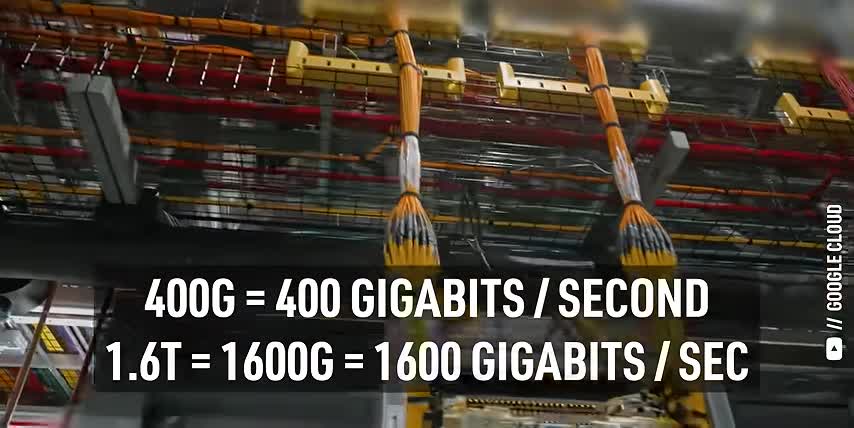
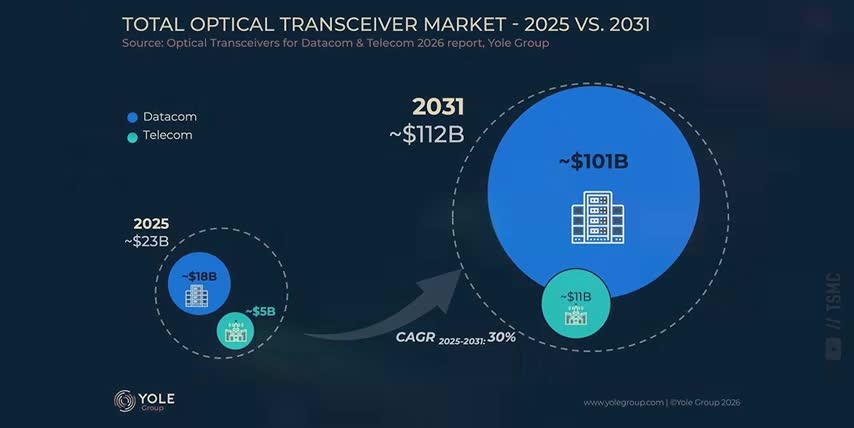
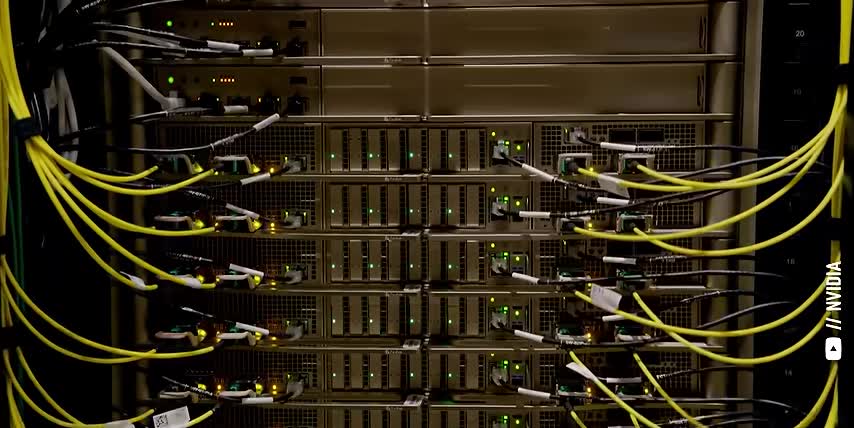
And that means the bottleneck moved from the chips themselves to the network feeding them. Most data‑center routers and switches send electrical signals over copper wire, which works well for short distances but breaks down for large, distributed AI data centers. On the flip side, optical networks transmit light through glass fibers, and light can carry much more data over much longer distances with much lower losses along the way. So copper makes a lot of sense for moving data between chips inside a single rack, but serious AI data centers use optical networks to move data between racks, between buildings, and even across continents using undersea fiber. Optical connections can push 400 G, 800 G, or even 1.6 T of bandwidth per port—G stands for gigabits per second. Your copper internet connection at home is probably 500 megabit or 1 gigabit, which is already fast enough to stream multiple 4K videos at the same time. A 400 G optical connection is 400 times faster than that, and 1.6 T means 1.6 terabits per second, or 1600 G.
That's the kind of insane bandwidth that massive AI data centers need to feed their GPUs fast enough so they don't sit idle. And just like everything else inside a data center, optical networking is actually an entire stack.
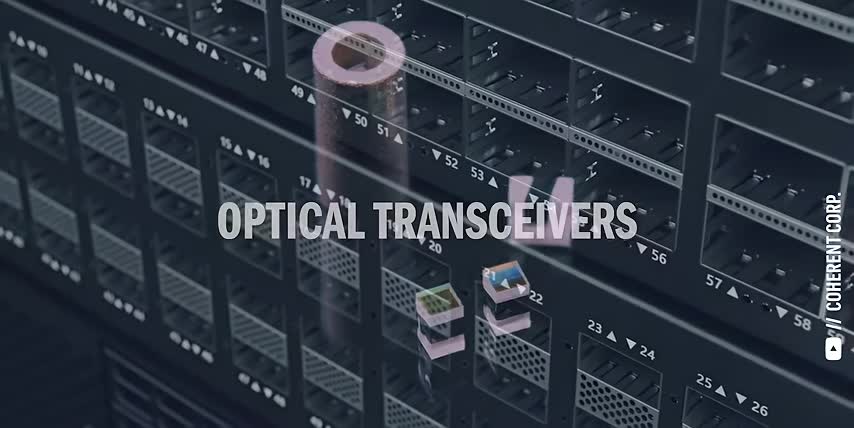
Transceivers are the little plug-in modules that sit in switches and server ports they're called transceivers because they can transmit and receive data on one end of a fiber optic cable they read in electrical signals from a chip and convert those signals into light using a tiny laser then on the other end they read in that light and convert it back to electricity i'm making this video right now because something big is happening with these lasers the big thing that investors need to understand is that silicon is great for compute but terrible for making light so unlike most of the chips that we talk about on this channel laser chips are actually made with indium phosphide or inp instead of silicon for the last 30 years inp lasers were mainly used in long-haul telecommunications equipment signal transmitters boosters and switches that carry data over very long distances so companies like atnt and verizon would buy hundreds or thousands of INP lasers whenever they expanded their networks.
And since they were such low volume products the supply chain for them was low volume too, using 2 or maybe even 4 wafers instead of the big 12 silicon wafers that the rest of the chip industry uses. But here the big problem: the AI industry needs hundreds of millions of these lasers today. A 1.6‑terabit transceiver has eight of these laser chips sending data at 200 gigabits each, and don’t forget each fiber‑optic cable has two transceivers—one at each end—so that’s 16 chips inside a single cable. Most GPUs actually take three cables to connect to the rest of the cluster: one from the GPU’s network card to the leaf switch at the top of the rack, one from that switch to the spine switch for that group of racks, and a third to the core switch that coordinates network traffic for the entire cluster. That’s three cables, six transceivers, and 48 indium phosphide laser chips per GPU.
And that’s only one part of the network—the one connecting GPUs in different racks over InfiniBand or Ethernet. The connections between GPUs inside the same rack are still on copper today, and that network carries around nine times the bandwidth, so moving it to fiber would mean many more lasers and roughly 20 more kilowatts of power per rack, all to power the latest AI models. By the way, Claude Fable 5 is so powerful the U.S. government forced Anthropic to keep it offline until just a few weeks ago; now it’s back, and knowing how to use it is an advantage you either have or others have over you. That’s where Outskill comes in. The sponsor of this video, Outskill, is running their Claude AI Mastery workshop this coming weekend from 10 am to 7 pm Eastern. In two days you’ll learn to use Claude for deep research, build reports and dashboards, put together full presentations, and set up connectors to automate tasks. They’re giving the first 1 000 people who sign up with my link a free seat. Whether you work in management, marketing, tech, or sales, you’ll get hands‑on with Claude code, build custom agents, generate AI visuals and videos, and walk out with the skills you need to run your whole week on autopilot. Over 10 million people worldwide have already attended, and slots for this one are filling up fast because you also get free sign‑up bonuses like 50 secret quad codes, a full AI prompt library, and a personalized AI toolkit builder—so make sure to register for your free seat with my link below today.
That's important because Indium Phosphide is on China's export controls list. Second, if hyperscaler spending does slow down, both of these stocks will get hit hard. As I'm about to show you, data centers account for more than 70% of coherence revenues. Lumentum doesn't report their data center numbers anymore, but their revenues grew by 83% year over year, which probably didn't come from telecom companies. So Nvidia buys from both of them and owns a piece of them too. So if they cut their optical networking budget, both of these companies will feel it right away. That's a huge upside if AI spending keeps growing, but it's also a lot of exposure to one single market segment.
And the third big risk is that indium phosphide shortages and supply constraints mean that both companies have to spend more in order to scale aggressively, and they need to do it while demand is hot. So any construction or production delays hurt them twice as bad. Once for losing market share today and again for missing demand down the road. That means today winners could quickly become tomorrow losers and you need to know that going in all right let start with coherent ticker symbol cohr coherent reported 2 billion dollars in revenue last quarter which is up 34 year over year with gross margins of 38.5 which is almost three points higher than last year for the full fiscal year their adjusted earnings came in at 5.61 cents per share versus $3.53 the year before.
That's 59% earnings growth year over year. Three quarters of their revenue came from one place. Coherent's data center and communication segment generated $5.3 billion of their $7.1 billion in revenues over the last year, while their older industrial laser business actually shrank.
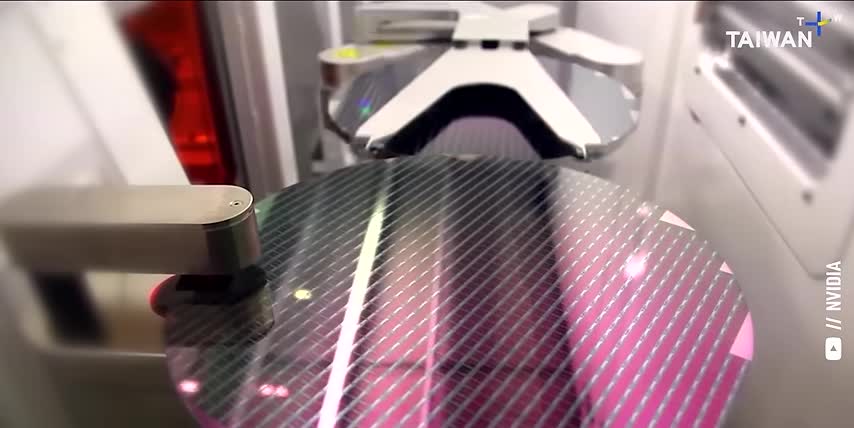
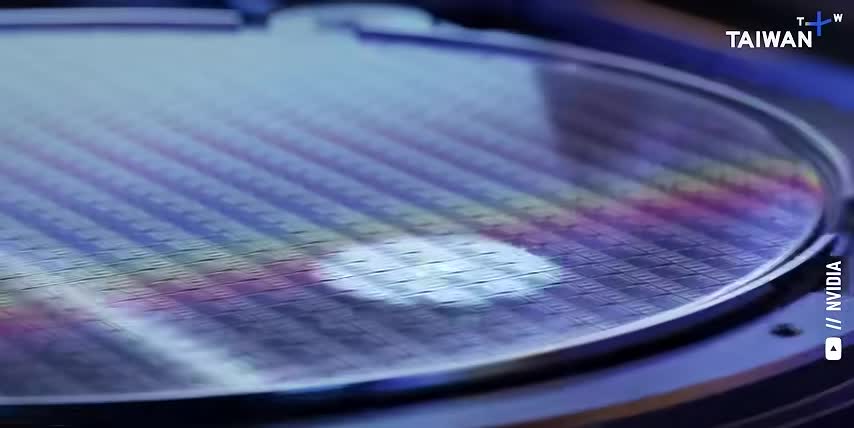
That's another strong signal that demand for indium‑phosphide lasers is now coming mostly from AI. One special thing about Coherent is that they're vertically integrated: they make their own laser chips, package them into optical engines, and build the finished 800 Gb and 1.6 Tb transceivers that those chips go into. While Lumentum builds and sells components, Coherent does everything starting from the bare wafer, and that wafer might be the secret to their success. Like I said earlier, chips made on indium phosphide used to be very low‑volume products, so they were made on two‑ to four‑inch wafers, but Coherent moved their production to six‑inch wafers, which lets them make four times more chips at roughly half the cost.

They actually get even more than that for two key reasons. First, there's less wasted space at the edge of the wafer; as the wafer gets bigger, more of it gets turned into chips. Second, yields actually tend to go up with total production volume because the process gets refined way more often. Coherent CEO pointed out that their yields are higher on their six‑inch lines across every single product they make on them. As a result, Coherent expects to double their indium‑phosphide output by the end of this year and then double it again by the end of 2027, a pace no one else even comes close to.
Earlier this year Nvidia invested $2 billion into Coherent, giving it just under 4 % of the company and a multi‑year agreement that includes a multi‑billion‑dollar purchase commitment as well as access to five more of Coherent's product lines of co‑packaged optics. This wasn't a random investment—Nvidia has been in the optical networking game ever since it bought Melanox in 2020, which helped it build the biggest data‑center networking business in the world today. Coherent's big advantages in the laser‑chip market come with real costs: it spent $1.1 billion on capex over the last year versus about $80 million in cash from operations, meaning roughly $14 was spent on chip production for every $1 earned. Management says investments into data‑center chip production have an average payback period of about 18 months.
So if they're right, this is pretty much the best investment they could possibly make. But if their schedule slips, it'll be a very expensive mistake. As an investor, I really like Coherent's full-stack approach to optics, from their cost-efficient 6-inch wafers all the way to their high-speed transceivers. And even though they're spending $14 for every $1 they make, being backed and partly owned by Nvidia lowers the risk of all that spending over the next few years. Talk about a great way to get rich without getting lucky. And that brings me to Lumentum, ticker symbol L-I-T-E. And if you feel I've earned it, consider hitting the like button and subscribing to the channel. That really helps me out and it lets me know to make more comparison videos like this.
Thanks, now let's talk about Lumentum stock. Lumentum reported a billion dollars in revenue last quarter, which was up 109 year over year adjusted earnings per share came in at 3.23 versus just 88 cents a year ago which means their earnings are up 267 from last year and their adjusted gross margins hit 50.4 you know the shortage is bad when gross margins get this high on components lumentum's main product is an electro-absorption modulated laser, or EML.
EMLs do two jobs on the same chip. First it has a laser that runs continuously at a specific wavelength, and second it has an absorber that sits right next to it. When the absorber turns on, the light from the laser is blocked, which is the same thing as a zero; when the absorber turns off, the laser can get through—that’s a one. This absorber can turn on and off more than a hundred billion times per second, and that’s how Lumentum encodes data into its lasers.
Lumentum makes several different kinds of lasers besides EMLs. For example, they make ultra‑high‑power lasers for silicon photonics that get switched on and off somewhere else entirely, and they also make pump lasers, which don’t carry data at all but feed the amplifiers that keep telecom signals strong as they travel across long distances. Lumentum is effectively sold out of their pump lasers for the foreseeable future, but the biggest opportunity is where all these lasers are about to sit today.
Optical engines live inside a plug at the front of a switch that’s connected to a chip by tens of centimeters of copper. The problem with copper is that the faster you try to move a signal through it—meaning the higher the frequency—the more signal you lose along the way for two reasons. First, current stops flowing through the middle of the wire and crowds toward its surface, so there’s less metal actually carrying the signal; that’s called the skin effect. Second, some of that signal gets absorbed by the wire’s insulation and turns into heat.
That's called dielectric loss. And both of these losses can get pretty noticeable even over just a few inches of copper. But glass doesn't have these problems. It would take 20 miles of optical fiber to lose as much signal as just 10 inches of copper, and co-packaged optics actually move the laser right next to the chip.
Switching to fiber optics and shortening this electrical path lowers the amount of energy that it takes to move data by over 60 percent, Nvidia says. Their co‑packaged optical switches cut network power by three and a half times and use four times fewer lasers to do it, saving around 13 kilowatts of power on a Grace Blackwell rack—about 10 percent of the rack's entire power budget. That extra power can go back to more compute, which is exactly why Nvidia invested $2 billion in Lumentum on the same day they invested in Coherent, and with almost the same terms. Lumentum spent $451 million on factories and equipment last year against $751 million in cash from operations, meaning they spent 60 cents for every dollar they actually made compared to Coherent’s $14 billion.
One thing I should mention is that if you pull up Lumentum’s numbers they posted a net loss of $0.8465 per share last quarter, but that’s due to a one‑time non‑cash charge of $7.8 billion associated with converting debt to equity. The business itself generated $279 million in operating income for the quarter. This is why it’s important to look into the details instead of just trusting headline numbers. So if networking really is the next big bottleneck for AI, Lumentum is one of the only companies in any position to solve it, especially with Nvidia in their corner too.
Alright, so which of these two stocks am I actually buying? Personally, I'm still buying both, just like I said last time I covered them. But don't worry, I won't leave you hanging.
If I could only pick one, I'd still pick Coherent, because they built the world's first production line for 6-inch indium-phosphide wafers, and they're on track to quadruple their capacity by the end of next year that's exactly what you want to be doing during a shortage just remember they're spending 14 for every dollar they actually generate to do it that said i think lumentum still has a ton of upside they grew their revenues by a hundred and nine percent year over year at over 50 gross margins and they only spent 60 cents on every dollar to do it so at the very least both of these stocks are worth a spot on every long-term investors watch list let me know in the comments whether you're buying coherent or lumentum stock and if you want me to make a deep dive video on either one of them and if you want to see even more stocks i'm buying to get rich without getting lucky check out this video next either way thanks for watching and until next time this is ticker symbol you my name is alex reminding you that the The best investment you can make is in you.
Checkout our YouTube Channel
Get the latest videos and industry deep dives as we check out the science behind the stocks.