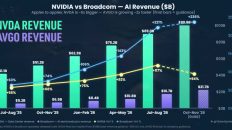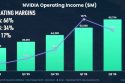
Something big is happening in the stock market and most investors don't see it coming. Stocks like Arm and AMD are up by over 150% since the start of the year. Micron is up by over 200%, more than tripling in price since January 1st. And Sandisk is up by way over 500% year to date. Everyone who sees these kinds of returns always asks me the same three questions. Is this an AI bubble? Should I take profits or keep buying? and where do stocks go from here my name is Alex and I spent eight years as an electrical engineer and AI researcher at MIT which helped me find great stocks like these years before the rest of the market so let me show you what's really happening and how I'm investing in it your time is valuable so let's get right into it look I'm not here to hold you hostage so here's everything I'll talk about up front I'll break down the dot-com bubble and compare it to the stock market today.
Table of Contents
1. Key Takeaways
2. The Dot-Com Bubble Comparison
3. The Answer to the Spending Question
4. Prices Are Rising, Not Falling
5. 2001 vs 2026 Side by Side
Key Takeaways
- Token generation is growing ~7x per year at Google alone, and AI infrastructure is running at near 100% utilization—unlike the empty fiber of the dot-com era.
- The dot-com bubble formed when capacity was built for 12x growth but only 2x materialized; today's AI build-out is the opposite: capacity is growing slower than actual AI demand.
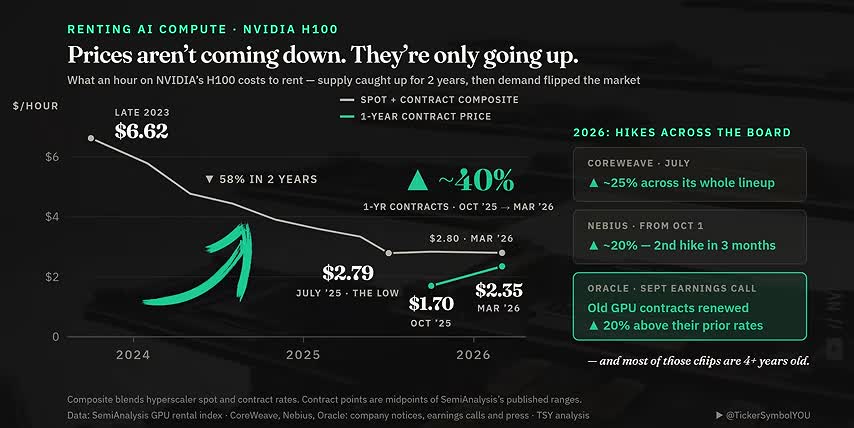
- Hardware prices are rising, not falling: H100 rental prices jumped ~40%, and even 4-year-old GPUs are being resold at a premium, the opposite of the dot-com collapse.
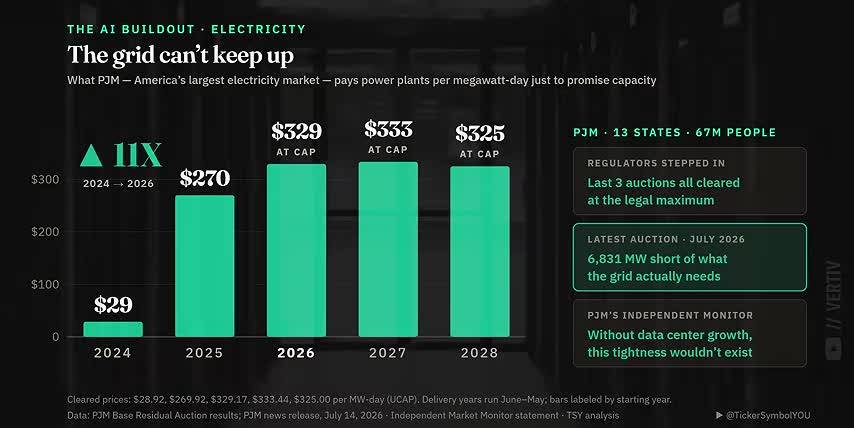
- Memory and electricity are the new bottlenecks: DRAM contract prices doubled, and power prices in PJM jumped 11x in two years.
- The four largest AI spenders are seeing real, contracted demand: Microsoft, Google Cloud, and Amazon hold $1.7 trillion in combined backlog.
- Valuations are much lower than the dot-com peak: Nvidia trades at ~28x earnings versus Cisco's ~200x in 2000.
The trillions of dollars in AI spending and how much of that is actually getting used, what's going on with all the prices for processors, memory, and power, and of course, whether all this means we're in a bubble, where the market goes from here, and what I'm personally doing about it. I want to start this video in an interesting way.
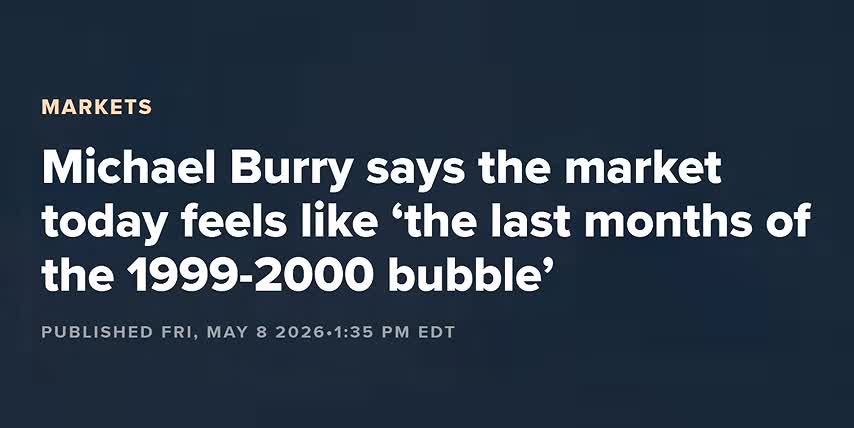
Everyone knows that Michael Burry bet against the housing market before it collapsed in 2008, the trade infamously known as “The Big Short” mostly because he won’t let you forget it. Today he’s betting against AI stocks, and many market bears are right there with him. Back in May, Burry wrote to his subscribers that this feels like the last months of the 1999‑2000 bubble. He put real money behind that call; his last public filing was back in November, where about 80 % of his portfolio was made up of bets against just two stocks, Nvidia and Palantir. A week later Michael Burry deregistered his fund, which means he doesn’t have to report his positions anymore, and now he runs a paid Substack where he reports them anyway. As of this month his list of shorts includes Oracle, Palantir, Nebius, CoreWeave and Micron, and the big question he has is this: when does the spending for the AI build‑out actually end?
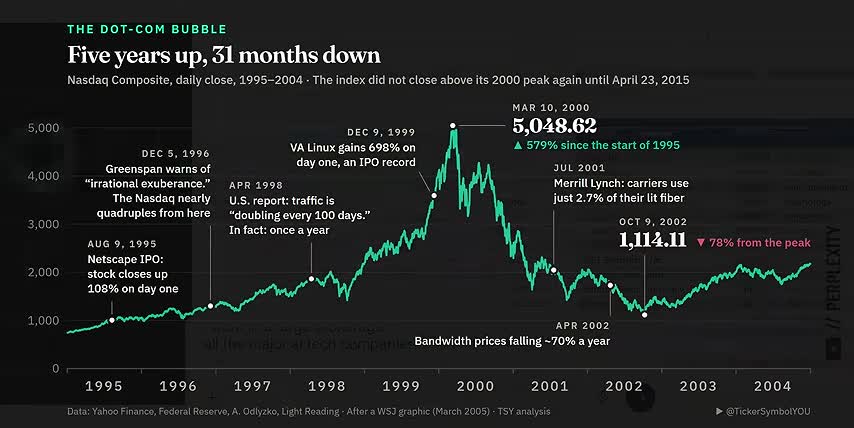
That’s a good question, and the answer is hiding in plain sight. This is the Nasdaq from 1995 to 2004, the ten years right around the peak of the dot‑com bubble. It really began in August 1995 when a web‑browser company named Netscape went public; the stock more than doubled on its first day and that was the first big red flag. The Nasdaq went up roughly 400 % over the next four and a half years, turning ten thousand dollars into fifty thousand dollars and making everybody look like a genius along the way. Just to be clear, one dollar in 1995 is worth more than two dollars today, and this is the Nasdaq—an index of almost every stock listed on the entire exchange, not a crazy bet on a single company.
By December 1999 a company called VA Linux gained 698 % on its first day of trading, the single biggest first‑day pop the market had ever seen. Three months later the Nasdaq reached its peak and then fell by 78 % over the next two and a half years, turning 50 000 into just 11 000, and the Nasdaq didn’t close above that peak again for fifteen years. So if we’re in a similar situation today and the AI bubble pops, things could get pretty bad for a very long time. That’s why all the questions I get are really the same one: where are we on this chart today? The problem back then was that no one could answer this question in the moment.
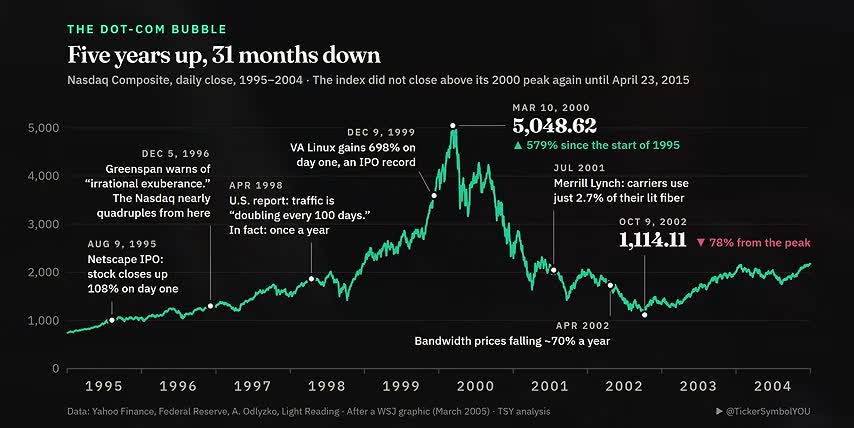
In December 1996, Alan Greenspan, then chair of the Federal Reserve, gave a speech asking whether irrational exuberance was pushing the market too high. Anyone who sold their stocks when he said that missed almost the entire run; the Nasdaq nearly quadrupled over the next three years after his statement. This is what makes bubbles so dangerous: every part of the way up feels the same, like the market is running way too hot, but prices keep going up. Stock prices can’t tell you where you are on this chart, but the science behind them can. Let’s compare what happened during the dot‑com bubble to the AI build‑out happening today. The internet runs on fiber‑optic cable—glass wires that carry data as pulses of light. In the late ’90s companies raced to build, buy and bury as much fiber as they could, and they had a good reason: in April 1998 an official U.S. government report said internet traffic was doubling roughly every 100 days, about a 12× growth rate year over year. But that number traced back to an estimate made by a single internet company and was wrong by an order of magnitude; real internet traffic was about doubling once every year.
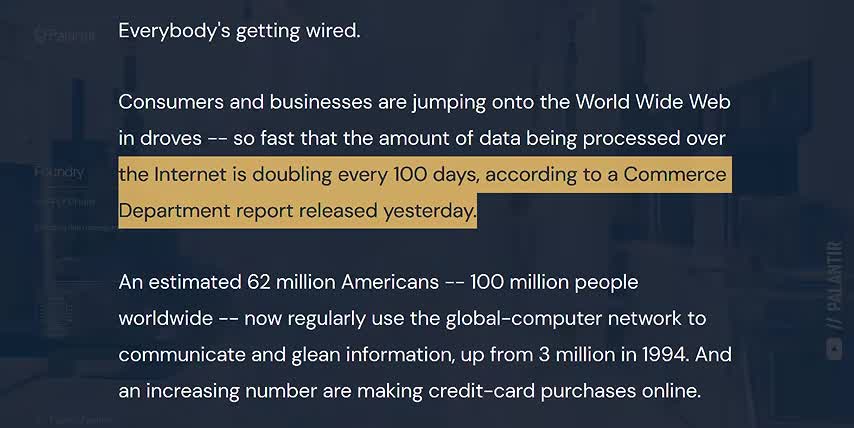
So the entire industry was building for 12x growth, but what it really got was 2x growth instead. By summer of 2001, one Wall Street estimate said that data carriers were using less than 3% of the fiber that they weighed. With that much empty capacity, prices started to collapse. Bandwidth prices fell by about 70% per year for three years in a row. A data line from New York to Los Angeles went from $1.8 million a year in early 2000 to under $150,000 in 2002.
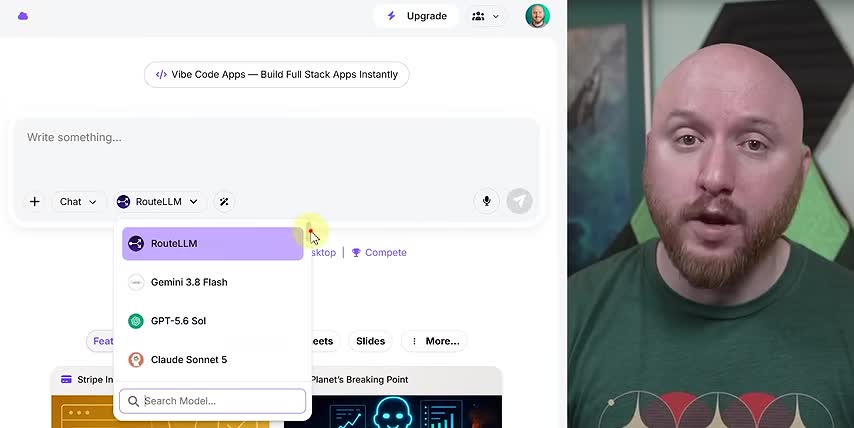
So yeah, it wasn't a great time to be an internet business with most of your value locked up in physical infrastructure but here's what most investors forget and what Michael Bury is missing: internet demand never actually fell; traffic kept doubling every year right through the crash. The internet was real, the forecast was the bubble, so let's apply that same test to AI today. Speaking of which, I spend a ton of time researching who's winning the AI race—Google or Meta, OpenAI or Anthropic—and the answer changes week by week. That's a great question for investors but terrible for users. I paid for ChatGPT, Claude, and Gemini and was always guessing which model to use for each job, so I stopped guessing and started using ChatLLM by Abacus AI, the sponsor of this video. It has every frontier model in one interface—GPT, Claude, Gemini, Grok, and DeepSeek—and supports new ones the day they launch. I can pick the model myself or let RouteLLM choose the right one for each job. For example, I can point it at a company and run deep research with one model, then turn it into a structured presentation with another, complete with charts and images, all in just a few minutes. When you need more than chat, the Abacus AI agent can help build complex apps and websites or run 24/7 agents that keep working through longer tasks. I kick it off before bed and then check it in the morning. All that starts for just $10 per month, way cheaper than I was paying for all those models, so check it out at chatllm.abacus.ai or with my link in the description.
If we're actually in an AI bubble, we should see the same warning signs that we saw during the dot‑com bubble: traffic growing slower than capacity and excess capacity sitting empty, so infrastructure prices collapse. Let's start with the traffic. Tokens are the closest thing we have to counting AI traffic; a token is the basic unit of AI, about four bytes or three‑quarters of a word, so a book of about 75,000 words would be about 100,000 tokens. Every question you ask AI gets chopped up into tokens and every answer gets built back out of them. Just like your power company bills you by the kilowatt‑hour and your phone company might bill you by the gigabyte, AI companies bill by tokens. Google counts every token their AI models process between last May and this May; that count increased by 7×, and that's just Google. OpenAI reported 6 billion tokens per minute on its developer platform last October; about six months later that number was 15 billion. OpenRouter, a marketplace where developers can choose between hundreds of AI models, says its traffic has grown by at least 10× every single year.
But what about the costs of the build‑out itself? The four biggest spenders are Microsoft, Google, Amazon, and Meta Platforms. In 2023 they spent a combined $147 billion on buildings and equipment. Over the last 12 months, they spent $511 billion.
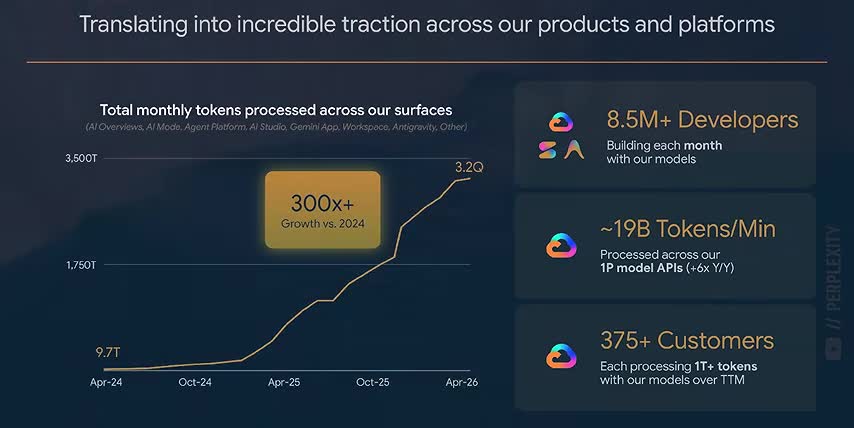
That's a massive number, but it's only up 75% from the year before. Remember, the dot-com bubble was caused by companies building for 12x annual growth, but only actually seeing 2x. Today, they're not even spending 2x more, but they're getting 7x growth in traffic. Said another way, the build-out grew way faster than actual web traffic during the dot-com era. But today, it's the exact opposite. AI traffic is growing way faster than the buildout, even if it seems expensive in the short term. So that's the answer to Michael Burry's question, spending will end when traffic stops growing faster than capacity and demand is fully met. But that probably won't happen for a long time, which is the next piece of the puzzle.
The reason AI traffic is growing so much faster today than web traffic grew during the dot-com build out is because AI keeps getting cheaper When GPT launched in March of 2023 it cost for every million tokens that you sent it 16 months later OpenAI released GPT mini which was good or better than GPT at most tasks But a million tokens cost just $0.15. That's 200 times cheaper. When bandwidth got 90% cheaper after the dot-com crash, people didn't just use the same amount of internet and pocket the savings. They started streaming music and movies and building online businesses. That's the whole idea behind Jevin's Paradox. When something gets cheaper, people start using way more of it. And the cheaper it gets, the faster total demand rises. That's what's happening with AI right now.

On September 10th, DeepSeek released a new model, V4.1 Flash, that charges as little as 60 cents per million tokens of output, not input, but actual work done and sent back to the user. Eight days later, it was the second most used model on OpenRouter, and demand for DeepSeq's older models only kept growing as well. Now, to be fair, more tokens doesn't necessarily mean more demand.
Newer models can think longer and use more tools before answering the same question, so the same question can burn more tokens. Yeah, some of that 7x increase is the same questions costing more tokens, but every one of those tokens still needs a chip to be generated, and that’s exactly what the AI build‑out is all about. All right, so the traffic is really there. What about capacity? In 2001, 97 % of the fiber for the internet build‑out was sitting unused, but on their latest earnings call NVIDIA’s CFO Colette Kress said that NVIDIA’s compute is fully utilized across every cloud they serve.
Google designs its own AI chips called TPUs; last fall they said that even their seven‑ and eight‑year‑old TPUs were still running at 100 % utilization. Both Microsoft and Amazon said that demand continues to exceed available supply and expect the same for 2027. On September 10th, just one week after launching GPT‑6 Astra, OpenAI had to stop taking new sign‑ups for their $200‑a‑month Pro plan due to limits in capacity. A company turning away customers who want to pay $200 every month is the opposite of the empty‑fiber problem of the dot‑com era. On top of that, not every chip is even up and running: last year Microsoft’s CEO said they had chips they couldn’t plug in because there weren’t enough buildings with the electricity to run them. That means whenever AI hardware is sitting idle it’s waiting on electricity, not on customers.

So while the dot‑com build‑out was limited by demand, the AI build‑out is limited by supply—that’s why the last piece of the puzzle is prices. During the dot‑com crash, bandwidth prices fell by 70 % per year because nobody needed what was being built. If the AI build‑out is outrunning true demand, then AI infrastructure prices should be falling the same way. For two years the price of renting NVIDIA H100s, which was their flagship AI chip back in 2022, fell from $6.60 an hour to $2.80 by the middle of last year because supply was catching up to demand. But then everything flipped between last October and this past March: one‑year rental contracts for the H100 jumped in price by about 40 %.
And this year, the company's renting out AI infrastructure started raising prices across the board. CoreWeave raised their prices across their entire lineup by about 25% in July. Nebius announced 20% increases starting October 1st, which is its second price hike in three months. And on their latest earnings call, Oracle's CEO said that their GPU contracts were getting renewed or resold 20% above their previous contracts, even though most of the chips in those contracts are four years old or older. Think about what this means. The bare case for AI says chips become worthless in three or four years. But in reality, four-year-old chips are getting rented at higher prices than their original contracts. And memory is even crazier.
Contract prices for DRAM nearly doubled in quarter one of this year. and they're still climbing. Nebius bills RAM as its own line item, so on their CPU servers, you pay per virtual CPU per hour and separately per gigabyte of RAM per hour. Nebius is raising their memory prices by over 40%. This is why Micron stock more than tripled this year and why SanDisk is up by over 500%. And that's just memory. PJM is America's largest electricity city market, covering 13 states.
In 2024, its power plants were paid about $29 per megawatt day of contracted capacity. In 2025 that skyrocketed to $270, and this year it rose to $329 – an 11× increase in just two years. Regulators had to step in and cap the price of auctions of power contracts, and the last three auctions all hit their legal maximum. On top of that, the latest power auction came up 6,800 megawatts short of what the grid actually needs, and that gap is largely attributed to data‑center demand. So let’s put 2001 and 2026 side by side: in 2001, 97% of fiber sat empty and bandwidth prices were falling by about 70% per year. Today, utilization rates for chips are at 98%, rental prices for four‑year‑old hardware are going up instead of down, and the power grid can’t keep up with demand. Every single warning sign from the dot‑com bubble is missing from the AI build‑out.
All right, now that we have all that context we can answer our big three questions: Is this an AI bubble? Should we take profits or keep buying? And where do stocks go from here? If you feel I’ve earned it, consider hitting the like button and subscribing to the channel – that really helps and lets me know to make more content like this, thanks. First, is this an AI bubble? If you take only one thing away from this entire video, let it be this: a bubble is not when prices go up really fast; it’s when they detach from real demand. During the dot‑com bubble the warning signs were everywhere – insane traffic forecasts, empty fiber, and collapsing prices. Today, token generation at Google alone is growing by 7× per year, hardware is staying fully utilized, and prices are rising even for older chips. These same metrics are great things to watch for signs of AI actually turning into a bubble. If GPU or memory utilization starts to drop and prices start to fall, that’s probably a sign that supply is outgrowing demand, and the gap between them is exactly where the bubble would start to form – that’s what I’ll keep tracking and will report the moment I see it. Question 2: Should we be buying or taking profits? Well, let’s compare how much stocks actually cost.
In March of 2000, Cisco passed Microsoft to become the most valuable company in the world, trading at a price-to-earnings ratio of about 200, and a forward PE close to 130. Today the most valuable company in the world is Nvidia, and it trades at 28 times earnings and a forward PE of about 18. And my most recent video compares SK Hynix, Micron and Sandisk. All three of them trade under 9 times next year's earnings. I can't tell you whether that's a good price. That really depends on you, your portfolio and your time horizon. After all, personal finance is more personal than finance. But what I can tell you is that's at least 14 times cheaper than Cisco traded at the peak of the dotcom bubble.
That's why I'm still making videos every week talking about which stocks I'm buying and why, even when genuinely smart people like Michael Burry say we're in a bubble. The third question is, where do stocks go from here? Or, said another way, where are we on this chart? The truth is I don't really know; I can't predict prices, and anyone who says they can is lying to you. But I can read contracts just like Michael Burry. Microsoft is sitting on $678 billion of future business already under contract, up 84 % year over year. Google Cloud's backlog is $514 billion and Amazon's is $496 billion—that's $1.7 trillion in contracted revenue across just three companies, not including NeoClouds, not including Nvidia, AMD, ARM, or Broadcom. Obviously, none of that means stock prices will keep going up, but it does mean that businesses are budgeting for AI and cloud computing years in advance.

Ultimately, stock prices can't tell us if we're in a bubble, but the science behind the stocks can. In 1999 there were plenty of warning signs, but almost nobody bothered to check. Today we just did: the tokens are real, they're growing fast, and they're being paid for years in advance. Hardware is staying 98 % utilized and prices keep going up, not down, even on older chips. If any of that changes I will make a video about it, but until then I'm going to keep getting rich without getting lucky. And if you want to see what I'm buying to get rich without getting lucky, check out this video next. Either way, thanks for watching, and until next time this is Ticker Symbol—my name is Alex—reminding you that the best investment you can make is in you.
Checkout our YouTube Channel
Get the latest videos and industry deep dives as we check out the science behind the stocks.