One month ago, the market was panicking over the Iran war and broken supply chains. Today, it's verging on extreme greed. But below all the headlines, big institutions are quietly building cash because they see a massive opportunity ahead. My name is Alex, and I spent eight years as an electrical engineer and AI researcher at MIT, which helped me find stocks like NVIDIA, Micron, Vertiv, and CoreWeave long before the rest of the market. In this post, I'm going to show you the major market stories that are already changing, which stocks are about to win big, and a huge mistake that I made along the way. Your time is valuable, so let's get right into it. The CNN Fear and Greed Index has been stuck near extreme greed for the last three weeks, the longest stretch so far this year.
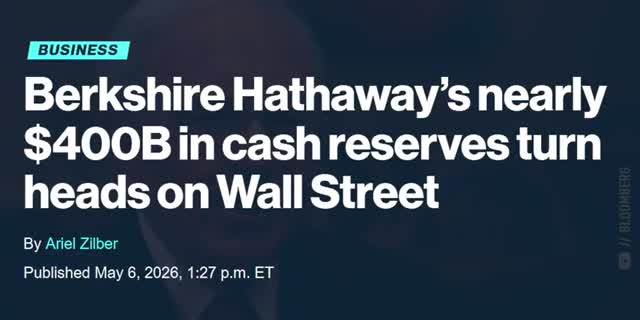
It's easy to understand why everyone is so greedy, at least on the surface. During earnings, the biggest tech companies on earth announced over 0 billion in AI infrastructure spending this year alone, up 77% from last year, despite their supply chains being at a standstill. However, the signal that prompted me to write this post is that, just last week, at Berkshire Hathaway's annual meeting, Warren Buffett stated that the stock market is in a mood for gambling, likening this investing environment to going to a church with a casino attached. Berkshire Hathaway, under its new CEO Greg Abel, is currently sitting on almost 0 billion in cash, a whopping 32% of their entire portfolio, an all-time record for Warren Buffett's firm.
That means they're holding more cash than they did at the start of the dot-com bubble, the global financial crisis, and the pandemic. Warren Buffett coined the phrase be fearful when others are greedy and greedy when others are fearful. And that's exactly what he's doing right now. The question isn't why. That part is obvious. War, broken supply chains, and rising costs. The real question is where that money goes when he buys back in, and when other massive institutions follow his lead. Here's where I think the biggest opportunities in the market are right now. Accountability is important to me, so let's talk about my big mistake, because I owe you a real apology here. Let's talk about CPUs. Traditional AI data centers run roughly one CPU for every eight GPUs.
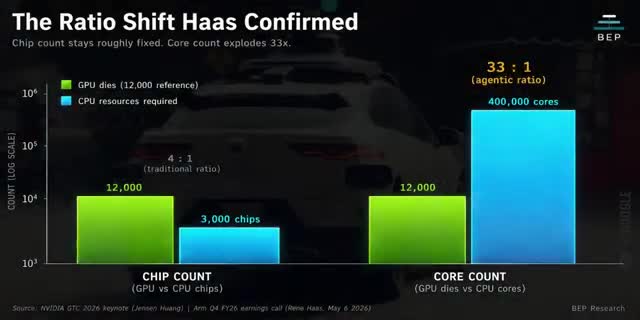
GPUs handle the heavy math, while CPUs manage traffic flow. However, agentic AI changes this dynamic. When a coding agent runs for 30 minutes straight, it makes numerous separate tool calls, spawns hundreds of sub-agents, and its memory usage can increase tenfold over the course of a session. None of this orchestration, including the tools, sub-agents, and context management, runs on GPUs; it all runs on CPUs. At GTC 2026, Jensen Huang presented specific numbers: 12,000 GPUs running at scale require 400,000 CPU cores to run alongside them, suggesting a 33:1 CPU to GPU ratio. This is one reason why I believe stocks like AMD and Intel are currently performing well.
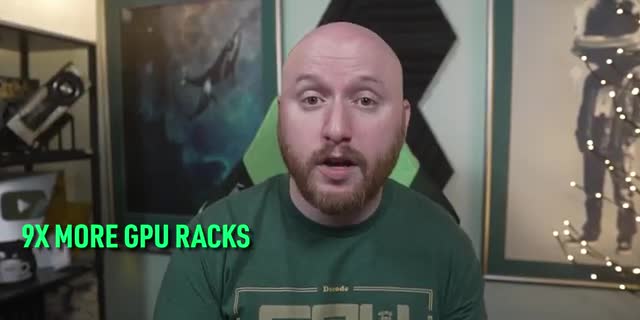
But let me spend 30 seconds walking you through the real math and not the hype and i'll show you the mistake that made me miss a lot of easy money there are 72 ruben gpus per rack so 12 000 gpus would need about 167 racks each vera rack has 256 cpus and each cpu has 88 cores so one rack of vera cpus has almost 23 000 cores That means for every 167 GPU racks, you actually only need 18 CPU racks, or a ratio of 9 to 1 GPU to CPU racks, not the other way around. In chip terms, a data center wants 4600 Vera CPUs for every 1200 Rubin GPUs, or 1 CPU for every 2.6 GPUs. Now here was my mistake, and why I owe you an apology. In my opinion, investors should care about the racks.
After all, data centers are built and priced in terms of racks, and like I just showed you, Agentic AI needs 9 times more GPU racks than CPU racks but I didn think about it in terms of chips And AI data centers only need 3 times more GPUs than CPUs if you count by chips instead of racks Said another way, there are roughly 3 times more CPUs in AI data centers than I realized. That's a big difference, and I really should have caught it sooner. I didn't cover AMD enough, and I really should have. I didn't cover Intel enough, and I really should have. I didn't listen to your feedback in the comments, and I really should have. I apologize, full stop. So, let me put my ego aside and cover AMD and Intel now. AMD just reported earnings last week.
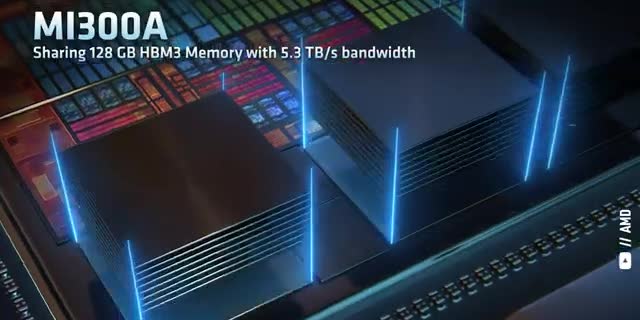
Revenues came in at $10.3 billion for the quarter, which is up 38% year over year. Data center revenue came in at $5.8 billion, which grew by a much higher 57%. Most of that revenue comes from data center CPUs, not GPUs. and their CPU sales are growing a lot faster. But like I just said, those CPUs are much more important in AI data centers than I realized. Meta Platforms recently committed to 6 gigawatts of AMD‘s Instinct GPUs, with 1 gigawatt for fully customized MI450s built exclusively for Meta's workloads. That's roughly the size of all the AI compute on Earth combined outside of Microsoft, Amazon, and Google. And Meta just committed all of that to AMD. This is a huge win for AMD, but it comes at a huge cost that investors need to know about.
In order to make it happen, AMD gave Meta a warrant, the right to buy roughly 10% of the entire company at one penny per share. Now, Meta only gets those shares if AMD stock hits $600, which would be around a trillion dollar valuation. But today, AMD already trades over $450, so it's already 75% of the way there. That means Meta gets almost $100 billion in AMD stock essentially for nothing, and AMD shareholders will get diluted by 10%. But wait, they actually get diluted by 20% because AMD has the same deal with OpenAI. So the moment AMD stock touches $600 per share, you take 20% off the top, and it's actually only worth $480, just $30 more than its current price. That's the real cost of competing in Nvidia's market.
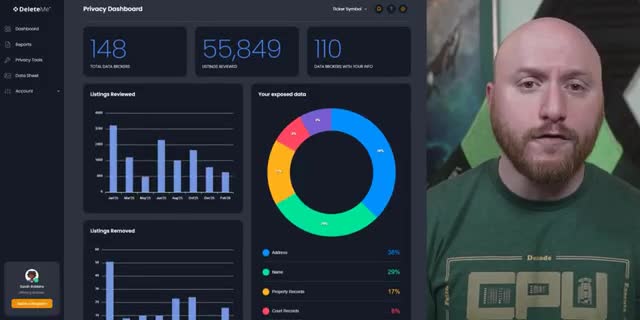
And there's something else on the market that you need to know about, and that's your private data. There are hundreds of online data brokers making big money by collecting and selling your personal information. That's why I've been using this video's sponsor, DeleteMe, for over two years now, and I can't recommend them enough. Delete.me is a hands-free subscription service that will remove your personal information from those online data brokers. They give you a quarterly privacy report showing everything they've done. And they've reviewed over 55,000 listings for me so far. But what really surprised me is that these data brokers had way more than just my private data. They had my wife's and my entire family's too. That's another reason I really like Delete.me.
They have a family plan so we can all have more control over our personal data so if you care about your data and your family's privacy you can get 20 off any consumer plan with my code symbol 20 by going to join delete me dot com slash symbol 20 or with my link in the description and a big thank you to delete me and to you for supporting the channel all right on their latest earnings call lisa sue said that the data center cpu market will nearly triple in size by 2030. that's a compound annual growth rate of 35% or roughly 3 times faster than the S&P 500. So even with that 20% dilution coming up, AMD's future is looking pretty bright. But while AMD designs CPUs, Intel actually builds them. For years, everyone said the same thing about Intel, including me.
Intel needed a huge customer to prove that they could still build chips and no big company would take that risk. Until then, Intel's foundry was a gamble, not a business to invest in. But everything changed in April, when Intel landed three huge customers back to back to back. First Intel joined TerraFab a billion chip factory being built in Austin with Tesla SpaceX and XAI using Intel most advanced manufacturing technology For the first time Intel has a flagship customer lined up before the factory was even finished. Then, Intel signed a multi-year deal with Google to build custom chips for their internal cloud infrastructure. And just a few days ago, Bloomberg reported that Apple is in early talks with Intel and Samsung about manufacturing their chips in the US.
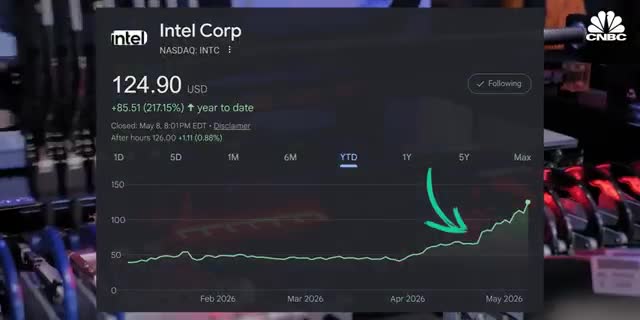
That way, they can reduce the risks of all their chips being made at TSMC in Taiwan. If you didn't know, Apple used Intel's chips in every Mac from 2006 to 2020, when they switched over to their own M1 chips made by TSMC, and Intel lost their biggest customer. So Apple coming back would be one of the biggest comebacks in market history. This is not a done deal, but it is the first serious signal that apple is looking at chip makers beyond tsmc for the first time in over a decade intel reported earnings a few weeks ago the revenue came in at 13.6 billion dollars which is up seven percent year over year and earnings per share came in at 29 cents up from 13 last year those numbers aren't too crazy but the market's reaction sure was intel stock jumped 24 the next day, marking their single best day since the dot-com era.
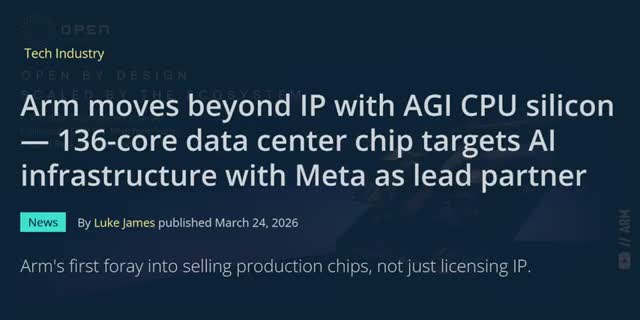
Two years ago, I said that Intel was a value trap. Today, they're the only American-owned and operated factory that can build some of the world's most advanced chips, and they might finally have the customers to prove it. But the battleground for AI's CPUs just got a lot bigger. For the last 35 years, ARM was the arms dealer that never picked a side. They sold Blueprints to Nvidia and AMD, Apple, and Qualcomm, and they collected royalties while everyone else fought the actual chip war. That is, until now. A few weeks ago, ARM launched the AGI CPU, the first chip they've ever designed and sold themselves in the history of the company. And right off the bat, the specs are pretty serious. ARM's AGI CPU has up to 136 cores per chip and 60 chips per rack.

Now, let's perform the same calculation and compare it to Nvidia. According to Jensen, approximately 400,000 CPU cores are required to support 12,000 Rubin GPUs. With 136 cores per ARM chip and 60 chips per rack, this translates to just under 8,200 cores per rack. Therefore, it would take around 49 racks to support those GPUs, compared to just 18 racks of Nvidia Vera CPUs, which may seem worse. However, if we examine the actual chip counts instead of just the racks, we find that 4,600 Vera CPUs are needed to support those 12,000 Rubin GPUs, which is 1 CPU for every 2.6 GPUs, as previously shown. In contrast, only 3,000 ARM AGI CPUs are required to support the same amount.
That's 1 CPU for every 4 GPUs, or around 54% better performance than nvidia's vera said another way arm's new cpu is actually much more powerful than nvidia's so much so that you need almost 40 fewer to run the same data centers and that's just versus nvidia it has roughly double the performance per watt versus intel and amd and arm says it can save around 10 billion dollars in construction costs per gigawatt of data center compute. So let's bring everything full circle. Meta just committed to building 6 gigawatts in data center infrastructure using AMD's chips. If they used ARM's AGI CPUs instead, they would have saved $60 billion on this project alone, which is pretty close to what AMD paid Meta to win that deal in the first place. And I'm not the only one who caught that math.
Meta did too. That's why they are Arm's first and flagship customer for the AGI CPU, and early demand for this chip is through the roof. As soon as Arm started taking orders their demand doubled in the first six weeks and on their earnings call just a few days ago Arm CFO said they expect to sell over a billion dollars worth of these CPUs in the first year alone and hit $15 billion in annual chip revenue by 2031. The entire company makes less than $5 billion a year today. So Arm is expecting this chip to quadruple their annual revenue over the next 5 years. So, ARM didn't just enter the CPU battleground, they dropped a tactical nuke on it. And the AGI CPU is only one part of their story.
ARM‘s royalties from data center chip designs more than doubled year over year, beating every estimate. And these royalties have insane 95% gross margins, much higher than even the best software companies, let alone hardware firms. The reason the stock dropped 10% after their earnings goes back to what I said at the start this video. Supply chain issues are stopping them from growing even faster. Arm's problem isn't that nobody wants their chip, it's that they can't build those chips fast enough and the smart money knows it. But if you think demand for AI infrastructure is insane right now, there's one more bombshell I need to walk you through. Now, to be clear, what I'm about to show you isn't verified, so it could be nothing or it could change everything.

And if you found this video valuable, consider hitting the like button and subscribing to the channel. It really does help, and it tells me to make more content like this. Alright, let's talk about what could be the single biggest breakthrough in AI efficiency since the original Transformer paper. Last week, a Miami startup called SubQuadratic announced a new model called SubQ 1M Preview. The research version of this model has a 12 million token context window, which is up to 12 times bigger than most frontier models today. The version they plan to actually ship matches everyone else at 1 million tokens, but it claims to be over 300 times cheaper to run.
Said another way, if you spent $2,500 doing work on Claude, you could do that same work on SubQ's model for the price of a cup of coffee. They raised $29 million in seed funding and launched at a $500 million valuation. But here's what makes this announcement pretty hard to judge. It didn't come with a peer-reviewed paper, it didn't come with a public model to test, and it didn't come with any benchmarks that anyone outside the company could reliably reproduce. So I'm watching what happens next. If Anthropic, OpenAI, or Google publish their own work on subquadratic attention in response, that means these claims are being taken seriously. But if there's crickets, this is probably just smoke and mirrors.
Regardless, investors must understand the potential implications if this breakthrough proves to be real or if another similar breakthrough occurs. When Deep Sea was released, AI became dramatically cheaper overnight. Instead of demand decreasing, it exploded because each dollar of computing power went much further. When the cost of something decreases, you get more value for your money, so overall demand increases. The availability of cheaper smartphones does not mean people use less data; rather, it means more people are using more apps and consuming more content every day, resulting in the need for more data centers to handle the increased demand. Therefore, if SubQ proves to be real, every aspect of the AI revolution will become even more valuable, including the CPUs that I previously overlooked. This is a mistake I will not repeat.
At the start of this video, I pointed out that CNN's Fear and Greed Index has been close to extreme greed for the last three weeks, the longest stretch so far this year. But Warren Buffett is sitting on record levels of cash. Warren Buffett coined the phrase be fearful when others are greedy, and greedy when others are fearful. And that's exactly what he's doing right now. The question isn't why. We already know that. War, supply chains, and rising costs. The question is where that money goes when big institutions buy back in. And now you know that too. And if you want to see what else I'm investing in, check out this video next. Either way, thanks for watching and until next time, this is Ticker Symbol You. My name is Alex, reminding you that the best investment you can make is in you.

Table of Contents
1. Market Trends
2. CPU Importance
3. AMD and Intel
4. ARM CPU
5. AI Breakthroughs
Market Trends
It's easy to understand why everyone is so greedy, at least on the surface. During earnings, the biggest tech companies on earth announced over 0 billion in AI infrastructure spending this year alone, up 77% from last year, despite their supply chains being at a standstill. However, the signal that prompted me to write this post is that, just last week, at Berkshire Hathaway's annual meeting, Warren Buffett stated that the stock market is in a mood for gambling, likening this investing environment to going to a church with a casino attached. Berkshire Hathaway, under its new CEO Greg Abel, is currently sitting on almost 0 billion in cash, a whopping 32% of their entire portfolio, an all-time record for Warren Buffett's firm.
CPU Importance
GPUs handle the heavy math, while CPUs manage traffic flow. However, agentic AI changes this dynamic. When a coding agent runs for 30 minutes straight, it makes numerous separate tool calls, spawns hundreds of sub-agents, and its memory usage can increase tenfold over the course of a session. None of this orchestration, including the tools, sub-agents, and context management, runs on GPUs; it all runs on CPUs. At GTC 2026, Jensen Huang presented specific numbers: 12,000 GPUs running at scale require 400,000 CPU cores to run alongside them, suggesting a 33:1 CPU to GPU ratio. This is one reason why I believe stocks like AMD and Intel are currently performing well.
AMD and Intel
AMD recently reported its earnings. The revenue came in at .3 billion for the quarter, representing a 38% year-over-year increase. Data center revenue reached .8 billion, with a significantly higher growth rate of 57%. Most of this revenue comes from data center CPUs, rather than GPUs. Furthermore, their CPU sales are growing much faster. As I mentioned earlier, these CPUs are more important in AI data centers than I initially realized. Meta Platforms has committed to 6 gigawatts of AMD's Instinct GPUs, including 1 gigawatt for fully customized MI450s built exclusively for Meta's workloads, which is roughly equivalent to the size of all AI compute on Earth outside of Microsoft, Amazon, and Google. Meta has committed all of this to AMD.
ARM CPU
Now, let's perform the same calculation and compare it to Nvidia. According to Jensen, approximately 400,000 CPU cores are required to support 12,000 Rubin GPUs. With 136 cores per ARM chip and 60 chips per rack, this translates to just under 8,200 cores per rack. Therefore, it would take around 49 racks to support those GPUs, compared to just 18 racks of Nvidia Vera CPUs, which may seem worse. However, if we examine the actual chip counts instead of just the racks, we find that 4,600 Vera CPUs are needed to support those 12,000 Rubin GPUs, which is 1 CPU for every 2.6 GPUs, as previously shown. In contrast, only 3,000 ARM AGI CPUs are required to support the same amount.
AI Breakthroughs
Regardless, investors must understand the potential implications if this breakthrough proves to be real or if another similar breakthrough occurs. When Deep Sea was released, AI became dramatically cheaper overnight. Instead of demand decreasing, it exploded because each dollar of computing power went much further. When the cost of something decreases, you get more value for your money, so overall demand increases. The availability of cheaper smartphones does not mean people use less data; rather, it means more people are using more apps and consuming more content every day, resulting in the need for more data centers to handle the increased demand. Therefore, if SubQ proves to be real, every aspect of the AI revolution will become even more valuable, including the CPUs that I previously overlooked. This is a mistake I will not repeat.
Key Takeaways
The key takeaways from this video are:
- The market is currently experiencing extreme greed, but big institutions are building cash reserves.
- Warren Buffett's Berkshire Hathaway is sitting on a record amount of cash, indicating a potential buying opportunity.
- CPUs are more important in AI data centers than previously thought, with a 1:2.6 CPU to GPU ratio.
- AMD and Intel are well-positioned to benefit from the growing demand for CPUs.
- ARM's new AGI CPU offers improved performance and power efficiency, potentially disrupting the CPU market.
Checkout our YouTube Channel
Get the latest videos and industry deep dives as we check out the science behind the stocks.