Table of Contents
1. Introduction to AI Stocks
2. Nvidia and AI Revolution
3. Broadcom and Google
4. TSMC and Micron
5. Vertiv and IREN
6. Meta and Palantir
7. CrowdStrike and Cybersecurity
8. Key Takeaways
If you put $10,000 in Apple stock at the start of the smartphone era, you'd have over $600,000 today. If you invested that money in NVIDIA when ChatGPT came out just over three years ago, you'd already have over $100,000. My name is Alex and I spent eight years as an electrical engineer and AI researcher at MIT, which helped me find great stocks like NVIDIA, Micron, and TSMC years before the rest of the market. And in this post, I'll show you my top 10 stocks to get rich without getting lucky. Your time is valuable, so let's get right into it.
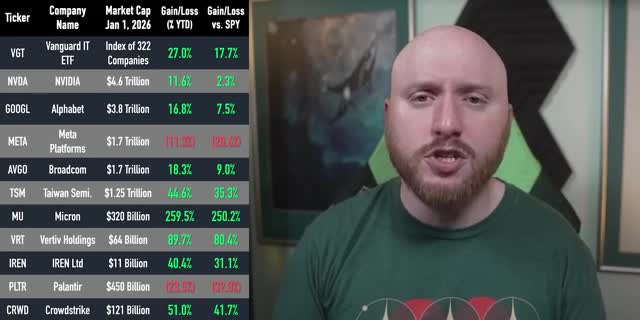
Late last year, I made a video on my top 10 stocks for 2026, but since then, this channel has grown by close to 100,000 subscribers, and I've gotten a lot of questions on which stocks I'm buying, especially with all the craziness going on in the market right now. I'm not here to hold you hostage, so here's the full list of stocks up front, how they're performing so far this year, and their returns versus the S&P 500, since the whole point is to get rich without getting lucky. And that's exactly what's happening, with most of my stocks beating the broader market by double digits. But it's not just about picking the right stocks. It's about how this whole list works together to be a portfolio that's better than the sum of its parts. And I'll explain that as we go along.
Also, accountability is important to me. So I have a few simple rules for this list. Once I pick the stocks, I can't add or remove them for the entire year. That way, if I pick a bunch of losers, I can't just take them off the list and pretend like it never happened. I also can't add any winners after they've already run up. Every stock stays locked in for the whole year, and I only change the order based on earnings and the news. That forces me to make reasonable predictions about where the stock market could be headed next. I should also mention that I'm not a financial advisor. My AI and engineering background help me understand the science behind the stocks, not just their financials.
Introduction to AI Stocks
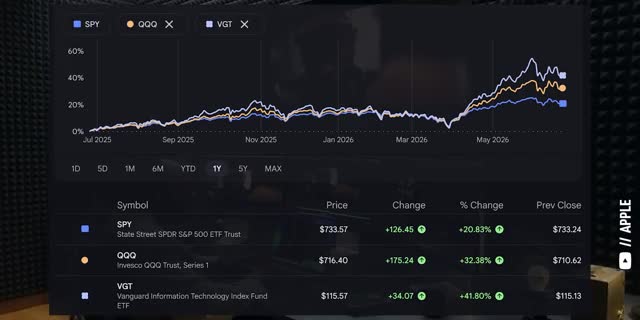
That's why I only invest inside my circle of competence, and I always buy and hold for the long term, which usually means 3-5 years. But why these stocks specifically, and are they still good investments today? Well, that's the point of the rest of this video. So let's jump right into the list. The longer I invest, the more I believe that every great portfolio starts with a fund. When I put my money in the market every month, I put it in an ETF instead of keeping it in cash. That way it grows faster than inflation and it stays relatively safe since the funds I pick tend to be well diversified. Most investors choose a fund that tracks the S&P 500, like SPY. But like I've been showing you for years now, it's actually very simple to beat the S&P 500.
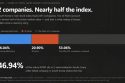
I'm not saying that it's easy, but it is simple. For example, just buying the Nasdaq 100 would outperform the S&P 500 over every single time frame. But the NASDAQ 100 has a few issues that might make it the wrong foundation for a portfolio that's focused on AI and the chips that power it. First, it holds stocks that don't fit the AI theme at all, like Walmart, Costco, T-Mobile, and Pepsi. Since it only holds 100 stocks in total, these companies can really affect the fund's long-term performance. Second, the NASDAQ recently changed the rules to let stocks into the index just 15 trading days after they go public, while the old wait was anywhere from three months to a year.
Nvidia and AI Revolution
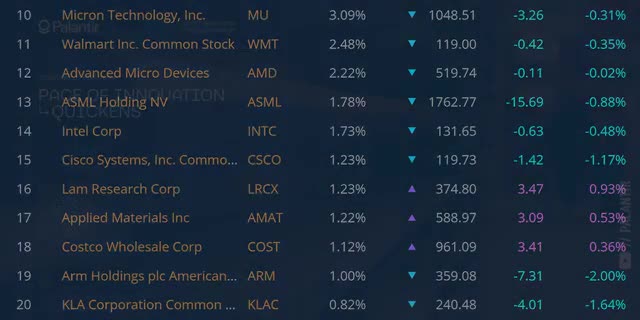
SpaceX is eligible to join the index as early as July 7th, while companies like OpenAI and Anthropic are both expected to go public and enter the index later this fall. All three companies have valuations measured in the trillions of dollars, and all three companies are still unprofitable today. That's why I've been moving my money into a fund that lets me have my cake and eat it too. Vanguard's Information Technology ETF, ticker symbol VGT. VGT holds over 300 companies, which puts it right between the Nasdaq 100 and the S&P 500 in terms of diversification, and it isn't afraid to let its winners ride. Just NVIDIA, Apple, and Microsoft make up more than 40% of the fund by weight, with other great companies like Broadcom, Micron, AMD, and LAM Research also in the top 10.
On top of that, this fund tracks a completely different index called the MSCI U.S. IMI Information Technology Index, which only holds U.S. stocks in the information technology sector. Over 80% of the stocks in VGT focus on hardware, semiconductors, system software, and applications, while skipping companies like Walmart, Pepsi, and even the trillion-dollar IPOs since they're not classified as information technology companies to begin with And it even has lower fees than SPY and QQQ So I saving money while outperforming both indexes by pretty large margins That why VGT is the foundation for my list of stocks to get rich without getting lucky Surprising no one the top stock on my list is Nvidia, since they're at the very center of the entire AI revolution.
Broadcom and Google
They make the chips that every AI model trains on and have the CUDA software ecosystem that no competitor can crack. But here's something that might surprise you. Nvidia stock is currently trading at a price to earnings ratio of 31. The last time it was this cheap was 7 years ago, when it was just $4 per share after accounting for stock splits. Said another way, Nvidia stock is cheaper now than at any point in the entire AI revolution, or in the 3 years before ChatGPT even came out. Talk about a great way to get rich without getting lucky. According to MarketUS, the global artificial intelligence market is expected to almost 19x in size over the next 9 years, which is a compound annual growth rate of 38.5% through 2034.
But many of the companies building next-generation AI applications are not publicly traded. Think about the 90s and early 2000s. Companies like Amazon and Google went public very early in their growth cycle, but today, they're waiting an average of 10 years or longer to go public.

TSMC and Micron
That means investors like us can miss out on most of the returns from the next amazon, the next google, the next nvidia.
But vcx by fundrise gives everyday investors access to some of the top private pre-ipo companies on earth, they have an impressive track record already investing over 500 million dollars in some of the largest most in demand ai infrastructure and space launch companies.
Vertiv and IREN
So if you want access to some of the best late stage companies before the ipo, check out vcx by fundrise with my link below today, all right, the reason i spend so much time going to ai conferences and interviewing industry experts all over the world is to understand how long nvidia can defend their massive market share.
In my opinion, this is still the single most important question in the stock market today, because Wall Street analysts keep thinking that Nvidia's growth will slow down and the AI revolution will slow down with it.
Meta and Palantir
We hear the same narrative every single quarter. The biggest company on earth simply can't keep growing at this pace. And that's true. Nvidia hasn't been growing at a steady pace at all. It's actually been accelerating. Nvidia's revenues grew year year-over-year by 55%, 62%, 73%, and 85% over the last four quarters. Like I've been saying for years now, NVIDIA will not get disrupted by another GPU maker, since their hardware and software ecosystems are already so entrenched. It'll take a fundamentally different kind of AI accelerator to chip away at their customer base one workload at a time. That's why Broadcom and Google are also very high on my list. While Nvidia sells infrastructure for a broad range of AI applications, their biggest customers don't want to rely on them forever.
They want specialized chips for the workloads that they run billions of times per day. That shift from general-purpose GPUs towards custom chips optimized for specific applications is the single most important thing that investors need to watch. Google has their own AI chip called the Tensor Processing Unit or TPU, and today it runs more AI compute than any other company on earth. Google is the only company that owns its entire stack. The chips, the data centers, the cloud, the Gemini models, and products and services used by billions of people around the world. Google Cloud is now making over $80 billion a year in revenue. They have a backlog of almost half a trillion dollars, and it's growing almost as fast as Amazon Web Services and Microsoft Azure put together.

CrowdStrike and Cybersecurity
But while Google builds custom chips for themselves, Broadcom builds them for everybody else, including Google, Meta, OpenAI, and Anthropic, making them one of NVIDIA's biggest direct competitors Broadcom AI chip revenue hit billion last quarter which is up 143 year over year And now they guiding for over billion in AI chip revenue by the end of 2027 Whether the market shifts towards NVIDIA GPUs Google's TPUs, or custom chips made by Broadcom, I win because I hold all three. And all three companies have two big things in common. First, regardless of who designs the chip, It's built by Taiwan Semiconductor, ticker symbol TSM. TSMC builds over 90% of all advanced chips on Earth and around 70% of the world's chips by revenue.
They're the only company that can make advanced chips for every side of the chip war at scale. They make GPUs for NVIDIA and for AMD. They make smartphone processors for Apple and for Samsung. They make custom AI chips for Amazon and Microsoft and Google. TSMC is so far ahead of every other foundry that they can simply set the price and customers have to pay, because there's nowhere else for them to even go. That's why TSMC is always on my list of stocks to get rich without getting lucky. The other thing all these companies have in common is they all rely on other companies for memory. AI chips are only as fast as the memory that supports them. Today, one of the biggest bottleneck of the entire AI build-out is high bandwidth memory.
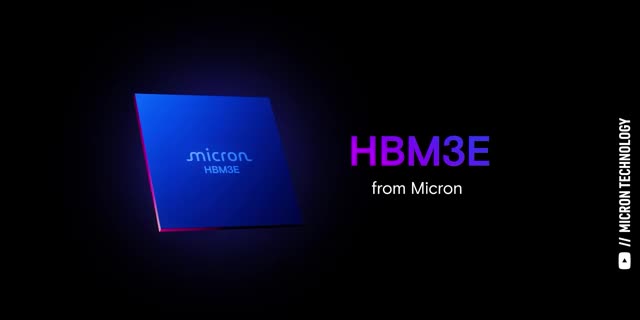
Only three companies on Earth even make it, and Micron is the only one based in the United States. Micron's memory is already pre-sold through the end of 2027, and the memory shortage is expected to get worse before it gets better as AI demand keeps increasing. That's why AI companies are signing multi-year contracts and prepaying for chips that aren't even built yet. Memory is no longer a cyclical commodity. has a lot of pricing power for memory chips and ai companies can either pay up or fall behind micron is about to report earnings right as i'm recording this so let me know in the comments if you want me to make a deep dive video on them once we have the latest numbers regardless while wall street analysts argue over which chip is faster tsmc and micron are getting paid no matter what that's another way that all the stocks on my list work together and if you feel i've earned it so far, consider hitting the like button and subscribing to the channel.
That really helps me out and it lets me know to make more content like this. Thanks, now let's keep moving down this list. Every AI data center also needs power and cooling. A single Nvidia rack today pulls around 120kW. That's around 10 times more than a traditional server rack. And the Vero Rubin racks that are currently shipping take over 200kW of power. And the power requirements will keep going up with each new generation. The old way of wiring data centers simply can't carry that much current. Copper starts to melt. So, Nvidia partnered with Vertiv, ticker symbol VRT, to redesign the entire power architecture from the ground up.

This redesign moves data centers to 800 volts of DC power, the same standard that Nvidia is building to eventually support 1 megawatt racks, and Vertiv co-developed it. Here's why that matters for investors. Most vendors sell one piece of the puzzle, either the power or the cooling. But Vertiv sells them both, as a single, end-to-end architecture from the grid to the chip, all optimized to work together. Companies like Schneider, Eaton, and Delta are racing to the same 800-volt standard. But only Vertiv and Schneider deliver the full power and cooling stack as a single system. But power is only half the problem. A rack that draws 600 kilowatts builds up a lot of heat, way more than air cooling can handle. These racks need direct-to-chip liquid cooling, and Vertiv builds that too.
Every gigawatt-scale AI factory being built right now needs what Vertiv is selling. And their backlog shows it, with orders growing by 250% year-over-year, which is the fastest growth in Vertiv's history. Before anyone can order Vertiv's systems, though, they need the grid-connected power to run it in the first place. And that's where iREN comes in. iREN has over 4.5 gigawatts of secured power across Texas, Oklahoma, Canada, and Spain. And they're using that power for AI data centers. NVIDIA itself has a five-year, $3.4 billion cloud contract to run their own internal workloads on iREN's infrastructure. And as part of that deal, Nvidia took a warrant to buy 30 million shares of IREN stock for $70 per share. That only pays off if IREN trades well above that price over the next few years.
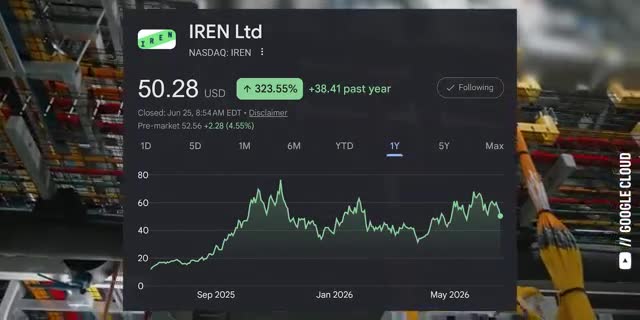
IREN is currently $49 per share, which implies a 40% upside just to hit Nvidia's strike price on this stock. Microsoft also signed a 5 billion deal for IREN capacity and they prepaid for 20 of it up front In fact iREN 3 billion dollar annual recurring revenue target only uses about 10 of the power that they already have secured. That means that they can support 10 times that number once all their AI infrastructure is constructed up and running. And that's why this stock is so volatile. Building data centers costs money that iREN doesn't have yet, so they'll need to keep raising capital to close that gap. That's a real risk, but it's the same kind of spending that we're seeing from AI companies across the board.
What makes IRAN special though, is they have by far the most secured power for their size. And that's exactly why I own it. Alright, so far we've covered my top stocks for AI chips and the infrastructure built around them. Software sits on top of that infrastructure, which is why I saved it for last. Let's start with Meta platforms. Meta currently trades at around 20 times earnings, which is the lowest multiple in the entire Magnificent Seven. It's cheap because they're spending between $125 and $145 billion in capex this year alone, which is close to double what they spent in 2025.

But here's the thing, their family of apps have over 3.5 billion daily active users across Facebook, Instagram, Messenger, and WhatsApp, so they need to spend aggressively on AI infrastructure if they want to serve AI to almost half the people on the planet. And while Wall Street analysts see Meta's spending as a risk, they are already proving that it is worth it: ad impressions are up 19%, the average price per ad is up by 12%, and their revenues are up by 33% year over year. So, as the stock keeps dropping, I'll keep dollar-cost averaging in to this global growth machine. And we can't talk about growth machines without talking about Palantir, which has been on my list for three years in a row now.
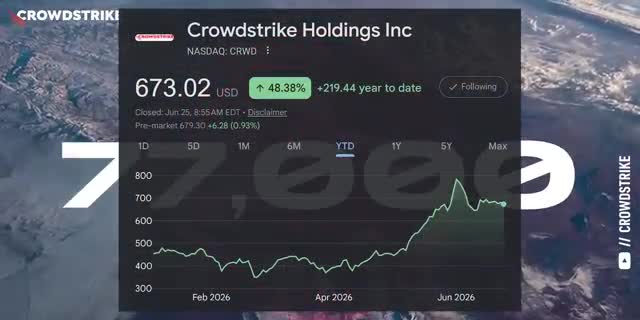
But we can't talk about data without talking about security. Every dollar spent on AI infrastructure, models, software, or services is a dollar that's vulnerable to new kinds of cyber attacks. So cybersecurity is not an option. It's just the cost of doing business. That's why I've been investing in CrowdStrike, ticker symbol CRWD. The big reason I like CrowdStrike is their Falcon platform, which has three parts. A library of cloud-based modules to do things like antivirus scans, firewall management, and protecting against malware. They have a proprietary threat graph that tracks the connections between people, their devices, and the networks they have access to. Kind of like Palantir's ontologies, but specifically for enterprise networks.
Then, they can compare the actual network traffic against that graph and deal with any differences as they come up. And they do that with the Falcon Agent, which is the third part of their platform. This Falcon Agent is a tiny piece of software that runs on every device to send data back to CrowdStrike so they know when it's time to run the different cloud modules and update their threat graph. The global cloud security market is expected to more than triple in size over the next six years, and that's before accounting for AI-enabled cyber threats. So I expect the cybersecurity industry to grow even faster than that, with CrowdStrike in a great position to capture a lot of that growth.

Key Takeaways
Like I mentioned earlier, I've been traveling to many different AI conferences, so I haven't been doing a good job keeping up with this list. But after 6 months, I still feel great about the whole thing. The stocks, the order, and the list's overall performance. And now that conference season is over, I'll be covering these stocks a lot more going forward. So let me know if you want me to make an updated deep dive video on any one of them. And if you want to see what else I'm buying to get rich without getting lucky, check out this video next. Either way, thanks for watching and until next time, this is Ticker Symbol U. My name is Alex, reminding you that the best investment you can make is in you.
Checkout our YouTube Channel
Get the latest videos and industry deep dives as we check out the science behind the stocks.